
– LA BOLITA in Cuba, According to the People is “Una Remesa that Never Arrives”. VIDEOS.

images (1)LA BOLITA EN CUBA, SEGÚN EL PUEBLO “UNA REMESA QUE NUNCA LLEGA”.

La lotería nacional cubana se creó durante la época de la colonia. Antes de 1959, la lanzaban por la radio y la televisión. Los tickets de las apuestas se vendían en los estanquillos de prensa, los bares y cafés.

Hoy, “la Bolita” es la versión cubana de lo que internacionalmente se conoce como Lotería. Básicamente es un juego en el que se apuesta dinero a uno o varios números, esperando coincidir con las cifras lanzadas…
556429_504285796250129_1057336768_n-300x300

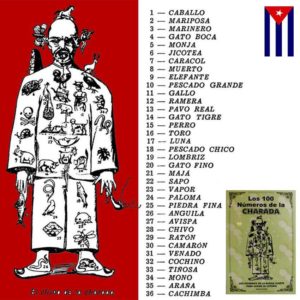
Las dos tiradas son diarias en horarios de la tarde y la noche. Los lanzamientos dependen de los números de la lotería del Cash 3 y el Play 4 que se juegan en la Florida. Cada número tiene varias figuras correspondientes en una lista llamada charada.

Son tres números, uno fijo y dos corridos. El fijo es el más importante, ya que por él se paga 75 veces la cantidad de dinero apostado en la jugada; y por cada uno de los corridos, 25.

LA BOLITA EN CUBA.

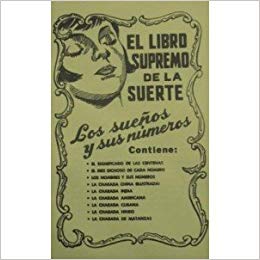
“Pacho se estaba volviendo loco con tantos números. Tenía en el cuarto una biblioteca. Charadas, crucigramas, pirámides, acertijos. ‘¿Qué es lo que camina pal’ lado?, ¿Cuál es el animal que a todos da asco? ¿Quién se la pasa gritando?…’ Y Pacho vuelto loco descifrando el verso: el cangrejo, 55, la rana, el 22, la cotorra, 21. Cuando llegaba la hora de ir a jugar, tenía una hoja llena de números, que casi nunca salían”.

Pacho reconoce que la bolita lo ayudó a terminar su casa, pero también dice que fue más el dinero que perdió.

“Yo jugaba todos los días, de lunes a domingo. Los primeros cien pesos del trabajo eran para eso, jugar bolita. Y eso que yo no soy de los jugadores duros, conozco gente que le ponen mil pesos a un número y doscientos a un parlé, esos sí que ganan mucho, pero igual pierden mucho, porque el viejo dicho cubano nunca falla: ‘el banco pierde y se ríe, el punto gana y se va’. Al final el banco siempre sale ganando”.

Premios-de-la-Bolita-o-Charada-Cubana-400x240

Con la llegada de la revolución en 1959, se emitieron leyes en Cuba contra las llamadas ‘lacras del capitalismo’ que incluían a los juegos azar. Por tal motivo, miles de cubanos en estos 60 años han purgado condenas por este juego, declarado ilícito por las autoridades.

Ahora que es un hombre de Dios, Pacho Mojena, opina que con el “Periodo Coyuntural” la bolita se convirtió en el clavo caliente al que se aferran las familias, para ver si aciertan un número que los saque de apuros.

“Yo diría que gana solo un 1 % de todos los que juegan — afirma Pacho— para el resto la bolita es apostar por una remesa que nunca llega”.

La tecnología no ha dejado escapar este filón, existen aplicaciones en los teléfonos móviles que mantienen atrapados a los amantes de este juego cubanísimo. Los grupos de WhatsApp se multiplican. Sus miembros intercambian “cábalas” y “sueños”, insertan tablas probabilísticas, y cuando al fin tiran los números, se decepcionan y sufren en grupos;…luego se alientan a continuar para la próxima tirada y gastar dinero.

Cada cierto tiempo el gobierno ataca a la bolita, organiza redadas y apresa a banqueros, pero nada detiene al cubano, que necesita ganar a toda costa para defenderse de la crisis en un sistema obsoleto y pasado de moda que no funciona.

cuba-CU (1)

RECOMIENDENOS A SUS AMISTADES * PREFIERA A NUESTROS SPONSORS *

RECOMIENDENOS A SUS AMISTADES * PREFIERA A NUESTROS SPONSORS *

logo

unnamedLA BOLITA IN CUBA, ACCORDING TO THE PEOPLE “UNA REMESA (A REMITTANCE) THAT NEVER ARRIVES”.

The Cuban national lottery was created during the colonial era. Before 1959, she was released on radio and television. The tickets for bets were sold in press boxes, bars, and cafes.

Today, “La Bolita” is the Cuban version of what is internationally known as Lottery. Basically it is a game in which you bet money on one or several numbers, hoping to match the figures released …

The two runs are daily in the afternoon and evening hours. The pitches depend on the lottery numbers of Cash 3 and Play 4 that are played in Florida. Each number has several corresponding figures in a list called charade.

They are three numbers, one fixed and two corridos. The landline is the most important since he is paid 75 times the amount of money wagered on the play; and for each of the runs, 25.

bolita-lotería-Cuba-eltoque-Didier-Cruz-2018

LA BOLITA IN CUBA.

“Pacho was going crazy with so many numbers. I had a library in the room. Charades, crosswords, pyramids, riddles. ‘What walks side by side? What animal disgusts everyone? Who spends it screaming? … ‘And Pacho went crazy deciphering the verse: the crab, 55, the frog, the 22, the parrot, 21. When it was time to go play, he had a sheet full of numbers, they almost never went out. ”

Pacho acknowledges that the ball helped him finish his house, but also says that it was more money he lost.

“I played every day, from Monday to Sunday. The first hundred pesos of the work were for that, to play ball. And that I am not of the hard players, I know people who put a thousand pesos to a number and two hundred to one I stopped, those who win a lot, but still lose a lot, because the old Cuban saying never fails: “the bank loses and laughs, the point wins and leaves.” In the end, the bank always wins. ”

With the arrival of the revolution in 1959, laws were issued in Cuba against the so-called ‘scourges of capitalism’ that included gambling. For this reason, thousands of Cubans in these 60 years have purged sentences for this game, declared illegal by the authorities.

Now that he is a man of God, Pacho Mojena, he thinks that with the “Short Term Period” the ball became the hot nail to which families cling, to see if they get a number right out of trouble.
417Pg7tuOQL._SX258_BO1,204,203,200_

“I would say that only 1% of all who play wins – says Pacho – for the rest the ball is to bet on a remittance that never arrives.”

Technology has not let this reef escape, there are applications on mobile phones that keep lovers of this very Cuban game trapped. WhatsApp groups multiply. Its members exchange “kabala” and “sueños”, insert probabilistic tables, and when they finally throw the numbers, they are disappointed and suffer in groups;… then they are encouraged to continue for the next run and spend money.

From time to time the government attacks the ball, raids and seizes bankers, but nothing stops the Cuban, who needs to win at all costs to defend himself from the crisis in an obsolete and old-fashioned system that does not work.

Agencies/ ADN/ E. Martin/ S. Correa/ Internet Photos/ YouTube/ Arnoldo Varona/ www.TheCubanHistory.com
THE CUBAN HISTORY, HOLLYWOOD.

cuba-ferries

RECOMIENDENOS A SUS AMISTADES * PREFIERA A NUESTROS SPONSORS *
RECOMIENDENOS A SUS AMISTADES * PREFIERA A NUESTROS SPONSORS *

logo

– FELIPE PAZOS JR. , Actor in Film of Hemingway’s Novel “The Old Man and the Sea”. (Born: Havana). VIDEOS.

Felipe-Pazos-Old-Man-Sea FELIPE PAZOS JR., ACTOR EN FILM BASADO EN LA NOVELA DE HEMINGWAY “EL VIEJO Y EL MAR”. (NACIDO EN LA HABANA). VIDEOS.

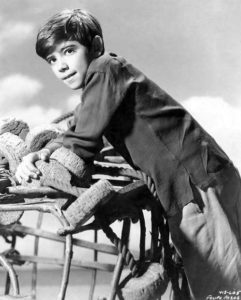
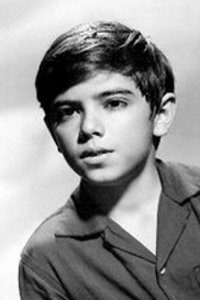
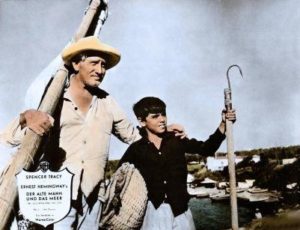
Javier Felipe Pazos Vea nació en La Habana, Cuba, el 22 de noviembre de 1944. Es un actor cubanoamericano que cuando era niño, a pesar de que tenía 14 años en el momento del papel junto a un viejo pescador cubano interpretado por Spencer Tracy. en la película de 1958 ‘El viejo y el mar’ basada en la novela de Ernest Hemingway.

Su padre era en 1959 un miembro importante de la Revolución Cubana. Pazos Jr. era hijo de Felipe Pazos Sr., un destacado economista cubano y su esposa Sara Vea.


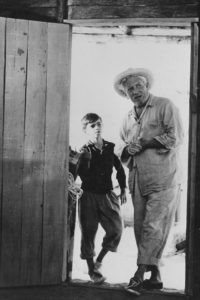
Felipe Pazos Jr. en una escena de “El viejo y el mar” (1958).

A los 18 años, publicó un artículo en la Nueva República titulado Cuba — “¡Viva la revolución!” bajo su nombre completo, Javier Felipe Pazos Vea, argumentando en contra de la invasión estadounidense de Cuba bajo la dictadura de Fidel Castro. Pazos Jr. eventualmente estudió ingeniería y se mudó a Venezuela.

En 1960 se mudó con su familia a los Estados Unidos.

Como Manolin, en la película El viejo y el mar (1958), Felipe Pazos Jr fue un gran actor en su primera obra.

Según información recibida (2018), Felipe Pazos Jr. todavía vive en los Estados Unidos.

LA NOVELA DE HEMINGWAY “EL VIEJO Y EL MAR”.

El viejo y el mar (1958). Felipe Pazos Jr. participó como actor.

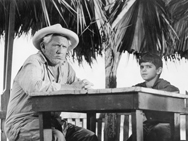
Un viejo pescador cubano Santiago (Spencer Tracy) no ha atrapado nada en 84 días. A pesar de la dedicación del niño (Felipe Pazos) que le trae café y comida, el pescador teme que se haya vuelto perpetuamente desafortunado. En su 85º día de pesca, el anciano atrapa un pez pequeño y decide seguir pescando. Cuando una de sus múltiples líneas de pesca engancha a un gran marlin, comienza una batalla implacable entre un anciano y ese enorme pez que puede terminar siendo la captura de su vida que se demostraría a sí mismo que todavía es capaz. Durante tres días y noches, lucha contra los peces, en una prueba de coraje mental y físico que se convierte, para él, en la prueba definitiva de su valía como hombre. Es una larga batalla.

Basado en la novela del mismo nombre de 1952 del autor estadounidense Ernest Hemingway (1899-1961). Esta fue la primera de las tres adaptaciones de pantalla de la novela de Hemingway, las otras dos fueron la película de televisión de 1990 del mismo nombre y el cortometraje animado de 1999 del mismo nombre.

https://youtu.be/NNCxNntn2yc
Ganador del Premio de la Academia al Mejor Cortometraje de Animación en 2000.
“El Viejo y el Mar” – Corto, Animación

Año de Estreno: 1958
Basado en: la Novela ‘El Viejo y el Mar’ de Ernest Hemingway

Actor: Spencer Tracy, Felipe Pazos Jr., Harry Bellaver, Don Diamond, Don Blackman, Mary Hemingway y Ernest Hemingway
Director: John Sturges, Henry King y Fred Zinnemann
Productor: Leland Hayward
Escritor: Peter Viertel
Editor: Arthur P. Schmidt y Folmar Blangsted
Director de fotografía: James Wong Howe, Floyd Crosby, Tom Tutwiler y Lamar Boren

MV5BMjk5NjcwY2YtMmU4ZS00MDllLWE3OGEtZjFlNDk5NGYyODRhXkEyXkFqcGdeQXVyMjUyNDk2ODc@._V1_

Música: Dimitri Tiomkin
Presupuesto: 5.000 millones
Empresa de distribución: Warner Bros.
Duración: 86 minutos
Género: drama y aventura
País: Estados Unidos
Idioma: inglés
Narrador: Spencer Tracy

cuba_havana_adobestock_57649461-2048px (1)

RECOMIENDENOS A SUS AMISTADES * PREFIERA A NUESTROS SPONSORS *
RECOMIENDENOS A SUS AMISTADES * PREFIERA A NUESTROS SPONSORS *

logo

felipe-pazos-jr-200x300FELIPE PAZOS JR., ACTOR IN HEMINGWAY’S NOVEL “THE OLD MAN AND THE SEA”. (BORN IN HAVANA).

Javier Felipe Pazos Vea was born in Havana, Cuba on November 22, 1944. He is a Cuban-American actor who as a young boy — even though he was 14 at the time of the role alongside an old Cuban fisherman played by Spencer Tracy in the 1958 film ‘The Old Man and the Sea’ based on the novel by Ernest Hemingway.

His dad was an important member of the Cuban Revolution, in 1959. Pazos Jr. was a son of Felipe Pazos Sr. a leading Cuban economist and wife Sara Vea.

https://youtu.be/6Ky8aim7eEg

Felipe Pazos Jr. in a scene from “The Old Man and the Sea” circa 1958 Felipe Pazos Jr. in a scene from “The Old Man and the Sea” circa 1958

At 18, he published an article in the New Republic entitled Cuba—“Long Live the Revolution!” under his full name Javier Felipe Pazos Vea, arguing against the U.S. invasion of Cuba under the reign of President Fidel Castro. Pazos Jr. eventually went on to study engineering and moved to Venezuela.

In 1960 he moved with his family to the U.S. According to information received he still lives in the United States.

HEMINGWAY’S NOVEL “THE OLD MAN AND THE SEA”

The Old Man and the Sea (1958). Pazos Jr.participated as an actor.

An old Cuban fisherman Santiago (Spencer Tracy) has not caught anything in 84 days. Despite the devotion of the young boy (Felipe Pazos) who brings him coffee and food, the fisherman fears he has become perpetually unlucky. On his 85th day of fishing, the old man catches a small fish and decides to keep fishing. When one of his multiple fishing lines hooks a large marlin, begins a relentless battle between an old man and that enormous fish that may end up being the catch of his life that he would prove to himself he is still capable. For three days and nights, he battles the fish, in a trial of mental and physical courage that becomes, for him, the ultimate test of his worth as a man. It is a long battle.

As Manolin, in the movie The Old Man and the Sea (1958), Felipe Pazos Jr was a great actor is his 1st play.

According to information received (2018) Felipe Pazos Jr. still lives in the United States.

Based on the 1952 novella of the same name by American author Ernest Hemingway (1899-1961). This was the first of three screen adaptations of Hemingway’s novella, the other two being the 1990 TV movie of the same name, and the 1999 animated short film of the same name.

https://youtu.be/NNCxNntn2yc
Recipient of the Academy Award for Best Short Animated Film in 2000.
The Old Man and the Sea – Short, Animation

Release year: 1958
Based On: The novel ‘The Old Man and the Sea’ by Ernest Hemingway
Actor: Spencer Tracy, Felipe Pazos Jr., Harry Bellaver, Don Diamond, Don Blackman, Mary Hemingway, and Ernest Hemingway
Director: John Sturges, Henry King, and Fred Zinnemann
Producer: Leland Hayward
Writer: Peter Viertel
Editor: Arthur P. Schmidt and Folmar Blangsted
Cinematographer: James Wong Howe, Floyd Crosby, Tom Tutwiler, and Lamar Boren

der-alte-mann-und-das-meer-mit-spencer-tracy-und-felipe-pazos (1)

Music: Dimitri Tiomkin
Budget: 5.000 million
Distribution Company: Warner Bros.
Duration: 86 minutes
Genre: Drama and Adventure
Country: United States
Language: English
Narrator: Spencer Tracy

Agencies/ Wiki/ Hemingway’s Bio/ Internet Photos/ YouTube/ Arnoldo Varona/ www.TheCubanHistory.com
THE CUBAN HISTORY, HOLLYWOOD.

5.Volunteer+Vacations+in+Cuba

RECOMIENDENOS A SUS AMISTADES * PREFIERA A NUESTROS SPONSORS *

RECOMIENDENOS A SUS AMISTADES * PREFIERA A NUESTROS SPONSORS *
logo

– MARÍA TERESA VERA, Singer, Composer and Her Musical Legacy to Cuba. VIDEOS.

vera7MARÍA TERESA VERA, CANTANTE, COMPOSITORA Y SU LEGADO MUSICAL A CUBA. VIDEOS.

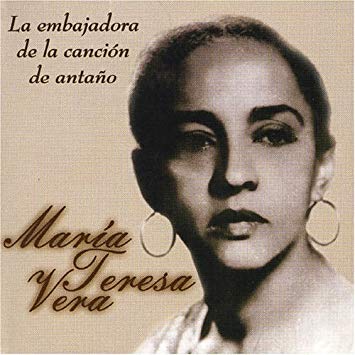
María Teresa Vera, cantante, guitarrista y compositora, nació un 6 de Febrero de 1895 en el pueblo de Guanajay, Pinar del Rio (hoy Artemisa) siendo su voz imprescindible en la historia de la música tradicional de la primera mitad del siglo XX en Cuba.

Este año, en homenaje por su 125 aniversario de nacimiento, el buscador de web Google dedica doodle en reconocimiento a su destacada trayectoria musical.

Su primera obra, el bambuco “Esta vez tocó perder” la compuso en 1914. En 1911, a los 16 años, debutó en el Teatro Politeama Grande, donde actualmente radica la Manzana de Gómez, interpretando la criolla “Mercedes”, de Manuel Corona, quien fuera su autor favorito y que le enseñó a tocar la guitarra.

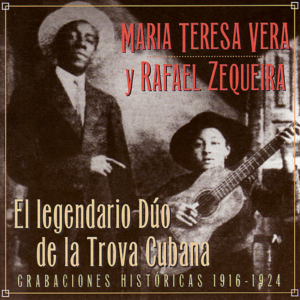
En 1915 ya aparecía integrando dúo con Rafael Zequeira y tuvo un gran éxito en Cuba y el extranjero.

Fue de las pocas mujeres que en esa época asumió la canción trovadoresca, llamada vieja trova, como expresión de múltiples estilos y géneros: el son, el bolero, la criolla, la habanera, la guaracha y la rumba que comenzaban a dar forma al pentagrama genuinamente cubano…

Varias veces visitó Estados Unidos en donde cumplió presentaciones y grabó canciones para distintas casas disqueras. Fue así que popularizó, por medio de la difusión más importante de aquel momento, las canciones que le hicieron famosa: Mercedes, Longina, Santa Cecilia, y otras de Corona; Mujer perjura, de Miguel Campanioni; rumbas y clavijas ñáñigas, de Ignacio Piñeiro; y bambucos y boleros de Rosendo Ruiz, Patricio Ballagas y Sindo Garay.

Cantó con Zequeira hasta 1924, año en que éste murió; luego hizo dueto con el propio Corona, Higinio Rodríguez y Miguelito García. Integró, junto a Ignacio Piñeiro, el sexteto de sones “Occidente”, agrupación sonera con la que también se presentó en Estados Unidos.

En 1937 unió su singular voz sin vibrato, seca, y cadenciosa a la de Lorenzo Hierrezuelo, en un popular dúo que duró 27 años y un repertorio de cientos de canciones de todos los autores, logrando un estilo para la posteridad.

61jjUvD1UhL._SY355_

Entre sus piezas famosas sobresalen “Por qué me siento triste”, “No me sabes querer”, “Yo quiero que tu sepas” y la inmortalizó la criolla “Veinte años” de la inspiración de Guillermina Aramburu, obra incluida en el repertorio de destacados intérpretes nacionales y foráneos.

Son suyos, también, varios boleros y boleros sones compuestos en la década de 1930-1940 con letras de las autoras Guillermina Aramburu y Enma Núñez.

Una de sus mejores composiciones, la habanera Veinte años, ha sido interpretada por varios artistas cubanos; ‘Sólo pienso en ti’, un bolero-son, también es conocido. En 1945 fue contratada por Circuito CMQ para el programa de radio Cosas de Ayer. En la década de 1950, apareció en el programa de televisión El Casino de la Alegría y en la década de 1960 recibió homenajes públicos por su retiro en 1962. Maria Teressa Vera murió en La Habana, el 17 de diciembre de 1965.

Poseedora de una preciosa voz prima en la historia musical cubana esta considerada “Embajadora de la Canción de Antaño” y su legado musical apegado a su raíz deviene patrimonio sonoro de Cuba.

cayo-santa-maria-copia

RECOMIENDENOS A SUS AMISTADES * PREFIERA A NUESTROS SPONSORS *
RECOMIENDENOS A SUS AMISTADES * PREFIERA A NUESTROS SPONSORS *
logo

vera2MARÍA TERESA VERA, SINGER, COMPOSER AND HER MUSICAL LEGACY TO CUBA. VIDEOS.

María Teresa Vera, singer, guitarist, and composer, was born on February 6, 1895, in the town of Guanajay, Pinar del Rio (today Artemisa) being her essential voice in the history of traditional music of the first half of the 20th century in Cuba.

Her first play, the bambuco “This time he had to lose” she composed in 1914. In 1911, at age 16, she debuted at the Teatro Politeama Grande, where the Manzana de Gómez currently lives, performing the Creole “Mercedes” by Manuel Corona, who was her favorite author and who taught her to play the guitar.

In 1915 she already appeared as a duo with Rafael Zequeira and had great success in Cuba and abroad.

600x600bf

It was one of the few women who at that time assumed the troubadour song, called old trova, as an expression of multiple styles and genres: the son, the bolero, the Creole, the Havana, the guaracha and the rumba that began to shape the pentagram genuinely Cuban …

Several times she visited the United States where she performed presentations and recorded songs for different record houses. It was thus that she popularized, through the most important dissemination of that moment, the songs that made her famous: ‘Mercedes’, ‘Longina’, ‘Santa Cecilia’, and others from Corona; ‘Perjura woman’, by Miguel Campanioni; rumbas and pegs ñáñigas, by Ignacio Piñeiro; and bamboo and bolero by Rosendo Ruiz, Patricio Ballagas, and Sindo Garay.

She sang with Zequeira until 1924, the year he died; then she became a duet with Corona himself, Higinio Rodríguez and Miguelito García. She joined, along with Ignacio Piñeiro, the sextet of sones “Occidente”, a sonar group with which she also appeared in the United States.

ab67616d0000b273fff4b70ccf8855ce43233596

In 1937 she joined her unique voice without vibrato, dry, and cadences to that of Lorenzo Hierrezuelo, in a popular duo that lasted 27 years and a repertoire of hundreds of songs by all authors, achieving a style for posterity.

Among her famous pieces stand out “Why I feel sad”, “You do not know how to love me”, “I want you to know” and immortalized the Creole “Twenty years” of the inspiration of Guillermina Aramburu, work included in the repertoire of highlights national and foreign interpreters.

They are also her, several boleros and boleros are composed in the decade of 1930-1940 with letters of the authors Guillermina Aramburu and Enma Núñez.

One of her best compositions, the habanera Veinte años, has been performed by a number of Cuban artists; ‘Sólo pienso en ti’, a bolero–son, is also well-known. In 1945 she was contracted to Circuito CMQ for the radio program Cosas de Ayer. In the 1950s, she appeared in the TV program El Casino de la Alegría and in the 1960s she received public tributes on her retirement in 1962. She dies in la Havana, on December 17, 1965.

Possessing a precious premium voice, the composer worked extensively for more than five decades. She is considered Ambassador of the Song of Yesterday ”and her musical legacy attached to her root becomes Cuba’s sound heritage.

Agencies/ RHC/ Guadalupe Yaujar/ Maite González/ Extractos/ Excerpts/ Internet Photos/ YouTube/ Arnoldo Varona/ www.TheCubanHistory.com
THE CUBAN HISTORY, HOLLYWOOD.

La Habana morro

RECOMIENDENOS A SUS AMISTADES * PREFIERA A NUESTROS SPONSORS *
RECOMIENDENOS A SUS AMISTADES * PREFIERA A NUESTROS SPONSORS *

logo