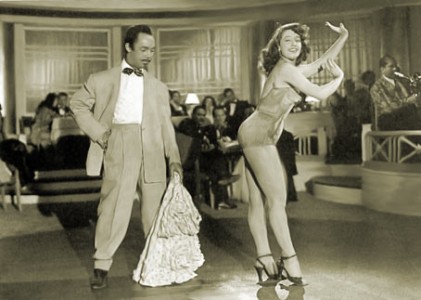
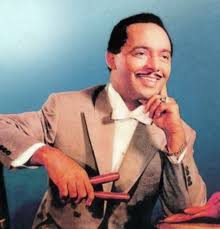
DÁMASO PÉREZ PRADO, CONOCIDO COMO “EL REY DEL MAMBO”, MÚSICO Y DIRECTOR DE ORQUESTA. VIDEOS/FOTOS. * DÁMASO PÉREZ PRADO WELL KNOWN AS “THE KING OF THE MAMBO”, MUSICIAN AND BANDLEADER. VIDEOS/ PHOTOS.

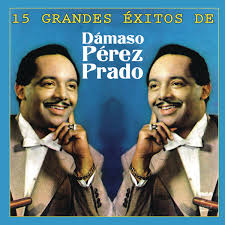
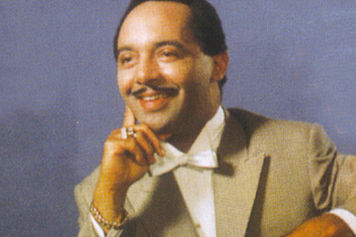
Dámaso Pérez Prado nació en Matanzas, Cuba, el 11 de diciembre de 1916. Fue director de orquesta, músico (cantante, organista y pianista) y compositor cubano. Se le conoce a menudo como el “Rey del Mambo”. Su orquesta fue la más popular del mambo. Su hijo, Pérez Prado Jr., continúa dirigiendo la Orquesta Pérez Prado en la Ciudad de México hasta la fecha.

Su madre era maestra de escuela y su padre, periodista. Estudió piano clásico en su infancia y posteriormente tocó el órgano y el piano en clubes locales. Durante un tiempo, fue pianista y arreglista de la Sonora Matancera, la agrupación musical más conocida de Cuba. También trabajó con orquestas de casino en La Habana durante la mayor parte de la década de 1940 y se ganó la reputación de ser un músico imaginativo (su estilo solista precedió al bebop por al menos cinco años) y ruidoso. Sus compañeros de la época lo apodaban “El Cara de Foca”.

SU CARRERA ARTÍSTICA

En 1948 se mudó a México para formar su propia banda y grabar para RCA Victor. Rápidamente se especializó en mambos, una adaptación animada del danzón cubano. Los mambos de Pérez destacaban entre la competencia, con sus fogosos riffs de metales y sus fuertes contrapuntos de saxofón, y sobre todo, sus característicos gruñidos (de hecho, dice “¡Dilo!” en muchos de los supuestos gruñidos). En 1950, el arreglista Sonny Burke escuchó “Qué rico el mambo” durante unas vacaciones en México y lo grabó de regreso en Estados Unidos como “Mambo Jambo”. El sencillo fue un éxito, lo que impulsó a Pérez a lanzar una gira por Estados Unidos. Sus presentaciones en 1951 agotaron las entradas y comenzó a grabar lanzamientos estadounidenses para RCA Victor.

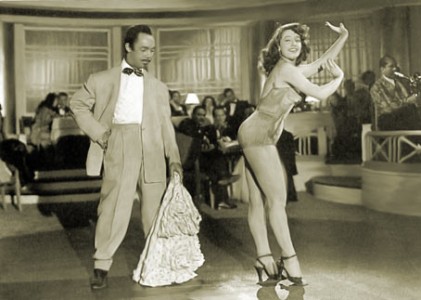
Pérez es el compositor de piezas tan famosas como “Mambo No. 5” (que posteriormente encabezó las listas británicas tanto para Lou Bega en 1999 como para el personaje animado Bob el Constructor en 2001) y “Mambo No. 8”. En el auge del movimiento mambo, en 1955, Pérez alcanzó el número uno en las listas estadounidenses con una versión chachachá de “Cherry Pink and Apple Blossom White” (compuesta por el compositor francés Louiguy). Este arreglo, con la participación del trompetista Billy Regis, se mantuvo en el puesto durante 10 semanas consecutivas. La canción también alcanzó el número uno en el Reino Unido y en Alemania. Pérez había versionado este tema por primera vez para la película Underwater! en 1954, donde se puede ver a Jane Russell bailando “Cherry Pink”. En 1958, una de las composiciones de Pérez, “Patricia”, se convirtió en el último disco en alcanzar el número 1 en las listas Jockeys y Top 100, las cuales dieron paso la semana siguiente a la entonces recién estrenada lista Billboard Hot 100. La canción también alcanzó el número uno en Alemania y el número ocho en el Reino Unido.

Su popularidad en Estados Unidos coincidió con el auge de la primera ola de interés por la música latina fuera de las comunidades latinas durante las décadas de 1940, 1950 y principios de 1960. También actuó en películas en Estados Unidos y Europa, así como en el cine mexicano (la película Rumberas), siempre con su característica perilla y sus suéteres y chalecos de cuello alto. A finales de la década de 1950, su éxito decayó y los años dieron paso a nuevos ritmos, como el rock and roll y, posteriormente, la música pop. Su asociación con RCA terminó en la década de 1960, y su producción discográfica se limitó principalmente a sellos más pequeños y a antologías de estilo latino reciclado.


EL REGRESO DE DAMASO PÉREZ

A principios de la década de 1970, Pérez regresó definitivamente a su apartamento frente al imponente Paseo de la Reforma de Ciudad de México para vivir con su esposa y sus dos hijos, Dámaso Pérez Salinas (conocido como Pérez Prado, Jr.) y María Engracia. Su carrera en Latinoamérica seguía siendo sólida. Realizó giras y continuó grabando material que se publicó en México, Sudamérica y Japón. Era venerado como uno de los gigantes de la industria musical y actuaba regularmente en la televisión mexicana. En Japón, se publicó una grabación de su gira de 1973 en formato LP, en uno de los primeros formatos de 4 canales conocido como Quadraphonic.

En 1981, Pérez participó en una revista musical titulada Sun, que tuvo una larga temporada en la capital mexicana. En 1983, alguien que había usado su nombre falleció, y la prensa informó erróneamente sobre el fallecimiento del director de orquesta Pérez Prado. Su última actuación en Estados Unidos fue en Hollywood el 12 de septiembre de 1987, cuando tocó ante un público abarrotado. Ese mismo año grabó su última grabación. Una persistente mala salud lo aquejó durante los dos años siguientes, y falleció de un derrame cerebral en la Ciudad de México el 14 de septiembre de 1989, a los 72 años.

Durante su vida, un elenco de figuras destacadas de la música pasó por su orquesta, entre ellas: Alex Acuña (percusión), Pete Candoli (trompeta); Beny Moré (voz); Johnny Pacheco (percusión [más tarde flauta]); Armando Peraza (percusión) y Mongo Santamaría (percusión), entre otros.


DÁMASO PÉREZ PRADO WELL KNOWN AS “THE KING OF THE MAMBO”, MUSICIAN AND BANDLEADER. VIDEOS/ PHOTOS.

Dámaso Pérez Prado was born in Matanzas, Cuba on December 11, 1916. He was a Cuban bandleader, musician (singer, organist and pianist), and composer. He is often referred to as the ‘King of the Mambo’. His orchestra was the most popular in mambo. His son, Pérez Prado, Jr., continues to direct the Pérez Prado Orchestra in Mexico City to this day.


His mother was a school teacher, his father a newspaper man. He studied classical piano in his early childhood, and later played organ and piano in local clubs. For a time, he was pianist and arranger for the Sonora Matancera, Cuba’s best-known musical group. He also worked with casino orchestras in Havana for most of the 1940s, and gained a reputation for being an imaginative (his solo playing style predated bebop by at least five years), loud player. He was nicknamed “El Cara de Foca” (“Seal Face”) by his peers at the time.

HIS ARTISTIC CAREER

In 1948 he moved to Mexico to form his own band and record for RCA Victor. He quickly specialized in mambos, an upbeat adaptation of the Cuban danzón. Perez’s mambos stood out among the competition, with their fiery brass riffs and strong saxophone counterpoints, and most of all, Pérez’s trademark grunts (he actually says “¡Dilo!”, or “Say it!”, in many of the perceived grunts). In 1950 arranger Sonny Burke heard “Que rico el mambo” while on vacation in Mexico and recorded it back in the United States as “Mambo Jambo”. The single was a hit, which caused Perez to launch a US tour. His appearances in 1951 were sell-outs and he began recording US releases for RCA Victor.


Perez is the composer of such famous pieces as “Mambo No. 5” (later a UK chart-topper for both Lou Bega in 1999 and animated character Bob the Builder in 2001) and “Mambo No. 8”. At the height of the mambo movement, in 1955, Perez hit the American charts at number one with a cha-cha version of “Cherry Pink and Apple Blossom White” (composed by French composer Louiguy). This arrangement, featuring trumpeter Billy Regis, held the spot for 10 consecutive weeks. The song also went to number one in the UK and in Germany. Perez had first covered this title for the movie Underwater! in 1954, where Jane Russell can be seen dancing to “Cherry Pink”. In 1958 one of Perez’s own compositions, “Patricia”, became the last record to ascend to #1 on the Jockeys and Top 100 charts, both of which gave way the following week to the then newly-introduced Billboard Hot 100 chart. The song also went to number one in Germany, and in the UK it reached number eight.

His popularity in the United States matched the peak of the first wave of interest in Latin music outside the Latino communities during the 1940s, 1950s and early 1960s. He also performed in films in the United States and Europe, as well as in Mexican cinema (Rumberas film), always with his trademark goatee and turtle-neck sweaters and vests. With the end of the 1950s, his success waned, and the years gave way to new rhythms, like rock ‘n roll and then pop music. His association with RCA ended in the 1960s, and his recorded output was mainly limited to smaller labels and recycled Latin-style anthologies.

DAMASO PEREZ RETURS

In the early 1970s Perez permanently returned to his apartment off Mexico City’s grand Paseo de la Reforma to live with his wife and two children, son Dámaso Pérez Salinas (known as Perez Prado, Jr.) and daughter María Engracia. His career in Latin America was still strong. He toured and continued to record material which was released in Mexico, South America, and Japan. He was revered as one of the reigning giants of the music industry and was a regular performer on Mexican television. In Japan, a live concert recording of his 1973 tour was released on LP in an early 4-channel format known as Quadraphonic.

In 1981 Perez was featured in a musical revue entitled Sun which enjoyed a long run in the Mexican capital. In 1983 someone who had used his name had died, and the press erroneously reported the death of bandleader Pérez Prado. His last United States appearance was in Hollywood on September 12, 1987, when he played to a packed house. This was also the year of his last recording. Persistent ill health plagued him for the next two years, and he died of a stroke in Mexico City on September 14, 1989, aged 72.

During his lifetime, a cast of musical luminaries passed through his orchestra, including:
Alex Acuña, percussion, Pete Candoli, trumpet; Beny Moré, vocals; Johnny Pacheco, percussion [later flute]; Armando Peraza, percussion and Mongo Santamaría, percussion among others.

Agencies/ Wiki/ Internet Photos/ YouTube/ www.TheCubanHistory.com/ Arnoldo Varona.
THE CUBAN HISTORY,HOLLYWOOD.
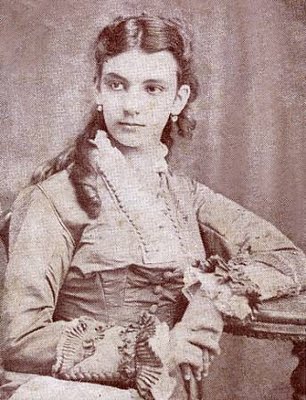
NUESTRO JOSE MARTI ENAMORADO, EN SU VIDA INTIMA Y PRIVADA. PHOTOS. * OUR JOSE MARTI IN LOVE, IN HIS INTIMATE AND PRIVATE LIFE. PHOTOS.


¿De dónde sacó tiempo este hombre para hacer lo que hizo?

Aunó las voluntades independentistas, fundó un partido político, organizó la guerra contra España. Después de los 17 años de edad, cuando salió deportado de Cuba tras cumplir prisión y trabajos forzados pese a su minoría de edad, vivió de manera casi permanente en el exilio. Cursó dos carreras universitarias en España; trabajó como abogado y tenedor de libros, fue maestro en Guatemala, Venezuela y Estados Unidos. Cónsul en Nueva York de varias repúblicas sudamericanas y su representante en conferencias internacionales. Orador. Periodista siempre. Creó y dirigió un periódico, Patria, y publicó varias revistas, entre ellas La edad de oro, para los niños de América, que escribía de cabo a rabo. Redactaba directamente en inglés para periódicos norteamericanos. Hizo teatro, escribió una novela. Como poeta, es de los más grandes del idioma, iniciador del modernismo, aunque a la postre no quepa en ninguna escuela… Sus obras completas –crónicas, artículos, ensayos, literatura, cartas, discursos…- suman casi treinta volúmenes de más de 300 páginas cada uno.


¿De dónde sacó tiempo este hombre que vivió solo 42 años para hacer lo que hizo? ¿Dejaron sus tareas políticas y profesionales tiempo para la vida privada? ¿Amó?

“Martí era un hombre necesitado de calor. Solo en las lides del amor o de la acción encontraba su propia temperatura”, dice Jorge Mañach en Martí el Apóstol, su insuperable biografía del Héroe Nacional de Cuba. Un hombre que a veces se enamoraba del amor más que de la mujer.

Tuvo un matrimonio contrariado del que le nació un hijo al que dedicó un poemario espléndido, Ismaelillo. Pero antes y después y a veces paralelamente dejó entrar a otras mujeres en sus fervores de desterrado.

Rosario de la Peña, La Musa, la George Sand de México, fue de las primeras. Y la actriz, también mexicana, Concha Padilla, con la que tuvo un idilio de “bruscas alternativas de beatitud y borrasca”. Ella fue la protagonista principal del drama Amor con amor se paga que el público mexicano pagó a Martí con largos aplausos.

Era muy celosa la Concha y tenía motivos para ello. Se mostraba cada vez más avara con el galán mientras él se prodigaba en atenciones con las demás mujeres. Galantuomo le llamaba un amigo, y él confesaba que quería dividirse “en cachitos” entre todas.

Doña Leonor, la madre, no veía con agrado los amoríos de Martí con Concha Padilla, “que podrá ser todo lo decente que se quiera, pero es una cómica”, y muchos de sus amigos tampoco. Manuel Mercado, su hermano mexicano, le metió por los ojos a la cubana Carmen Zayas Bazán, fina y elegante, que atraía, a su paso por la Alameda, las miradas de todos los jóvenes.

Luego de los amores turbulentos con la Concha, Carmen fue un remanso. Se comprometieron y Martí viajó a Guatemala. Allí conoció a María García Granados, hija de un ex Presidente de ese país. Fue una simpatía mutua, un acercamiento inmediato a aquella muchacha de 20 años de edad, rostro pálido y mirada suave. Él le descubrió el amor dormido y se le desbordaba la ternura cuando ella interpretaba al piano algún vals de Ardite.

Pídele ella que le escriba un poema en su álbum íntimo. Martí lo hace y la muchacha lo lee con pesar. Habla de amistad en sus versos, no de amor. Quiere él estrecharle la mano y ella se lleva el pañuelo a los ojos y huye al interior de la casa.

Nada había dicho Martí a sus amigos guatemaltecos de su compromiso con Carmen y el poema en el álbum de María, más que una mentira piadosa es para ella una cruel revelación.

Viaja él a México y regresa a Guatemala, casado. María muere. Años después Martí la inmortalizaría en La niña de Guatemala, uno de sus poemas más célebres y repetidos.


…Ella dio al desmemoriado / una almohadilla de olor. / El volvió, volvió casado. / Ella se murió de amor…

Con Carmen Zayas Bazán las cosas van a veces bien y casi siempre mal. Logra el deportado regresar a La Habana, donde nace su hijo, pero vuelven a desterrarlo y a partir de ahí la pareja se reunirá de cuando en cuando. Si se encuentran, media una paz diplomática entre ellos en un hogar difícil por la estrechez económica y los continuos reclamos que hacen a Martí sus ideales patrios. Un día, acogida a la protección del cónsul español en Nueva York, Carmen abandona a Martí para siempre. Es una mujer y acaso intuye que otro amor “sereno ya y doméstico le ha sustituido el amor esquivo”.

Porque a esa hora otra Carmen, Carmen Miyares, había aparecido ya en la vida del Apóstol. Y la llena. Está casada con el cubano Manuel Mantilla, enfermo de melancolía y parálisis. Es medio venezolana y medio santiaguera, robusta, parlanchina, simpática.

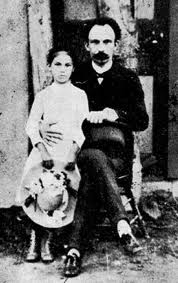
Mucho se ha hablado de esos amores. Algunos los niegan. A María, la hija de Carmen y en la que se repite el nombre de la niña de Guatemala, Martí la quiso con amor paternal. El parecido entre ambos es asombroso si se comparan sus retratos. ¿Era su padre? Poco importa precisarlo. A María Mantilla escribió Martí cartas desbordadas de cariño y consejos para la vida cuando él ya no estuviera.

La última de esas cartas, escrita semanas antes, la recibió María en Nueva York, el 19 de mayo de 1895, el mismo día que Martí, en Cuba, caía en combate frente a las tropas españolas. En ella le decía que llevaba su retrato sobre el corazón, como un escudo contra las balas.


OUR JOSE MARTI IN LOVE, IN HIS INTIMATE AND PRIVATE LIFE. PHOTOS.

Where did this man find the time to do what he did?

He united the independence movement, founded a political party, and organized the war against Spain. After the age of 17, when he was deported from Cuba after serving prison time and forced labor despite being a minor, he lived almost permanently in exile. He completed two university degrees in Spain; worked as a lawyer and bookkeeper; and was a teacher in Guatemala, Venezuela, and the United States. He was Consul in New York for several South American republics and their representative at international conferences. A speaker, he was always a journalist. He founded and edited a newspaper, Patria, and published several magazines, including La edad de oro, for the children of America, which he wrote from cover to cover. He wrote directly in English for North American newspapers. He performed plays and wrote a novel. As a poet, he is one of the greatest in the language, a pioneer of modernism, although ultimately he doesn’t fit into any school… His complete works—chronicles, articles, essays, literature, letters, speeches…—amount to almost thirty volumes of more than 300 pages each.

Where did this man, who lived only 42 years, find the time to do what he did? Did his political and professional duties leave time for his private life? Did he love?

“Martí was a man in need of warmth. Only in the struggles of love or action did he find his own temperature,” says Jorge Mañach in Martí the Apostle, his unsurpassed biography of Cuba’s National Hero. A man who sometimes fell in love with love more than with women.

He had a troubled marriage from which he had a son, to whom he dedicated a splendid collection of poems, Ismaelillo. But before and after, and sometimes in parallel, he allowed other women into his exile’s fervor.

Rosario de la Peña, The Muse, Mexico’s George Sand, was one of the first. And the actress, also Mexican, Concha Padilla, with whom he had a romance of “sudden alternations of bliss and storm.” She was the main protagonist of the play Amor con amor se paga (Love with Love is Paid), which the Mexican public paid tribute to Martí with prolonged applause.

Concha was very jealous, and she had good reason to be. She became increasingly stingy with her gallant while he lavished attention on other women. Galantuomo called him a friend, and he confessed that he wanted to divide him “into little pieces” among them all.

Doña Leonor, his mother, did not take kindly to Martí’s affairs with Concha Padilla, “who may be as decent as she wants, but she’s a comedian,” and neither did many of his friends. Manuel Mercado, his Mexican brother, had his eye on the fine and elegant Cuban Carmen Zayas Bazán, who, as she walked down the Alameda, attracted the attention of all the young men.

After his turbulent love affair with La Concha, Carmen was a haven. They became engaged, and Martí traveled to Guatemala. There he met María García Granados, daughter of a former president of that country. It was a mutual affection, an immediate rapport with that 20-year-old girl with a pale face and soft gaze. He revealed her dormant love, and tenderness overflowed when she played a waltz by Ardite on the piano.

She asked him to write a poem for her in her private album. Martí did so, and the girl read it with regret. He speaks of friendship in his verses, not of love. He wanted to shake her hand, and she put her handkerchief over her eyes and fled into the house.

Martí had said nothing to his Guatemalan friends about his engagement to Carmen, and the poem in María’s album, other than a white lie, is a cruel revelation to her.

He traveled to Mexico and returned to Guatemala, married. María died. Years later, Martí immortalized her in “The Girl from Guatemala,” one of his most famous and repeated poems.

…She gave the forgetful man / a scented pillow. / He returned, returned married. / She died of love…

With Carmen Zayas Bazán, things sometimes go well and almost always badly. The deportee manages to return to Havana, where his son is born, but he is exiled again, and from then on, the couple reunited from time to time. If they meet, a diplomatic peace is brokered between them in a difficult home due to financial hardship and the constant demands made on Martí by his patriotic ideals. One day, taken under the protection of the Spanish consul in New York, Carmen abandons Martí forever. She is a woman, and perhaps she senses that another love, “serene and domestic, has replaced the elusive love.”

Because by that time, another Carmen, Carmen Miyares, had already appeared in the Apostle’s life. And she filled it. She was married to the Cuban Manuel Mantilla, afflicted with melancholy and paralysis. She is half Venezuelan and half from Santiago de Compostela, robust, talkative, and charming.

Much has been said about these loves. Some deny them. Martí loved María, Carmen’s daughter, in whom the name of the girl from Guatemala is repeated, with paternal love. The resemblance between the two is striking when comparing their portraits. Was he her father? It hardly matters to specify. Martí wrote letters to María Mantilla, overflowing with affection and advice for life after his death.

The last of these letters, written weeks earlier, was received by María in New York, on May 19, 1895, the same day that Martí, in Cuba, fell in combat against Spanish troops. In it, he told her that he carried her portrait on his heart, like a shield against bullets.

Agencies/ Ciro Bianchi / Internet Photos/ www,TheCubanHistory.com/Arnoldo Varona.
THE CUBAN HISTORY, HOLLYWOOD.

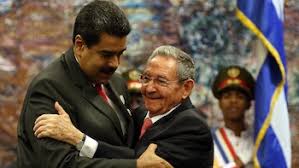
CUBA Y VENEZUELA HOY: ACUSA LA “DEA” A VENEZUELA DE ENVIAR DROGAS A LOS ESTADOS UNIDOS. PHOTOS. * CUBA AND VENEZUELA TODAY: THE “DEA” ACCUSES VENEZUELA OF SENDING DRUGS TO THE UNITED STATES. PHOTOS.

El director de la DEA acusa a Venezuela de colaborar con el ELN para enviar drogas a EE UU. “La dictadura venezolana es narcoterrorista”, dijo Terry Cole en una entrevista con la cadena Fox News. / EFE.

CUBA Y VENEZUELA HOY: ACUSA LA “DEA” A VENEZUELA DE ENVIAR DROGAS A LOS ESTADOS UNIDOS. PHOTOS.

Venezuela está dominada por Cuba y por el narcotráfico.

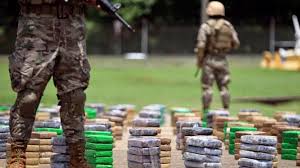
Washington afirma que han “incautado más cocaína” en lo que va de 2025 que en años anteriores. Envían cantidades récord de cocaína desde Venezuela a los carteles mexicanos, dijo Cole en una entrevista con la cadena Fox News”.

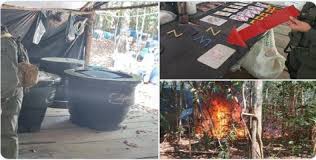
WASHINGTON- El director de la Administración de Control de Drogas de Estados Unidos (DEA), Terry Cole, acusó este jueves a Venezuela de colaborar con guerrillas colombianas como el Ejército de Liberación Nacional (ELN) para enviar “cantidades récord de cocaína” a los carteles mexicanos que trafican hacia EE UU.

“Venezuela se ha convertido en un estado narcoterrorista que sigue colaborando con las FARC y el ELN de Colombia para enviar cantidades récord de cocaína desde Venezuela a los carteles mexicanos, que siguen entrando a Estados Unidos”, dijo Cole en una entrevista con la cadena Fox News.

En lo que va de 2025 han “incautado más cocaína que en años anteriores”.

Cole agregó que a pesar de que la Administración del presidente Donald Trump ha reforzado sus esfuerzos para desmantelar las redes de narcotráfico, sobre todo en las fronteras, en lo que va de 2025 han “incautado más cocaína que en años anteriores” y advirtió que “sigue en aumento” la cantidad de metanfetamina y fentanilo que entra al país.

“La corrupción venezolana, la dictadura venezolana, es narcoterrorista. Siguen enviando este veneno a Estados Unidos, matando a cientos de miles de estadounidenses, sin mencionar a los miembros de la (banda) Tren de Aragua que envían a nuestro país para destruir sus hermosas calles”, advirtió, repitiendo las afirmaciones de Trump.

Washington está preparado para “usar todo su poder” para frenar el “flujo de drogas hacia su país”.

Las acusaciones de Cole contra el Gobierno del venezolano Nicolás Maduro se producen después de que la portavoz de la Casa Blanca, Karoline Leavitt, asegurara este martes que Washington está preparado para “usar todo su poder” para frenar el “flujo de drogas hacia su país”, en medio de la polémica por el despliegue de tres buques con 4.000 soldados en las aguas del Caribe cerca de Venezuela.

Caracas, por su parte, ha asegurado que las “amenazas” de EE UU revelan su “falta de credibilidad” y ponen en riesgo la “paz y estabilidad” de toda la región.

Los Gobiernos de Cuba, Bolivia, Nicaragua, y Colombia han condenado la presencia de los navíos de guerra estadounidenses en el Caribe.

El presidente colombiano, Gustavo Petro, llegó a asegurar que una invasión de EE UU a Venezuela convertiría a ese país en otra Siria y arrastraría a Colombia a otro conflicto.


CUBA AND VENEZUELA TODAY: THE DEA ACCUSES VENEZUELA OF SENDING DRUGS TO THE UNITED STATES. PHOTOS.

The DEA director accuses Venezuela of collaborating with the ELN to send drugs to the US. “The Venezuelan dictatorship is narco-terrorist,” said Terry Cole in an interview with Fox News. / EFE.

Washington claims it has “seized more cocaine” so far in 2025 than in previous years. Record amounts of cocaine are being sent from Venezuela to Mexican cartels, Cole said in an interview with Fox News”.

WASHINGTON—The director of the U.S. Drug Enforcement Administration (DEA), Terry Cole, accused Venezuela on Thursday of collaborating with Colombian guerrillas like the National Liberation Army (ELN) to send “record quantities of cocaine” to Mexican cartels trafficking to the United States.

“Venezuela has become a narco-terrorist state that continues to collaborate with the FARC and the ELN of Colombia to send record quantities of cocaine from Venezuela to Mexican cartels, which continue to enter the United States,” Cole said in an interview with Fox News.

So far in 2025, they have “seized more cocaine than in previous years.”

Cole added that despite the Trump administration’s strengthening efforts to dismantle drug trafficking networks, especially along the borders, so far in 2025 they have “seized more cocaine than in previous years” and warned that The amount of methamphetamine and fentanyl entering the country continues to increase.


“Venezuelan corruption, the Venezuelan dictatorship, is narco-terrorism. They continue to send this poison to the United States, killing hundreds of thousands of Americans, not to mention the members of the Tren de Aragua gang they send to our country to destroy its beautiful streets,” he warned, echoing Trump’s claims.

Washington is prepared to “use all its power” to stem the “flow of drugs into its country.”

Cole’s accusations against the government of Venezuelan President Nicolás Maduro come after White House spokeswoman Karoline Leavitt asserted Tuesday that Washington is prepared to “use all its power” to stem the “flow of drugs into its country,” amid the controversy over the deployment of three ships with 4,000 troops in Caribbean waters near Venezuela.

Caracas, for its part, has asserted that the US “threats” reveal its “lack of credibility” and jeopardize the “peace and stability” of the entire region.

The governments of Cuba, Bolivia, Nicaragua, and Colombia have condemned the presence of the US warships in the Caribbean.

Colombian President Gustavo Petro even asserted that a US invasion of Venezuela would turn that country into another Syria and drag Colombia into another conflict.

Agencies/ 14yMedio/ CorreosdelosViernes/ EFE/ Internet Photos/ www.thecubanhistory.com/ Arnoldo Varona.
THE CUBAN HISTORY, HOLLYWOOD.