 EL BEMBÉ, UNA CELEBRACION AFROCUBANA QUE INCLUYE MUSICA, CANTO Y BAILE. COMO SE CELEBRA. PHOTOS. * THE BEMBÉ, AN AFRO-CUBAN CELEBRATION INCLUDING MUSIC, SINGING, AND DANCING. HOW IT IS CELEBRATED. PHOTOS.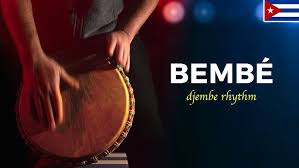
EL BEMBÉ, UNA CELEBRACION AFROCUBANA QUE INCLUYE MUSICA, CANTO Y BAILE. COMO SE CELEBRA. PHOTOS.
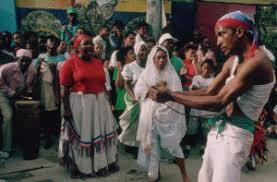
Un bembé es una celebración religiosa afrocubana (a menudo vinculada a la Santería/culto a los Orishas) que se celebra para honrar a los orishas (deidades). Incluye música, canto y baile, que se cree que facilitan la comunicación con los orishas.
El bembé es un aspecto vibrante y perdurable del legado africano en Cuba, que muestra cómo las tradiciones africanas se adaptaron y se fusionaron con el nuevo entorno tras la trata transatlántica de esclavos.
Una fiesta para la diversión de los orishas, los dioses pertenecientes al Panteón Yoruba. En esta fiesta se canta, se baila y se tocan diversos tipos de instrumentos de percusión.
Durante un bembé los Orishas son alabados, saludados e implorados para que se unan a la fiesta montando (posesión a través del trance) a uno de sus sacerdotes presentes.
Esto se hace a través de una confluencia de la canción, el ritmo y el movimiento, llamando al orisha de forma que se reconozca a si mismo en la lírica, ritmos y danzas que han sido interpretados para ellos quizás por miles de años.
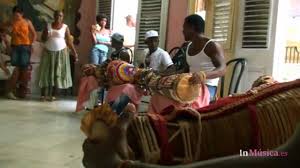
Los ritmos juegan una parte importante en esta ecuación y los tamboreros practican asiduamente por años para poder tocar los intricados ritmos correctamente. Esto es importante porque los tambores realmente le hablan a los Orishas debido a que el lenguaje yoruba es tonal, y los tambores han sido afinados de forma que toquen las diferentes tonalidades de la lengua Yoruba. Por esta razón algunos ritmos nunca se tocan a menos que sea dentro de un contexto religioso u ofendería al orisha. Estos ritmos son en realidad rezos a los Orishas, teniendo cada orisha sus propios ritmos asociados con ellos.
COVERSION EN UNA ORACION
El baile o danza también se convierte en oración dentro del contexto religioso de un bembé. Los movimientos de las danzas son los mismos movimientos que han sido asociados con los Orishas por miles de años.
Como sucede con los ritmos que se tocan con los tambores, cada orisha tiene su propia danza, la danza de Yemayá emula el movimiento de las olas, la de Oggún el corte con el machete, la de Oshún representa la forma en que ella se acicala frente al espejo de mano, etc. Por tanto, estos movimientos se convierten más en rezos bailables que lo que los europeos ocs y llamando a los Orishas para que estén con nosotros.
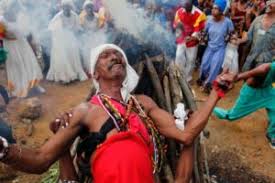
“EL TRANCE”
La Posesión a través del ‘Trance’ es una parte importante en esta religión. Durante un bembé o fiesta de tambores en honor de los orishas, un orisha puede ser convencido a unirse al festejo y entrar al cuerpo de uno de los sacerdotes consagrados a ese orisha. Se dice que la persona está siendo “montada” por el orisha, o que el orisha “ha bajado” del cielo para estar con nosotros. Las canciones, ritmos y bailes son realmente una súplica deliberada a los orishas para que bajen y nos bendigan con sus consejos, limpiezas y su mera presencia. Cuando un Orisha decide usar uno de nuestros cuerpos por un rato es, por supuesto, motivo de gran alegría.
Los orishas solo raramente montan a un aleyo o persona que no ha sido iniciada al sacerdocio, y en esas ocasiones usualmente señalan a esta persona como una persona que necesita ser iniciada en la religión como sacerdote o sacerdotisa.
Esto no se le impone a las personas, ni tampoco es algo demoníaco como en el caso de películas como “El Exorcista”. Si alguien no está listo, el orisha es delicadamente disuadido a alejarse hasta que la persona es iniciada y preparada para semejante ocasión.
EL BAILE DEL BEMBE
La celebración incluye un estilo de baile específico. El famoso músico cubano Benny Moré lo menciona en una canción emblemática: “En Cuba se baila el bembé”.
Influencia cultural: La influencia del bembé en el lenguaje cubano también es significativa, con expresiones como “Se formó el bembé” (que significa “se armó una gran fiesta o alboroto”) que reflejan su profundo arraigo en la cultura local.
PLEASE PATRONIZE OUR ADVERTISERS- PREFIERA NUESTROS SPONSORS.
THE BEMBÉ, AN AFRO-CUBAN CELEBRATION INCLUDING MUSIC, SINGING, AND DANCING. HOW IT IS CELEBRATED. PHOTOS.
A bembé is an Afro-Cuban religious celebration (often linked to Santería/Orisha worship) held to honor the orishas (deities). It includes music, singing, and dancing, which are believed to facilitate communication with the orishas.
The bembé is a vibrant and enduring aspect of the African legacy in Cuba, showcasing how African traditions adapted and merged with the new environment after the transatlantic slave trade.
It’s a celebration for the enjoyment of the orishas, the gods belonging to the Yoruba pantheon. Singing, dancing, and various types of percussion instruments are played at this celebration.
During a bembé, the Orishas are praised, greeted, and implored to join the celebration by possessing (through trance) one of their priests present.
This is done through a confluence of song, rhythm, and movement, calling to the orisha in a way that allows them to recognize themselves in the lyrics, rhythms, and dances that have been performed for them for perhaps thousands of years.
The rhythms play a crucial part in this equation, and the drummers practice assiduously for years to be able to play the intricate rhythms correctly. This is important because the drums actually speak to the Orishas, as the Yoruba language is tonal, and the drums have been tuned to play the different tones of the Yoruba language. For this reason, some rhythms are never played unless it is within a religious context, as it would offend the orisha. These rhythms are essentially prayers to the Orishas, with each orisha having its own associated rhythms.
DANCE AS PRAYER
The dance also becomes a form of prayer within the religious context of a bembé. The dance movements are the same movements that have been associated with the Orishas for thousands of years.
As with the rhythms played on the drums, each Orisha has its own dance. Yemayá’s dance emulates the movement of the waves, Oggún’s the cutting motion of the machete, Oshún’s represents the way she primps in front of her hand mirror, and so on. Therefore, these movements become more like prayers in motion than what Europeans might call dances, calling upon the Orishas to be with us.
“THE TRANCE”
Possession through “trance” is an important part of this religion. During a bembé, or drum ceremony in honor of the Orishas, an Orisha may be persuaded to join the festivities and enter the body of one of the priests consecrated to that Orisha. The person is said to be “mounted” by the Orisha, or that the Orisha “has come down” from heaven to be with us. The songs, rhythms, and dances are truly a deliberate plea to the Orishas to descend and bless us with their guidance, cleansing, and their very presence. When an Orisha decides to use one of our bodies for a while, it is, of course, a cause for great joy.
The Orishas only rarely possess an aleyo, or person who has not been initiated into the priesthood, and on those occasions, they usually indicate that this person needs to be initiated into the religion as a priest or priestess.
This is not forced upon people, nor is it something demonic, as in the case of films like “The Exorcist.” If someone is not ready, the Orisha is gently persuaded to leave until the person is initiated and prepared for such an occasion.
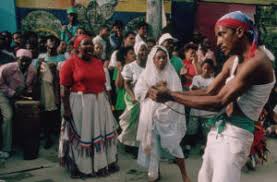
Agencies/ EcuRed/ Bembé/ Internet Photos/ YouTube/ Arnold Varona/ TheCubanHistory.com
THE CUBAN HISTORY, HOLLYWOOD.