

 LOS ZAFIROS , EL CUARTETO QUE REVOLUCIONÓ EL PANORAMA DE LA MUSICA CUBANA. PHOTOS. * LOS ZAFIROS, THE QUARTET THAT REVOLUTIONIZED THE CUBAN MUSIC SCENERY. PHOTOS.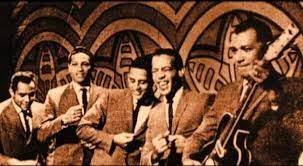
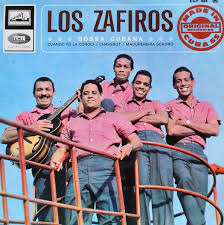
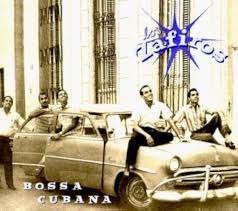
Los Zafiros fue un grupo de armonía vocal cubano creado en 1962, inspirado por grupos estadounidenses como The Platters.
Este grupo formó parte de lo que se conoció en Cuba como el movimiento de filin o feeling y su música se constituyó a partir de una fusión de ritmos cubanos como el bolero, con doo-wop, baladas, R&B, calypso, Bossa Nova y el rock.
Los Zafiros, el cuarteto de armonía vocal que revolucionó el panorama musical cubano nació en Diciembre de 1962 en el barrio habanero de Cayo Hueso, y se inspiró en los grupos norteamericanos The Platters, The Mills Brothers and The Modernaries.
Leoncio Morua “Kike”, Miguel Cancio “Miguelito”, Ignacio Elejalde y Eduardo Elio Hernández “El Chino” formaron la afamada agrupacion que en agosto de 1965 les llega su más importante éxito, con el Music Hall de Cuba.
Bajo la dirección musical y el acompañamiento a la guitarra de Manuel Galván (1931-2011) se presentan entonces en el Olimpia de París y actúan en Checoslovaquia, Polonia Alemania y la Unión Soviética en una gira de cuatro meses.
HASTA ENTONCES
En 1976 el grupo dejó de existir, hasta que en 1987, Mariano Suárez del Villar revive a Los Zafiros tras convocar a El Chino) como figura estrella, con cuatro nuevas voces, una guitarra plantado de esa manera otra semilla.
Oscar Aguirre fue el Primer guitarrista de Los Zafiros.
Ignacio, murió en 1981 a la edad de 37 años y Kike en 1983, mientras El Chino, afectado por falta de visión, incoherencia al hablar y alcoholismo vivió solo en Cayo Hueso hasta el día de su muerte el 8 de agosto de 1995 a los 56 años. Miguel vive en Estados Unidos desde hace algunos años ya.
Galbán continuó activo en la escena musical cubana a través de su trabajo con Buena Vista Social Club y como artista de grabaciones para el sello disquero World Circuit, que incluyó una grabación especial con Miguel Cancio, el único vivo.
En el disco intervinieron Orlando López (Cachaito), Roberto García y Bernardo García (Chori), con dos de sus antiguas canciones, que desempeñaron un rol estelar en el cortometraje Los Zafiros “Music from the Edge of Time”
La historia sobre Los Zafiros olvida muchas veces mencionar a Néstor Milí Bustillo y su duro batallar diario con Kike, Miguelito, Ignacio y El Chino, para lograr organizar, acoplar y hacer funcionar, hasta fundar esta leyenda de la música cubana.
LOCURA AZUL
El filme Locura Azul, de 1997, recrea a medias el surgimiento, desarrollo y desintegración de la formación musical y en el documental Herido de Sombras, de Jorge Dalton, El Chino cuenta como Los Beatles, retrasaron una gira para oírlos cantar.
Contó que durante su presentación en París, los célebres integrantes de la banda británica, quedaron sorprendidos con el impresionante “falsete” de Miguelito y llegaron a pensar que se colocaba un aditamento en la boca para producir ese sonido.
El relato del audiovisual de Dalton no es cierto y al decir de entendidos en el tema se tergiversó y propagó historias ficticias relacionadas con el cuarteto, debido a que El Chino fue entrevistado en un estado de deterioro mental, aclaran
A pesar de los años y de las trágicas circunstancias de su desintegración, la trayectoria de los “mulatos cantores”, artífices de un capitulo estelar en la historia de los cuartetos en Cuba, sigue en la memoria musical de los cubanos.
LOS ZAFIROS, THE QUARTET THAT REVOLUTIONIZED THE CUBAN MUSIC SCENERY. PHOTOS.
Los Zafiros was a Cuban vocal harmony group founded in 1962, inspired by American groups like The Platters.
This group was part of what became known in Cuba as the filin or feeling movement, and their music was based on a fusion of Cuban rhythms like bolero, with doo-wop, ballads, R&B, calypso, bossa nova, and rock.
Los Zafiros, the vocal harmony quartet that revolutionized the Cuban music scene, was founded in December 1962 in the Havana neighborhood of Key West and was inspired by American groups The Platters, The Mills Brothers, and The Modernaries.
Leoncio Morua “Kike”, Miguel Cancio “Miguelito”, Ignacio Elejalde, and Eduardo Elio Hernández “El Chino” formed the famous group that achieved its greatest success in August 1965, with the performance at the Cuban Music Hall.
Under the musical direction and guitar accompaniment of Manuel Galván (1931-2011), they then performed at the Olympia in Paris and toured Czechoslovakia, Poland, Germany, and the Soviet Union on a four-month tour.
UNTIL THEN
In 1976, the group ceased to exist, until 1987, when Mariano Suárez del Villar revived Los Zafiros after recruiting El Chino as the star, with four new vocalists, a guitarist thus planting another seed.
Oscar Aguirre was Los Zafiros’s first guitarist. Ignacio died in 1981 at the age of 37, and Kike in 1983. El Chino, affected by poor vision, incoherent speech, and alcoholism, lived alone in Key West until his death on August 8, 1995, at the age of 56. Miguel has lived in the United States for several years now.
Galbán remained active in the Cuban music scene through his work with the Buena Vista Social Club and as a recording artist for the World Circuit record label, which included a special recording with Miguel Cancio, the only surviving member.
Orlando López (Cachaito), Roberto García, and Bernardo García (Chori) participated in the album, performing two of their old songs. These songs played a starring role in the short film Los Zafiros, “Music from the Edge of Time.”
The story of Los Zafiros often forgets to mention Néstor Milí Bustillo and his daily struggle with Kike, Miguelito, Ignacio, and El Chino to organize, unite, and make this legend of Cuban music work.
BLUE MADNESS
The 1997 film Locura Azul partially recreates the emergence, development, and disintegration of the musical group. In Jorge Dalton’s documentary Herido de Sombras, El Chino recounts how The Beatles postponed a tour to hear them sing.
He recounted that during their performance in Paris, the famous members of the British band were surprised by Miguelito’s impressive “falsetto” and even thought he was wearing an instrument in his mouth to produce that sound.
The story in Dalton’s video is untrue, and according to experts on the subject, it was distorted and fictional stories related to the quartet were spread because El Chino was interviewed in a state of mental deterioration, they clarify.
Despite the years and the tragic circumstances of their dissolution, the trajectory of the “singing mulattoes,” architects of a stellar chapter in the history of quartets in Cuba, remains in the musical memory of Cubans.
Agencies/ Wiki/ NostalgiaCubana/ Arrajatabla/ Alberto Denis/ Extractos/ Excerpts/ Internet Photos/ Arnoldo Varona.
www.TheCubanHistory.com
THECUBAN HISTORY, HOLLWOOD.
