


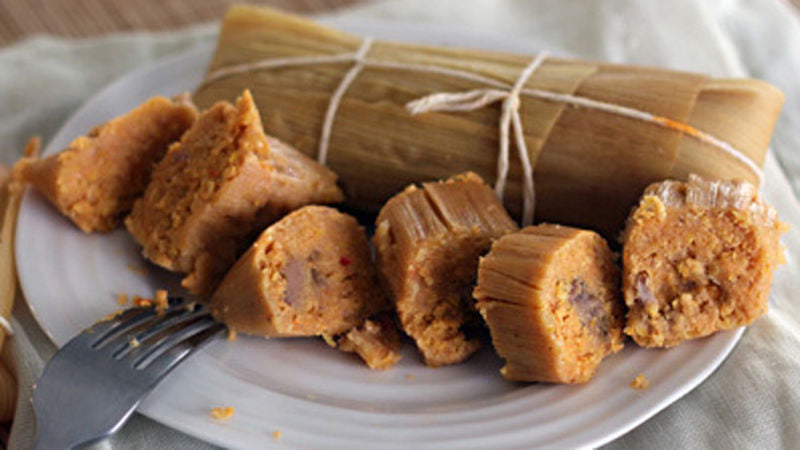
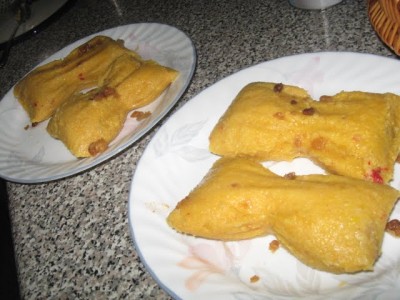
Los tamales cubanos son una delicia de gran sabor. Nos encanta comerlos en cualquier momento. En un tamal cubano, la carne se mezcla con la masa y no se usa como relleno como en los tamales mexicanos.
En Cuba usan un tipo de maíz de campo (o dentado), no es tan dulce y es más harinoso que el maíz dulce que comemos en los EE. UU.
Si tienes un granjero amigable cerca, es posible que puedas comprar un poco.
Pero ten en cuenta que necesitas maíz de campo fresco, ¡NO el material seco con el que alimentan al ganado! Tendrías que encontrar un granjero con un campo que te permita recogerlo recién sacado del tallo. En Cuba cortamos los granos de maíz con un trozo de madera ranurado con una cuchilla.
¿La forma fácil? Usa maíz dulce. La harina de masa tiende a amortiguar la dulzura.
Incluso hemos usado maíz congelado Niblets cuando no había maíz fresco disponible. La diferencia de sabor es muy leve.
¡La mayoría de las personas (incluso los cubanos) no notarían la diferencia!
Algunos principiantes cometen el error de usar trozos de carne demasiado grandes. Los buenos tamales están plagados de pequeñas motas de carne.
Raul, Jorge y Glenn. Tres chicos de Miami.
Tiempo de preparación: 30 minutos
Tiempo de cocción: 1 hora 30 minutos
Tiempo total: 2 horas
Rinde: 12-16 tamales
Los buenos tamales cubanos no están rellenos como un tamal mexicano; en cambio, están plagados de pequeñas motas de carne.
INGREDIENTES:
1 1/2 libra de carne de cerdo en trozos
2 dientes de ajo, enteros, pelados
1 cucharada de vinagre
agua para cubrir la carne
3 tazas de maíz amarillo fresco molido (se puede sustituir por maíz congelado)
3/4 taza de manteca de cerdo, mantequilla o manteca vegetal
2 1/2 tazas de masa harina
2 1/2 tazas de caldo de pollo
1/4 cucharadita de bijol (polvo de semilla de achiote)
1/4 taza de aceite de oliva para freír
1 cebolla grande, picada fina
1 pimiento verde grande, picado fino
5 dientes de ajo, picados
3 onzas de pasta de tomate (1/2 lata)
1/2 taza de agua
1/2 taza de vino (tinto o blanco)
1 limón grande (solo jugo)
1 cucharadita de sal
1/2 cucharadita de pimienta negra (recién molida)
24-32 hojas de maíz secas (remoje las hojas de maíz secas en agua caliente antes de usarlas)
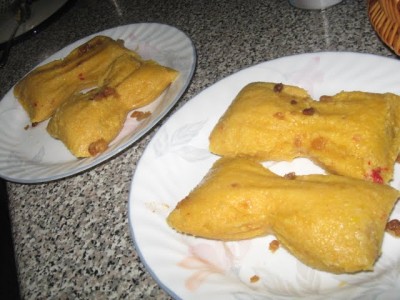
Para la carne, necesita carne de cerdo con abundante grasa, ya sea bien veteada o con una capa de grasa o ambas. Hemos tenido buena suerte con las costillas de cerdo deshuesadas al estilo campestre. O haz que el carnicero corte algo a pedido.
Sea cual sea la carne que uses, córtala en trozos más pequeños, de no más de dos pulgadas de grosor o tres pulgadas de largo. Agrega un poco de sal con un salero y colócala en una cacerola grande. Agrega agua hasta que apenas cubra la carne. Agrega dos dientes de ajo pelados y una cucharada de vinagre. Lleva a hervor; reduce el fuego y cocina a fuego lento, sin tapar, hasta que se haya evaporado toda el agua. Fríe los trozos de cerdo en la grasa derretida hasta que se doren, ¡pero NO crujientes! La carne debe estar tierna y fibrosa. Retira la carne. Recorta el exceso de grasa (no debe haber ninguna) y con un cuchillo o un martillo para carne, rompe la carne en trozos pequeños.
Rebana los granos de maíz de la mazorca (o usa maíz congelado). Muela rápidamente el maíz en un procesador de alimentos con la grasa que elijas (manteca de cerdo, mantequilla o manteca vegetal) hasta obtener una mezcla muy gruesa con granos de maíz visibles. ¡No proceses demasiado! Saque del procesador y mezcle 2 1/2 tazas de caldo de pollo tibio y dos tazas de masa harina con el maíz molido. Agregue una pizca de polvo Bijol para darle un bonito color amarillo.
Fría la cebolla y el pimiento verde en aceite de oliva a fuego medio, revolviendo de vez en cuando, hasta que las cebollas estén blandas. Agregue el ajo y continúe friendo durante dos o tres minutos. ¡No escurra el exceso de aceite! Mezcle la pasta de tomate en 1/2 taza de agua tibia y agréguela junto con el vino a las verduras. Cocine a fuego lento durante unos 10 minutos.
Coloque el cerdo, las verduras y la mezcla de maíz molido/masa en una olla grande. Agregue jugo de limón a la mezcla y mezcle. Agregue sal y pimienta y revuelva. Cocine la mezcla a fuego lento, revolviendo con frecuencia (¡no deje que se queme!) hasta que espese, aproximadamente 20 minutos.
Agregue más masa o más caldo según sea necesario para obtener una pasta firme, pero maleable. Pruebe y agregue sal si es necesario. Retire del fuego y deje enfriar.
Bon Appettite!
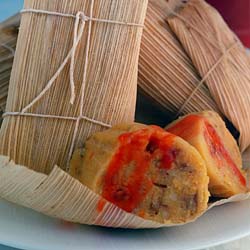
MAKE DELICIOUS CUBAN TAMALES/AYACAS THE EASIEST WAY. FOLLOW THE INSTRUCTIONS. PHOTOS.
Cuban tamales are a great taste treat. We love to eat them just about any time. In a Cuban tamal, the meat is mixed in with the dough and not used as a filling as in Mexican tamales.
In Cuba they use a type of field (or dent) corn, it’s not as sweet and it’s more mealy than the sweet corn we eat in the U. S.
If you have a friendly farmer nearby, you may be able to buy some.
But please note, you need fresh field corn, NOT the dried stuff they feed to the cattle! You’d have to find a farmer with a field who would let you pick it fresh off the stalk. In Cuba we cut off the corn kernels with a grooved piece of wood with a blade in it.
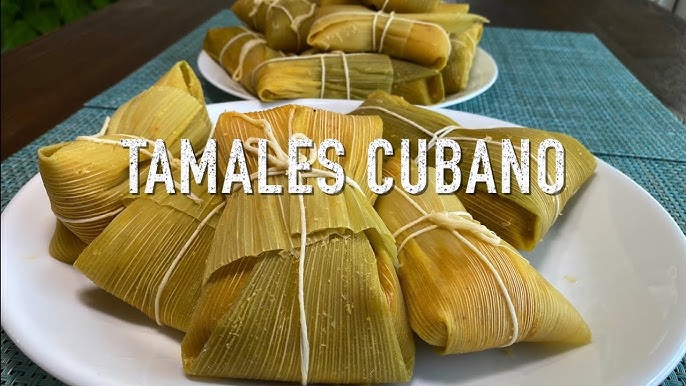
The easy way? Use sweet corn. The masa flour tends to dampen the sweetness.
We’ve even used frozen Niblets corn when fresh corn on the cob wasn’t available! The difference in taste is very slight.
Most people (even Cubans) wouldn’t know the difference!
Some beginners make the mistake of using pieces of meat that are too large. Good tamales are riddled with tiny flecks of meat.
(Raul, Jorge and Glenn. Three Guys from Miami.)
Prep time: 30 minutes
Cook time: 1 hour 30 minutes
Total time: 2 hours
Yield: 12-16 tamales
Good Cuban tamales are not stuffed like a Mexican tamal; instead, they are riddled with tiny flecks of meat.
INGREDIENTS:
1 1/2 pounds pork in chunks
2 cloves garlic, whole, peeled
1 tablespoon vinegar
water to cover meat
3 cups ground fresh yellow corn (may substitute frozen)
3/4 cup lard, butter, or shortening
2 1/2 cups masa harina
2 1/2 cups chicken broth
1/4 teaspoon bijol (annato seed powder)
1/4 cup olive oil for frying
1 large onion, chopped fine
1 large green pepper, chopped fine
5 cloves garlic, minced
3 ounces tomato paste (1/2 can)
1/2 cup water
1/2 cup wine (red or white)
1 large lemon (juice only)
1 teaspoon salt
1/2 teaspoon black pepper (fresh ground)
24-32 dried corn husks (Soak dried cornhusks in hot water before using)
For meat, you need pork with plenty of fat — either well marbled or with a fat layer or both. We’ve had good luck with de-boned country style pork ribs. Or have the butcher cut something to order.
Whichever meat you use, cut it up into smaller pieces — no more than two inches thick or three inches long. Add a little salt with a shaker and place in a large sauce pan. Add water to just barely cover the meat. Add two peeled garlic cloves and one tablespoon vinegar. Bring to a boil; reduce heat and simmer, uncovered until all of the water has boiled away. Fry the pork pieces in the rendered fat just until brown, but NOT crispy! The meat should be tender and stringy. Remove the meat. Trim off any excess fat (there shouldn’t be any) and with a knife or meat hammer; break up the meat into small pieces.
Slice the corn kernels off the cob (or use frozen corn). Quickly grind the corn in a food processor with your choice of fat (lard, or butter, or shortening) until you get a very coarse mixture with visible corn kernels. Don’t over process! Remove from the processor and blend in 2 1/2 cups warm chicken broth and two cups masa harina to the ground corn. Add a dash of Bijol powder to give it a nice yellow color.
Fry the onion and green pepper in olive oil at medium heat, stirring occasionally, until the onions are soft. Add garlic and continue to fry for two to three minutes. Do not drain off excess oil! Mix tomato paste in 1/2 cup warm water and add it and the wine to the vegetables. Simmer for about 10 minutes.
Place the pork, vegetables, and the ground corn/masa mixture in a large cooking pot. Add lemon juice to the mixture and blend. Add salt and pepper and stir. Cook the mixture on low heat, stirring frequently (don’t let it burn!) until it thickens — about 20 minutes.
Add more masa or more broth as necessary so that you have a stiff, but pliable paste. Taste and add salt if needed. Remove from heat and let cool.
Bon Appettite!
Agencies/ 3GuysfromMiami/ Extractos/ Excerpts/ Internet Photos/ Arnoldo Varona.
www.TheCubanHistory.com
THE CUBAN HISTORY, HOLLYWOOD.
