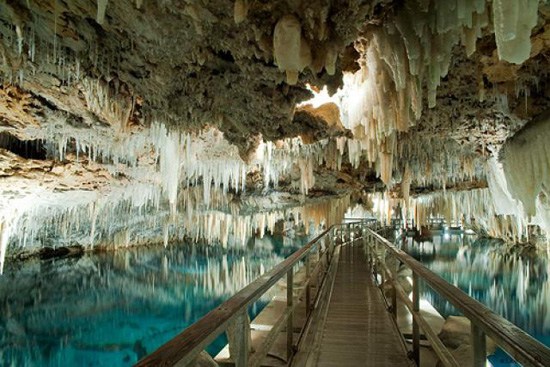
LAS CUEVAS DE BELLAMAR, UNO DE LOS REGALOS DE LA NATURALEZA A LA ISLA CUBANA. PHOTOS.
Hermosas hasta cortar el aliento, las Cuevas de Bellamar son un auténtico hervidero de conocimientos científicos e históricos que añadir al acervo cultural del país.
LAS CUEVAS DE BELLA MAR son un conjunto de cavernas de mas de 23 kilómetros de galerias situadas en la provincia Matanzas, Cuba.
Además de las asombrosas estalactitas, estalagmitas y helicitas que las pueblan, las Cuevas de Bellamar contienen en su interior un insólito fenómeno natural que se da sólo en ellas. Consiste en cristales macizos de calcito que cuelgan de las estalactitas y que han llamado la atención de geólogos de todo el planeta.
En las Cuevas de Bellamar podrás apreciar además otros elementos de gran belleza, como las geodas, un arroyo subterráneo que recorre la zona completa, y las preciosísimas cubiertas de capa cristalina que hace resplandecer las estancias con un brillo casi sobrenatural.
DATOS DE SU ANTIGUEDAD
Datan de 300.000 años de antigüedad y es uno de los tesoros naturales de Cuba. Fueron descubiertas en 1861 por un trabajador del hacendado Manuel Santos Parga de forma accidental. Este las acondicionó adecuadamente y aportó los servicios de un guía con intención de convertir las Cuevas de Bellamar en centro turístico.
Para acceder a las cuevas, ubicadas en un punto a 5 km al sureste de Matanzas lo mejor es tomar alguno de los autobuses 16, 17 o 20 que se dirijan hacia el este y solicitar al conductor un parada cercana a la calle 226. Una vez allí, deberás continuar caminando. Tras una pequeña subida de 30 metros te encontrarás ante las Cuevas de Bellamar, a las que accederás a través de un museo situado a la entrada.
En ellas se han encontrado restos de aves y animales vertebrados de la era Cuaternaria. Por si esto no fuera suficiente, sus extrañas formaciones geológicas despertarán tu interés si eres un apasionado de la cristalografía o la espeleología.
Por la belleza de sus galería y cavernas, los importantes hallazgos paleontológicos, además de una amplia gama de procesos cristalinos fueron declaradas Monumento Nacional.
Las galerías y pasadizos de las Cuevas de Bellamar se calcula que comenzaron a formarse hace unos 300 mil años. Según los estudiosos, la planicie en la cual están las cuevas se encontraba originalmente bajo el mar, formando parte de la bahía de Matanzas. A lo largo de la llamada Falla de Bellamar el agua subterránea, en combinación con el dióxido de carbón, fue disolviendo la roca calcárea y de esta forma fue creando cámaras subterráneas en el subsuelo; bajo el fondo marino.
Llamadas originalmente las Cuevas de Parga en homenaje a su descubridor (Manuel Santos Parga), el punto cambió su nombre por el de Las Cuevas de Bellamar, en plural, (aunque los especialistas indican que se trata de una sola cueva con varios salones) debido a su cercanía con la playa homónima en el oeste matancero.
Las estalactitas son cilíndricas, y según aumenta su tamaño se hacen cónicas mientras que las estalagmitas son cónicas o aplanadas, como derretidas. Ambas crecen hasta unirse y formar columnas. En algunos casos varias estalactitas relativamente cercas se van uniendo, dando lugar a las formaciones llamadas matos. Otras corren próximas a la pared formando cascadas. En las Cuevas de Bellamar se ven todas estas formaciones.
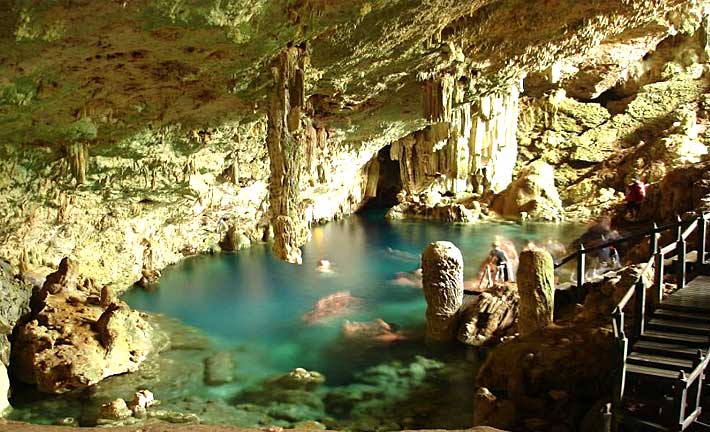
A las Cuevas de Bellamar se entra es por la cavidad llamada Salón Gótico, una cámara de forma cuadricular que mide unos 80 metros de largo por unos 25 metros de ancho. En la otra dirección se encuentran el pasadizo de Hatuey, Salón de las Damas, Lago de las Dalias y el Baño de la Americana. Sobre esta última existe la leyenda de que una veraneante estadounidense, muchos años atrás, se perdió en ese sitio, cuando decidió refrescar su cuerpo en las cristalinas y frías aguas.
En la centenaria cueva un grupo de espeleólogos descubrieron una estrecha cavidad que los condujo a otra prolongación subterránea de unos nueve kilómetros de longitud. Para sorpresa de todos, encontraron allí galerías de incomparable belleza. Se trata de formaciones cilíndricas pendientes de estalactitas, y suspendidas en el aire, en cuyos extremos cuelgan un conglomerado de cristales macizos de calcita.Por su dimensión y rareza los especialistas consideran el descubrimiento como joya exclusiva, incomparable con ningún otro hallazgo de su tipo. Son formaciones indescriptibles, por cuanto en ningún otro lugar del planeta se conoce semejante cristalería de carbonato de calcio.
Las Cuevas de Bellamar sigue siendo la reina, el Monumento Nacional preferido de todos los que la llegan a sus intrincados pasadizos.
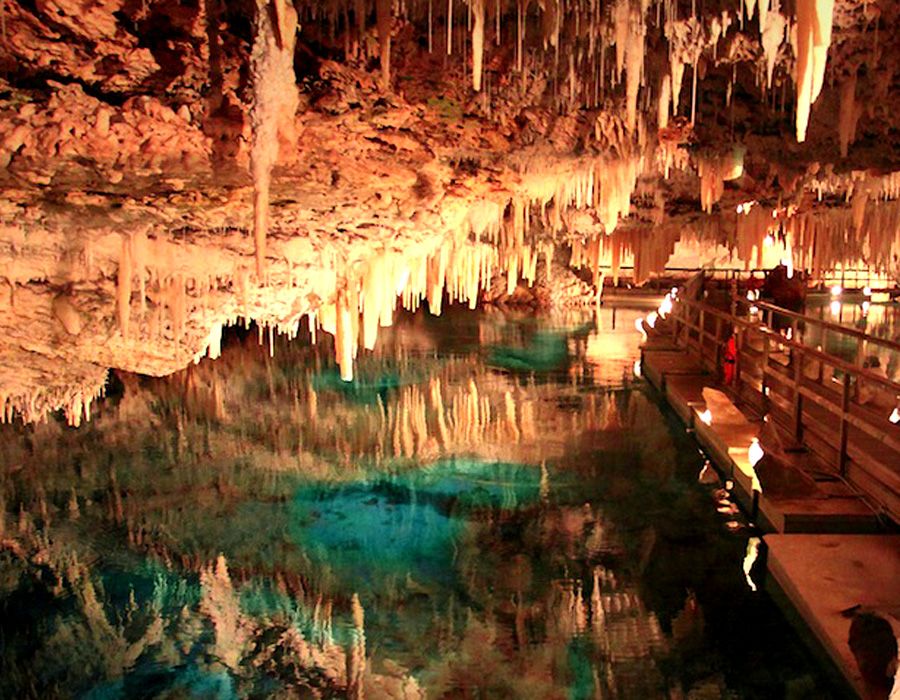

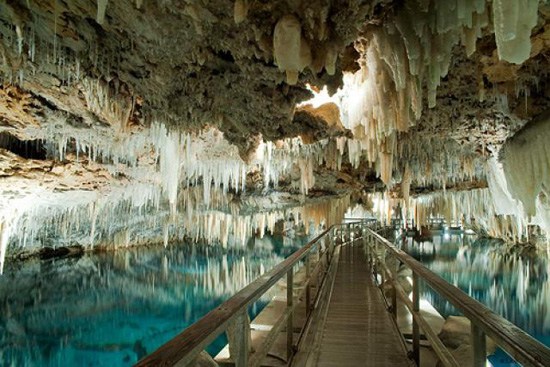
THE BELLAMAR CAVES ARE ONE OF NATURE’S GIFTS TO THE CUBAN ISLAND. PHOTOS.
Breathtakingly beautiful, the Bellamar Caves are a veritable hotbed of scientific and historical knowledge to add to the country’s cultural heritage.
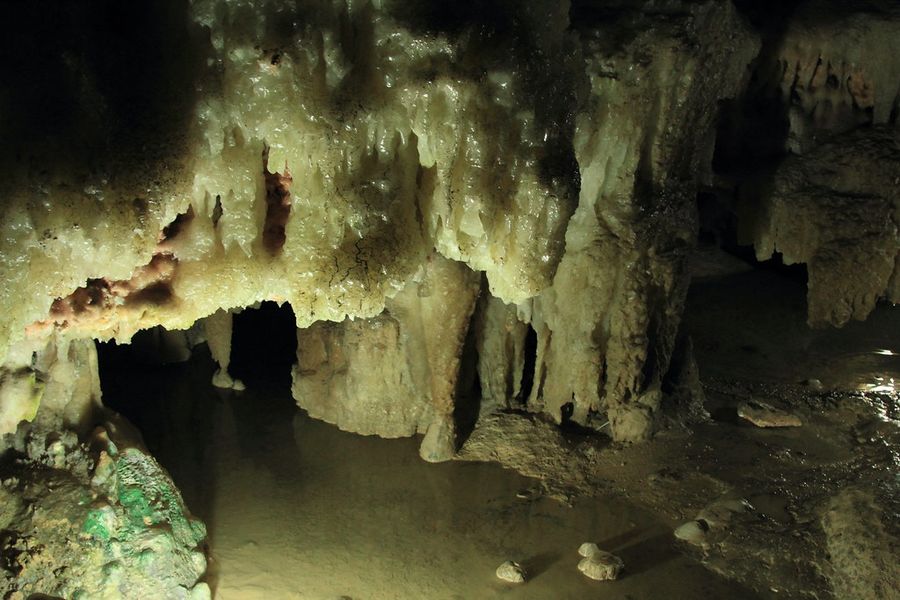
THE BELLA MAR CAVES are a group of caverns with more than 23 kilometers of galleries located in the Matanzas province, Cuba.
In addition to the amazing stalactites, stalagmites and helicites that populate them, the Bellamar Caves contain within them an unusual natural phenomenon that occurs only in them. It consists of solid calcite crystals that hang from stalactites and have attracted the attention of geologists from all over the planet.
In the Bellamar Caves you can also appreciate other elements of great beauty, such as the geodes, an underground stream that runs through the entire area, and the beautiful crystalline layer covers that make the rooms shine with an almost supernatural shine.
DATA ON ITS AGE
They date back 300,000 years and are one of Cuba’s natural treasures. They were discovered accidentally in 1861 by a worker of the landowner Manuel Santos Parga. He conditioned them properly and provided the services of a guide with the intention of turning the Bellamar Caves into a tourist center.
To access the caves, located at a point 5 km southeast of Matanzas, it is best to take one of the buses 16, 17 or 20 heading east and ask the driver for a stop near Calle 226. Once there, you must continue walking. After a short climb of 30 meters you will find yourself in front of the Bellamar Caves, which you will access through a museum located at the entrance.
Remains of birds and vertebrate animals from the Quaternary era have been found in them. As if this were not enough, its strange geological formations will awaken your interest if you are passionate about crystallography or caving.
Due to the beauty of its gallery and caverns, the important paleontological finds, in addition to a wide range of crystalline processes, they were declared a National Monument.
The galleries and passageways of the Bellamar Caves are estimated to have begun to form about 300 thousand years ago. According to scholars, the plain on which the caves are located was originally located under the sea, forming part of the Matanzas Bay. Along the so-called Bellamar Fault, groundwater, in combination with carbon dioxide, dissolved the calcareous rock and in this way created underground chambers in the subsoil; under the seabed.
Originally called the Parga Caves in homage to its discoverer (Manuel Santos Parga), the point changed its name to Las Cuevas de Bellamar, in plural, (although specialists indicate that it is a single cave with several rooms) due to to its proximity to the homonymous beach in the west of Matanzas.
Stalactites are cylindrical, and as their size increases they become conical while stalagmites are conical or flattened, as if melted. Both grow until they join together and form columns. In some cases several relatively close stalactites join together, giving rise to formations called mats. Others run close to the wall forming waterfalls. In the Bellamar Caves you can see all these formations.
You enter the Bellamar Caves through the cavity called the Gothic Hall, a square-shaped chamber that measures about 80 meters long by about 25 meters wide. In the other direction are the Hatuey passage, the Ladies’ Hall, the Dalias Lake and the Americana Bath. About the latter there is a legend that an American vacationer, many years ago, got lost in that place, when she decided to cool her body in the crystalline and cold waters.
In the century-old cave, a group of speleologists discovered a narrow cavity that led them to another underground extension about nine kilometers long. To everyone’s surprise, they found galleries of incomparable beauty there. These are cylindrical formations hanging from stalactites, suspended in the air, at the ends of which hang a conglomerate of solid calcite crystals. Due to its size and rarity, specialists consider the discovery as an exclusive jewel, incomparable with any other discovery of its type. They are indescribable formations, since nowhere else on the planet is such calcium carbonate glassware known.
The Bellamar Caves continue to be the queen, a National Monument, preferred by all who visit it.
Agencies/ Wiki/ Ecured/ LasCuevasdeBellamarHist./ Extractos/ Excerpts/ Internet Photos/ Arnoldo Varona/ www.TheCubanHistory.com

THE CUBAN HISTORY, HOLLYWOOD.