

 EL TOCORORO, Proclamado como el Ave Nacional de Cuba por su amor a la libertad. PHOTOS. * THE TOCORORO, Proclaimed as the National Bird of Cuba for its love of freedom. PHOTOS.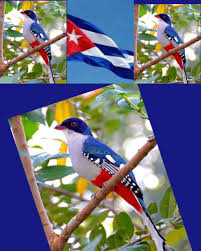
EL TOCORORO, Proclamado como el Ave Nacional de Cuba por su amor a la libertad. PHOTOS.
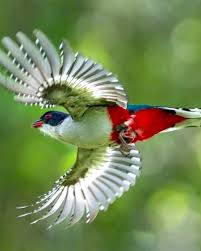
El tocororo (Priotelus temnurus) es el ave nacional de Cuba, un trogón de colores vibrantes endémico de la isla, conocido por su plumaje rojo, blanco y azul, que refleja los colores de la bandera cubana.
Habita en los bosques, tiene un canto distintivo que suena como “toco-toco-tocoro-tocoro” y simboliza la libertad.
Sus hábitats naturales son bosques secos, bosques húmedos y bosques antiguos muy degradados.
El azul, el blanco y el rojo , colores de la bandera de Cuba, matizan el plumaje del tocororo, proclamado como el Ave Nacional de la República caribeña. Los aborígenes llamaban “ guatini” a esa especie endémica que alcanza 28 centímetros de longitud.
El tocororo cubano tiene múltiples nombres por los que puede pasar. En los países de habla inglesa se le conoce comúnmente como el trogón cubano, mientras que en los países de habla española se le conoce como tocororo o tocoloro. Este nombre local se deriva de su llamada repetida, toco-toco-tocoro-tocoro.
El tocororo cubano es muy colorido con un dorso verde, una corona azul, una barriga y un pico rojos, y una garganta y un pecho blancos. Estos colores imitan los colores de la bandera cubana, por lo que se eligió para ser el ave nacional de Cuba. Tiene una cola larga y esponjosa que es única entre los trogones. De pico a cola, esta ave mide entre diez y once pulgadas. En vuelo, estas aves viajan en parejas creando una gran cantidad de ruido debido a su técnica de vuelo rudo y sin gracia. Y cuando queda atrapado en una jaula muere.
La llamada más común del trogón cubano es toco-toco-tocoro-tocoro, del cual se deriva su nombre local. También hace una llamada de emergencia corta que es difícil de identificar.
Habitat
El trogón cubano es muy común y se puede encontrar en toda la isla de Cuba. Los únicos lugares en los que es raro ver a esta ave son en la Isla de la Juventud, Guajaba, Romano y Sabinal. Prefieren los bosques húmedos y secos de todas las altitudes y les gusta estar a la sombra en lugar del sol.
El tocororo cubano anida en grietas ya creadas en árboles, principalmente en orificios de pájaros carpinteros abandonados. El tocororo cubano se alimenta de flores, frutas e insectos. A diferencia de la mayoría de las aves, es capaz de flotar mientras come.
El Tocororo Cubano al ser enjaulado, pierde su bello plumaje. En cautiverio, sobrevive poco tiempo.
Proclamado como el Ave Nacional de Cuba por su amor a la libertad y plumaje matizado por el rojo, el azul y el blanco, colores de la enseña patria, para los cubanos proteger el tocororo es defender nuestra identidad.
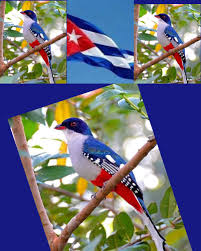
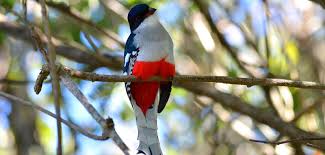
THE TOCORORO, Proclaimed as the National Bird of Cuba for its love of freedom. PHOTOS.
The tocororo (Priotelus temnurus) is the national bird of Cuba, a vibrantly colored trogon endemic to the island, known for its red, white, and blue plumage, which reflects the colors of the Cuban flag.
It inhabits forests, has a distinctive call that sounds like “toco-toco-tocoro-tocoro,” and symbolizes freedom.
Its natural habitats are dry forests, humid forests, and highly degraded old-growth forests.
The blue, white, and red colors of the Cuban flag adorn the plumage of the tocororo, proclaimed as the National Bird of the Caribbean Republic. The indigenous people called this endemic species, which reaches 28 centimeters in length, “guatini.”
The Cuban tocororo has multiple names by which it is known. In English-speaking countries, it is commonly known as the Cuban trogon, while in Spanish-speaking countries it is known as tocororo or tocoloro. This local name is derived from its repeated call, toco-toco-tocoro-tocoro.
The Cuban tocororo is very colorful with a green back, a blue crown, a red belly and beak, and a white throat and chest. These colors mimic the colors of the Cuban flag, which is why it was chosen to be the national bird of Cuba. It has a long, fluffy tail that is unique among trogons. From beak to tail, this bird measures between ten and eleven inches. In flight, these birds travel in pairs, creating a lot of noise due to their rough and ungraceful flight technique. And when trapped in a cage, it dies.
The most common call of the Cuban trogon is toco-toco-tocoro-tocoro, from which its local name is derived. It also makes a short alarm call that is difficult to identify.
Habitat
The Cuban trogon is very common and can be found throughout the island of Cuba. The only places where this bird is rarely seen are on the Isle of Youth, Guajaba, Romano, and Sabinal. They prefer humid and dry forests at all altitudes and like to be in the shade rather than in the sun.
The Cuban trogon nests in pre-existing cavities in trees, mainly in abandoned woodpecker holes. The Cuban trogon feeds on flowers, fruits, and insects. Unlike most birds, it is able to hover while feeding.
When caged, the Cuban trogon loses its beautiful plumage. In captivity, it does not survive for long.
Proclaimed the National Bird of Cuba for its love of freedom and its plumage tinged with red, blue, and white—the colors of the national flag—for Cubans, protecting the trogon is defending our identity.
Agencies/Wiki/ RHC/ Teresita Martinez/ Maria Calvo/ Internet Photos/ Arnldo Varona/ www.TheCubanhistory.com
THE CUBAN HISTORY, HOLLYWOOD.
