 ANTE LA CRISIS ENERGETICA, CUBA BUSCA PETROLEO EN AFRICA. PHOTOS. * FACING THE ENERGY CRISIS, CUBA SEEKS OIL IN AFRICA. PHOTOS.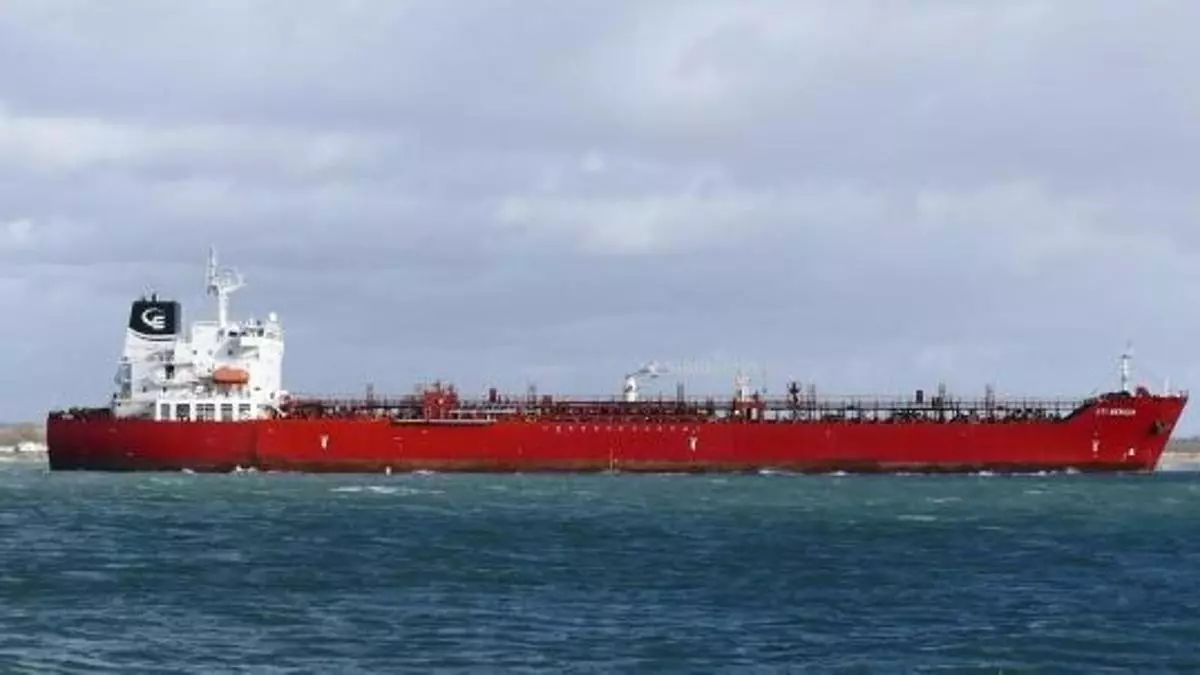
El tanquero ‘Mia Grace’ con bandera de Islas Marshall. / VesselFinder
ANTE LA CRISIS ENERGETICA, CUBA BUSCA PETROLEO EN AFRICA. PHOTOS.
MADRID- Un petrolero con bandera de las Islas Marshall, Mia Grace, salió este lunes de Lomé, capital de Togo, y llegará a La Habana el próximo 4 de febrero. El movimiento, advertido a 14ymedio por el experto en energía de la Universidad de Texas Jorge Piñón, muestra cómo, ante la presión ejercida por Estados Unidos tras la captura de Nicolás Maduro sobre el petróleo de Venezuela, principal proveedor de combustible a la Isla en los últimos 25 años, Cuba está intentando buscar suministro en otros lares, en este caso, África.
Piñón aventura que puede tratarse de una “compra al contado” de Cubametales, estatal dedicada a la importación y exportación de petróleo sancionada por EE UU, “a través de un intermediario europeo”. De igual manera, el especialista dice que no se conoce con certeza la calidad de la carga, pero especula que podría tratarse de diésel o fueloil. “Togo no refina petróleo, pero exporta petróleo refinado y cuenta con una amplia infraestructura de logística y tránsito marítimo”, detalla.
Teniendo en cuenta la capacidad del buque, 50.000 toneladas, y el calado que Piñón observa en las páginas de monitorización de barcos, explica: “Parece que no está completamente cargado”. El Mia Grace podría llevar o bien 314.500 barriles de diésel o bien 280.500 de fueloil, calcula el experto.
Las semanas que faltan para que llegue ese cargamento tienen visos de ser dramáticas. Este domingo se vivió una nueva jornada de oscuridad levemente interrumpida en toda la Isla. En su parte de hoy, la Unión Eléctrica (UNE) reconoció que el servicio se vio afectado la jornada anterior “durante las 24 horas”.
LA CRISIS ENERGETICA
Así lo reportan cubanos de la capital y de la provincia. La Habana permaneció apagada casi en su totalidad desde la tarde de ayer.
“Nos quitaron la luz 14 horas seguidas”, protesta una vecina de El Vedado. En Sancti Spíritus, el corte fue ligeramente más leve, de 10 horas, pero igualmente desesperante. “Sin embargo en las calles se ven personas con uniforme de campaña, supongo que por el Estado de Guerra ese, que no creo que sea por los americanos, sino por la electricidad y para reprimir al pueblo cuando tengan que apagar todo”, lamenta un vecino espirituano.
El déficit alcanzado este domingo en el horario pico, de 1.943 megavatios (MW), fue mayor del previsto por la salida del sistema de una unidad de la central termoeléctrica (CTE) Mariel –que ya tenia otro bloque averiado– y a una demanda “real” que también “superó las previsiones”. La aportación “significativa” de las renovables que señala la UNE en su comunicado –473 MW– solo se dio en las horas del mediodía, al tratarse de los parques solares.
Además de las averías en la CTE Mariel, se encuentran fuera de servicio dos unidades de la central Carlos Manuel de Céspedes (Cienfuegos), una de la Felton (Holguín), otra en la Antonio Maceo (la Renté, en Santiago de Cuba) y otra en la termoeléctrica de Santa Cruz del Norte (Mayabeque).
La mayor parte de las centrales de generación distribuida –101 de las más de 150 que existen en el país– están afectadas por falta de combustible, lo mismo que ocurre con la parada de la patana de Melones, y 156 MW adicionales están “indisponibles por falta de lubricante”. Así las cosas, se espera para este lunes, otra vez, una alta afectación: para una demanda máxima de 3.280 MW, solo habrá disponibles 1.405 MW –es decir un déficit de 1.875 MW–, que acabará dando una afectación real de 1.905 MW, casi el 60% de lo necesario.
El negro panorama no lo soluciona ni siquiera otros socios de La Habana, como México, que en los últimos días mandó el petrolero Ocean Mariner, procedente de Veracruz (México), con 80.000 barriles de crudo. Este mismo lunes, el digital Animal Político revela que el Gobierno de Claudia Sheinbaum exportó productos petroleros en 2025 a la Isla por un valor de 10.000 millones de pesos mexicanos (556 millones de dólares), cuatro veces más, señala el diario mexicano, que la Administración del presidente Enrique Peña Nieto (2012-2018).
La comparación venía al caso por las explicaciones que dio la actual presidenta mexicana el pasado 7 de enero a la pregunta sobre el valor de lo exportado por Pemex a Cuba. “No se está enviando más petróleo del que se había enviado históricamente, no hay un envío particular”, aseveró Sheinbaum en la conferencia matutina de aquel miércoles. “Durante muchos años se ha enviado petróleo a Cuba por distintas razones, unas son contratos, otras son ayuda humanitaria, incluso en la época de Peña Nieto, por ejemplo, se condonó una deuda que se tenía con Cuba”. Sin embargo, no aportó cifras concretas, con la promesa de darlos “más tarde”, pues la petrolera estatal estaba elaborando “la tendencia histórica desde hace varios años”.
FACING THE ENERGY CRISIS, CUBA SEEKS OIL IN AFRICA. PHOTOS.
On February 4, a tanker from Togo will arrive in Havana with approximately 300,000 barrels of fuel. The tanker, the ‘Mia Grace,’ sails under the Marshall Islands flag.
MADRID – An oil tanker flying the Marshall Islands flag, the Mia Grace, departed Lomé, the capital of Togo, this Monday and will arrive in Havana on February 4. This movement, reported to 14ymedio by University of Texas energy expert Jorge Piñón, shows how, in the face of pressure exerted by the United States following the capture of Nicolás Maduro and the sanctions on Venezuelan oil—the island’s main fuel supplier for the past 25 years—Cuba is attempting to find supplies elsewhere, in this case, Africa.
Piñón speculates that it could be a “cash purchase” by Cubametales, the state-owned company dedicated to the import and export of oil, which is sanctioned by the U.S., “through a European intermediary.” The specialist also says that the quality of the cargo is not known with certainty, but he speculates that it could be diesel or fuel oil. “Togo does not refine oil, but it exports refined oil and has extensive logistics and maritime transit infrastructure,” he explains.
Taking into account the vessel’s capacity, 50,000 tons, and the draft that Piñón observes on ship monitoring websites, he explains: “It appears that it is not fully loaded.” The Mia Grace could be carrying either 314,500 barrels of diesel or 280,500 barrels of fuel oil, the expert calculates.
The weeks leading up to the arrival of this shipment are likely to be dramatic. This Sunday, the entire island experienced another day of intermittent power outages. In its daily report, the National Electric Union (UNE) acknowledged that service was affected the previous day “for 24 hours.”
This is being reported by Cubans in the capital and in the provinces. Havana remained almost entirely without power since yesterday afternoon. “They cut off our electricity for 14 hours straight,” protests a resident of El Vedado. In Sancti Spíritus, the outage was slightly shorter, 10 hours, but equally frustrating. “However, people in military uniforms are visible in the streets, I suppose because of that State of War, which I don’t think is because of the Americans, but because of the electricity and to repress the people when they have to shut everything down,” laments a resident of Sancti Spíritus.
The weeks remaining until that shipment arrives are likely to be dramatic. This Sunday saw another day of darkness, only briefly interrupted, throughout the island. In its daily report, the Electric Union (UNE) acknowledged that service was affected the previous day “for 24 hours.”
This is what Cubans from the capital and the province are reporting. Havana remained almost entirely without power since yesterday afternoon. “They cut off our electricity for 14 hours straight,” protests a resident of El Vedado. In Sancti Spíritus, the outage was slightly shorter, 10 hours, but equally frustrating. “However, people in military uniforms are visible in the streets, I suppose because of that State of War, which I don’t think is because of the Americans, but because of the electricity and to repress the people when they have to shut everything down,” laments a resident of Sancti Spíritus.
The deficit reached this Sunday during peak hours, 1,943 megawatts (MW), was greater than expected due to the shutdown of a unit at the Mariel thermoelectric power plant (which already had another unit out of service) and a “real” demand that also “exceeded forecasts.” The “significant” contribution from renewable energy sources mentioned by the UNE in its statement – 473 MW – only occurred during midday hours, as these are solar power plants. In addition to the breakdowns at the Mariel thermoelectric plant, two units at the Carlos Manuel de Céspedes plant (Cienfuegos) are out of service, as are one unit at the Felton plant (Holguín), another at the Antonio Maceo plant (La Renté, in Santiago de Cuba), and another at the Santa Cruz del Norte thermoelectric plant (Mayabeque).
Most of the distributed generation plants—101 of the more than 150 in the country—are affected by a lack of fuel, as is the Melones floating power plant, and an additional 156 MW are “unavailable due to a lack of lubricant.” Given this situation, another significant power outage is expected this Monday: for a maximum demand of 3,280 MW, only 1,405 MW will be available—a deficit of 1,875 MW—which will result in an actual power outage of 1,905 MW, almost 60% of the required amount.
This bleak outlook is not even alleviated by other partners of Havana, such as Mexico, which in recent days sent the oil tanker Ocean Mariner, from Veracruz, Mexico, with 80,000 barrels of crude oil. This same Monday, the digital news outlet Animal Político revealed that the government of Claudia Sheinbaum exported petroleum products to the island in 2025 worth 10 billion Mexican pesos (556 million US dollars).

Agencies/ 14YMedio/ Internet Photos/ CubayVenezuelaHoy/Arnoldo Varona.
THE CUBAN HISTORY, HOLLYWOOD.