


La “Guantanamera” es una canción patriótica cubana, cuya letra utiliza un poema de la colección Versos Sencillos, del poeta cubano José Martí. Es una expresión de amor por Cuba y de solidaridad con los pobres del mundo.
La autoría oficial corresponde a Joseíto Fernández, quien popularizó la canción en la radio en 1929 (aunque no se sabe con certeza cuándo se publicó por primera vez en formato discográfico).
VIDA DE SU CREADOR, JOSEITO FERNANDEZ.
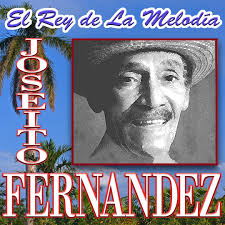
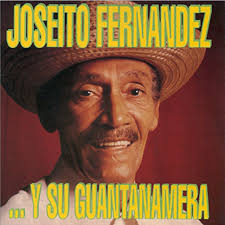
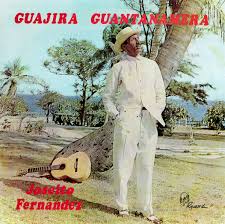
Muchas veces por el barrio de Los Sitios, en Centro Habana caminaba con elegancia y ritmo aquel hombre alto y huesudo que, vestido invariablemente de guayabera y pantalón blancos y tocado con un jipijapa auténtico, parecía un Quijote tropical. Era Joseíto Fernández, El Rey de la Melodía, el creador de la famosísima Guajira guantanamera, la pieza musical cubana, junto con El manisero, de Simons, y La comparsa, de Lecuona, más difundida en el mundo.
Esa melodía no es guajira ni tampoco guantanamera. Quiere decir esto que no es oriunda de la provincia cubana de Guantánamo ni pertenece al género musical conocido como guajira. Joseíto Fernández la creó en 1928, en tiempos en que se iniciaba como cantante de sones, y la estrenó en la radio en 1935.
Fue, a partir de 1940, el tema que identificó a su orquesta hasta que tres años después el cantante era contratado en exclusiva por una firma jabonera para que la interpretara en el programa radial El suceso del día, que escenificaba hechos de la crónica roja. Un poeta repentista componía la décimas o espinelas que recreaban el suceso criminal, y Joseíto las cantaba incorporándole el conocido estribillo de “Guantanamera, guajira guantanamera”. Aquello llegó a ser tan popular que, aunque el programa desapareció en 1957, todavía se oye decir que a alguien le cantaron la Guantanamera cuando se ha visto envuelto en un incidente desafortunado.
No es esa la Guantanamera que hoy recorre el mundo ni la que se repite en la Isla. Sino la que lleva versos de José Martí. En los años 50s Julián Orbón, compositor español avecindado en La Habana, la versionó con los Versos sencillos del Apóstol de la Independencia de Cuba, cuya métrica se ajustaba a las coplas de ocho compases que interpretaba Joseíto.
En 1962, el músico Héctor Ángulo, becado en EE UU por el Gobierno Revolucionario, cantó esa versión en un campamento de verano de ese país. Así la escuchó Pete Seeger y la grabó poco después con el título de La guantanamera.
En 1966, una versión del grupo vocal estadounidense The Sandpipers, basada en un arreglo de The Weavers de su concierto de reunión en el Carnegie Hall de mayo de 1963, se convirtió en un éxito internacional.
La canción ha sido versionada o interpretada, entre otros, por Celia Cruz, Compay Segundo y Wyclef Jean.
Sería a partir de esa grabación que algunos musicólogos se aventuraron a decir que Guajira guantanamera era una tonada hecha por el pueblo, un aire folclórico del que Joseíto se había apropiado. No hubo tal cosa. No se trata de un género anónimo, como el guaguancó o el son, sino de una guajira-son escrita en compases de dos por cuatro, a diferencia de las guajiras de Anckermann, que tomó elementos del punto y de la clave de raíces españolas y están escritas en compases de seis por ocho. El hecho de que ningún testimonio literario pruebe su similitud con otra tonada, confirma su originalidad, aunque tenga giros y cadencias parecidos al punto, la guajira y el son.
Hay algo más importante y definitivo. La versión cantada por Seeger tiene los elementos melódicos que se aprecian en la versión de la Guantanamera que para la disquera Víctor hizo Joseíto Fernández con su Orquesta Típica en 1941. En ese mismo año, su autor la registraba con el título de Mi biografía y el subtítulo de Guajira guantanamera.
Para Joseíto fue siempre un honor que versos de Martí se incorporaran a su melodía. Él mismo llegó a cantarla en esa versión y lo hizo como habitualmente se hace en la Isla: incorporando casuísticamente nuevas estrofas martianas y suprimiendo otras, a diferencia de la versión de Seeger, que incluye siempre los mismos versos. Afirmó en una ocasión que la Guantanamera fue siempre una canción protesta, de denuncia, porque recogía la tristeza y la desgracia de un pueblo y que al pedir bienestar y justicia para ese pueblo, los reclamaba también para sí.
Porque aquel hombre íntegro, complaciente y amable, habanero hasta la muerte, tuvo un origen muy humilde que nunca olvidó. Nació el 5 de septiembre de 1908 y murió en la Habana el 11 de octubre de 1979.
PLEASE PATRONIZE OUR ADVERTISERS * PREFIERA A NUESTROS SPONSORS

“LA GUANTANAMERA” AND JOSEITO FERNANDEZ, AN EXPRESSION OF LOVE FOR CUBA. VIDEOS / PHOTOS.
“Guantanamera” is a Cuban patriotic song, whose lyrics use a poem from the collection Versos Sencillos (Simple Verses) by Cuban poet José Martí. It is an expression of love for Cuba and solidarity with the world’s poor.
The official authorship belongs to Joseíto Fernández, who popularized the song on the radio in 1929 (although it is not known for sure when it was first released in recording format).
LIFE OF ITS CREATOR, JOSEITO FERNANDEZ.
Many times, that tall, bony man walked with elegance and rhythm through the Los Sitios neighborhood in Central Havana. He always wore a guayabera shirt and white pants, and wore an authentic straw hat, resembling a tropical Quixote. Joseíto Fernández, the King of Melody, was the creator of the famous “Guajira Guantanamera,” the Cuban musical piece, along with Simons’s “El Manisero” and Lecuona’s “La Comparsa,” the most widely performed in the world.
This melody is neither a “guajira” nor a “Guantanamera” melody. This means that it neither originates from the Cuban province of Guantánamo nor belongs to the musical genre known as “guajira.” Joseíto Fernández created it in 1928, when he was just starting out as a sone singer, and premiered it on the radio in 1935.
From 1940 onward, it was the signature song for his orchestra until three years later, when the singer was exclusively hired by a soap company to perform it on the radio program “El Suceso del Día,” which reenacted events from the crime news. A repentista poet composed the décimas or espinelas that recreated the criminal event, and Joseíto sang them, incorporating the well-known refrain of “Guantanamera, guajira guantanamera.” It became so popular that, although the program disappeared in 1957, it is still said that someone was sung the Guantanamera when they were involved in an unfortunate incident.
This is not the Guantanamera that travels around the world today, nor the one repeated on the island. But the one with verses by José Martí. In the 1950s, Julián Orbón, a Spanish composer living in Havana, covered it with Versos sencillos del Apóstol de la Independencia de Cuba (Simple Verses of the Apostle of Cuban Independence), whose meter was adjusted to the eight-bar verses that Joseíto sang.
In 1962, musician Héctor Ángulo, a scholarship recipient in the United States from the Revolutionary Government, sang this version at a summer camp in that country. Pete Seeger heard it and recorded it shortly afterward under the title La guantanamera.
In 1966, a version by the American vocal group The Sandpipers, based on an arrangement by The Weavers from their reunion concert at Carnegie Hall in May 1963, became an international hit.
The song has been covered or performed by, among others, Celia Cruz, Compay Segundo, and Wyclef Jean.
It was on the basis of this recording that some musicologists ventured to say that Guajira guantanamera was a tune made by the people, a folkloric air that Joseíto had appropriated. There was no such thing. It is not an anonymous genre, like the guaguancó or the son, but a guajira-son written in 2/4 time, unlike Anckermann’s guajiras, which borrowed elements of the punto and clave from Spanish roots and are written in 6/8 time. The fact that no literary evidence proves its similarity to any other tune confirms its originality, although it has turns and cadences similar to the punto, the guajira, and the son.
There is something more important and definitive. The version sung by Seeger has the melodic elements that can be appreciated in the version of Guantanamera that Joseíto Fernández made for the Víctor record label with his Orquesta Típica in 1941. That same year, its author recorded it with the title “My Biography” and the subtitle “Guajira Guantanamera.”
For Joseíto, it was always an honor to have verses by Martí incorporated into his melody. He himself sang it in that version, and he did so as is customary on the island: occasionally incorporating new verses of Martí’s work and deleting others, unlike Seeger’s version, which always includes the same lines. He once stated that La Guantanamera was always a protest song, a denunciation song, because it captured the sadness and misfortune of a people, and that by demanding well-being and justice for that people, he also claimed them for himself.
Because that man of integrity, accommodating, and kindness, a Havana native until his death, came from very humble origins that he never forgot. He was born on September 5, 1908, and died in Havana on October 11, 1979.
Agencies/ Ciro Bianchi/ Wiki/ LaGuantanameraHist./ Extracts/ Excerpts/ Internet Photos/ Arnoldo Varona.
www.TheCubanHistory.com
THE CUBAN HISTORY, HOLLYWOOD.
