


ALGUNAS SORPRERAS SOBRE LA FAUNA CUBANA QUE QUIZAS NO CONOZCAS. PHOTOS.
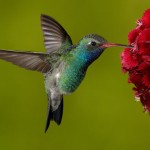
* – En Cuba vive el pájaro más pequeño del mundo, el zunzuncito o pájaro mosca.
El zunzún (mellisuga elenae) es la más pequeña de las aves del mundo y mide alrededor de 6 cm de longitud como máximo y pesa como promedio alrededor de 2 gramos. Sólo vive en Cuba.
•- En Cuba vive el anfibio más pequeño del mundo.
Es la rana pigmeo o sapito (sminthillus limbatus) que mide menos de 12 mm de longitud.
•- En Cuba vive el murciélago más pequeño del mundo que a la vez se considera el menor de los mamíferos.
Se trata del Nystiellus lepidus o murciélago mariposa, que solo pesa 2-3 g y mide alrededor de 3 cms.
•- El almiquí, a punto de extinción, tiene la saliva venenosa.
Efectivamente, el almiquí (solenodon cubanus) posee como característica de los mamíferos fósiles una saliva venenosa. Se pensó que estaba extinguido pues desde fines del siglo XIX no se veía pero en 1974 y 75 se capturaron 3 ejemplares.
•- Existen evidencias de que en Cuba vivieron monos.
El paralouatta varonai considerado el mayor de los monos antillanos sólo vivía en Cuba según se ha demostrado por hallazgos arqueológicos. Se desconoce cuando desapareció.
• – Que en nuestro país habitan 13 especies de jutía de las cuales algunas solo viven en determinados cayos.
Se han descrito 13 variedades de jutías en Cuba, algunas con un hábitat muy restringido lo que las hace peligrar. La jutía cabrera solo vive en el Cayo Ana María, la garrido en Cayo Majá, la jutía rata en Cayo Fragoso y la sanfelipensis en Cayo Juan García.
• – La jutía enana es la más pequeña de todos los del género capromydes en el mundo.
Dentro del género capromydes al cual pertenecen las jutías el representante más pequeño es la jutía enana, capromydes nana que solo vive en Cuba.
• – Se ha comprobado que en Viñales vive la especie de moluscos más antigua del mundo.
Se trata de la Viana regina o calcifolio que vive pegada a los mogotes y rocas para alimentarse del hongo de las mismas.
• – El manjuarí es considerado un fósil viviente y tiene cuerpo de pez y cabeza de reptil.
El manjuarí, atractosteus tristoechus, es un pez con características especiales, tiene cabeza similar a los reptiles y cuerpo de pez, su carne es comestible pero sus huevos son venenosos.
En Cuba existen más de 14000 especies de animales.
Los que habitualmente vemos en la vida diaria no son del pais.

SOME SURPRISES ABOUT CUBAN FAUNA THAT YOU MAY NOT KNOW. PHOTOS.
* – The smallest bird in the world lives in Cuba, the zunzuncito or buzzard.
The buzzard (mellisuga elenae) is the smallest bird in the world and measures around 6 cm in length at most and weighs on average around 2 grams. It only lives in Cuba.
•- The smallest amphibian in the world lives in Cuba.
It is the pygmy frog or toad (sminthillus limbatus) that measures less than 12 mm in length.
•- The smallest bat in the world lives in Cuba, which is also considered the smallest of mammals.
It is the Nystiellus lepidus or butterfly bat, which only weighs 2-3 g and measures around 3 cm.
•- The almiquí, on the verge of extinction, has poisonous saliva.
Indeed, the almiquí (solenodon cubanus) has a poisonous saliva as a characteristic of fossil mammals. It was thought to be extinct since it had not been seen since the end of the 19th century, but in 1974 and 1975, 3 specimens were captured.
•- There is evidence that monkeys once lived in Cuba.
The paralouatta varonai, considered the largest of the Antillean monkeys, only lived in Cuba, as has been demonstrated by archaeological findings. It is unknown when it disappeared.
•- That 13 species of hutia live in our country, some of which only live in certain keys.
13 varieties of hutia have been described in Cuba, some with a very restricted habitat, which makes them endangered. The cabrera hutia only lives in Cayo Ana María, the garrido in Cayo Majá, the rata hutia in Cayo Fragoso and the sanfelipensis in Cayo Juan García.
• – The dwarf hutia is the smallest of all the Capromydes genus in the world.
Within the Capromydes genus to which the hutias belong, the smallest representative is the dwarf hutia, Capromydes nana, which only lives in Cuba.
• – It has been proven that the oldest species of mollusks in the world lives in Viñales.
It is the Viana regina or calcifolio, which lives attached to the mogotes and rocks to feed on the fungus found there.
• – The manjuarí is considered a living fossil and has the body of a fish and the head of a reptile.
The manjuarí, atractosteus tristoechus, is a fish with special characteristics, it has a head similar to reptiles and a body of a fish, its meat is edible but its eggs are poisonous.
In Cuba there are more than 14,000 species of animals.
The ones we usually see in daily life are not from the country.

Agencies/ FaunadeCuba/ Extractos/ Excerpts/ Internet Photos/ Arnoldo Varona.
theCubanHistory.com
THE CUBAN HISTORY, HOLLYWOOD.
