


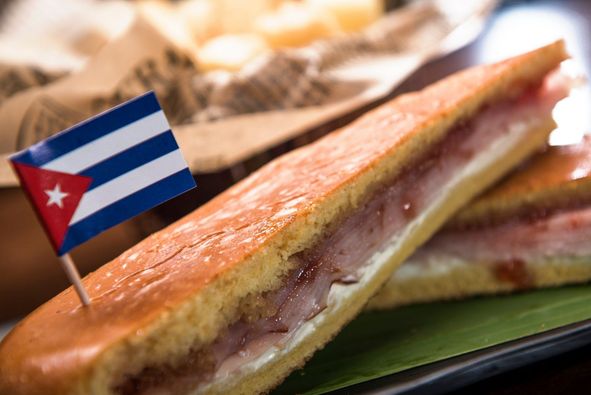
EL SANDWICH CUBANO “ELENA RUZ” Y LA HISTORIA DETRAS DE LA FAMOSA COMBINACION. FOTOS.
El sándwich Elena Ruz es un sándwich cubano que se originó en La Habana en los años 1930. El sándwich lleva el nombre de Elena Ruz Valdés-Fauli, una socialité cubana que con frecuencia pedía el sándwich en el restaurante El Carmelo, abierto toda la noche, en el Vedado de La Habana.
Servido en el mismo pan dulce con huevo que el sándwich Medianoche (a veces llamado Pan Suave o simplemente Pan de Medianoche), su sándwich consistía en queso crema, pavo en rodajas finas y mermelada de fresa ligeramente tostada en una plancha. .
Cuenta la historia que lo pidió tantas veces que se cansó de explicar los ingredientes a cada camarero y sugirió que El Carmelo simplemente se lo pusiera en el menú. A su regreso, con su prometido y su madre actuando como acompañantes, se sorprendió al encontrar su nombre “en las luces”.
Como le explicó a un escritor del Miami Herald más adelante en su vida, el restaurante había colocado un letrero de neón que decía “Pregunta por Elena Ruz. Delicioso sándwich. 25 centavos”. Hoy en día se disfruta mejor con chips de plátano y un refresco cubano, como Materva o Ironbeer.
¿QUIÉN FUE ELENA RUZ?
Es difícil investigar la vida de Elena Ruz Valdés-Fauli fuera del contexto de su sándwich cubano homónimo, y viceversa. Los dos temas son inseparables, aunque la propia Elena Ruz dejó atrás su Cuba natal, como muchos lo hicieron durante la Revolución. Nacida en 1909, tenía 18 o 19 años cuando, como cliente habitual del restaurante habanero El Carmelo, empezó a pedir un bocadillo especial fuera de carta de diseño propio.Tuvo que explicar tantas veces el sándwich que le pidió al gerente del restaurante que lo incluyera en el menú para que fuera más fácil pedirlo. En algún momento a finales de los años 20 o principios de los 30, regresó y encontró su nombre en las luces de neón, con el sándwich en el menú.
Al igual que otros sándwiches cubanos clásicos, el Elena Ruz fue traído a Miami y todavía se puede encontrar en los menús de los restaurantes cubanoamericanos en la actualidad.
Elena Ruz tendría alrededor de 50 años cuando Castro tomó el poder en 1959, su sándwich tenía poco más de 30. Como personas con recursos, ella y su esposo pudieron exiliarse con estilo, pasando 9 años en España antes de mudarse a Florida y, finalmente, , Costa Rica. En España y en Florida, el sándwich que lleva su nombre la había precedido. Dondequiera que fueran los cubanos en su éxodo posrevolucionario, llevaban el sándwich consigo.
Y aunque algunos restauranteros cubanos en Florida informan que el sándwich ha perdido popularidad en los últimos años, el respeto por la tradición lo mantiene en sus menús.
Y esta es mi historia personal, un sábado por la mañana, visitando mi cafetería preferida (soy un fanático del café cubano), tomo un Cortado para ayudarme a deshacerme del letargo de la noche anterior. Voy directo por el sándwich cubano y compartí un pastelito, maduros, una empanada y una orden de bistec encebollado además de mi sándwich Elena Ruz.

THE CUBAN SANDWICH CUBANO “ELENA RUZ” Y LA HISTORIA DETRAS DE LA FAMOSA COMBINACION. PHOTOS.
The Elena Ruz sandwich is a Cuban sandwich that originated in Havana in the 1930s. The sandwich is named after Elena Ruz Valdés-Fauli, a Cuban socialite who would frequently order the sandwich at the all-night El Carmelo restaurant in Vedado in Havana.
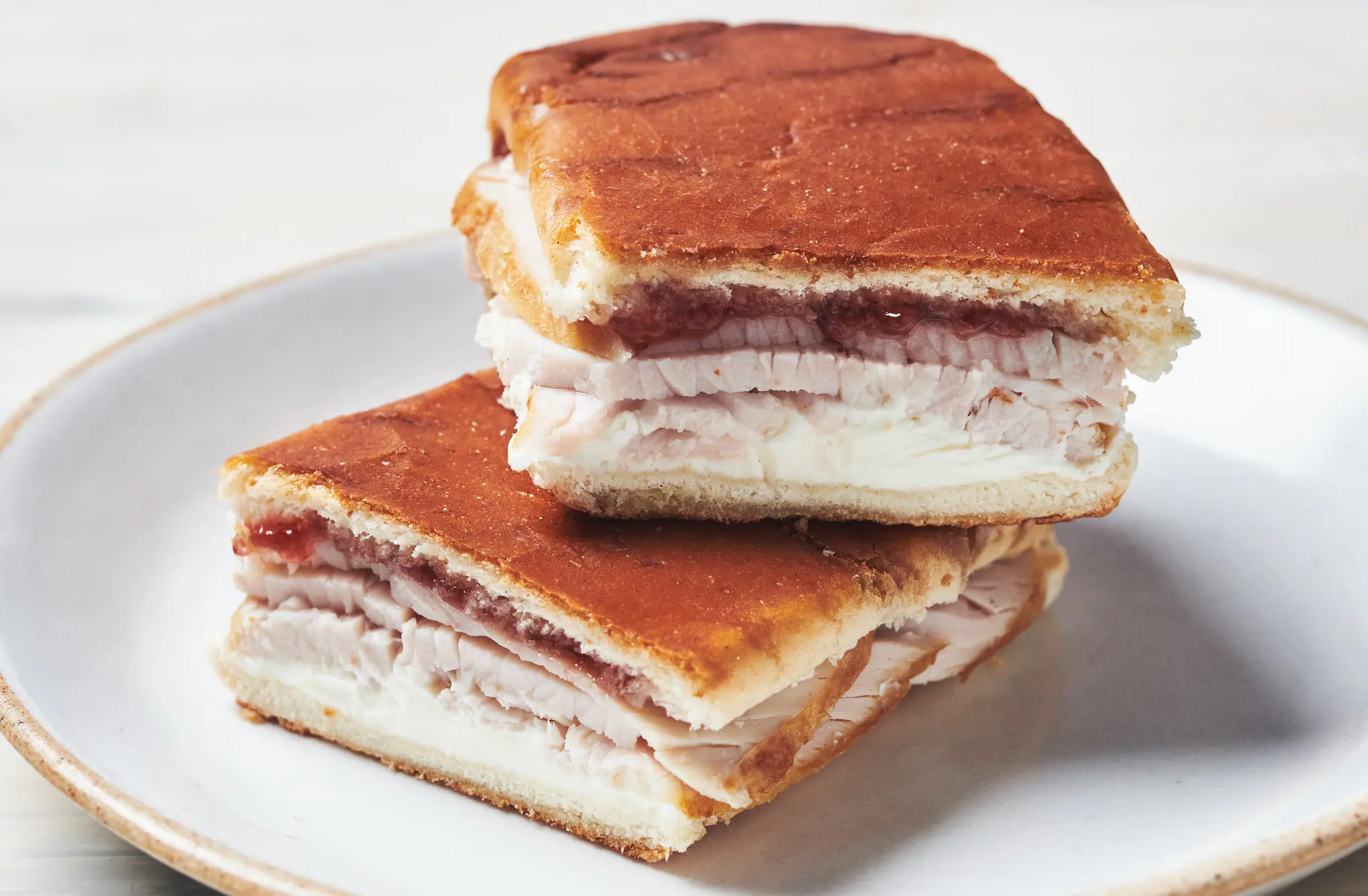
Served in the same sweet, eggy bread as the Medianoche (midnighter) sandwich–sometimes called Pan Suave (sweet bread) or simply Pan de Medianoche–her sandwich consisted of cream cheese, thin-sliced turkey, and strawberry jam lightly toasted in a plancha.
The story goes that she ordered it so many times that she got tired of explaining the ingredients to every waiter and suggested that El Carmelo simply put it on the menu for her. Upon her return–with her fiancée and her mother acting as a chaperone–she was surprised to find her name “in lights.”
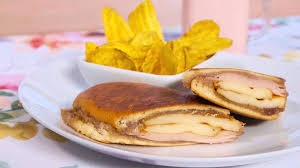
As she explained to a Miami Herald writer later in life, the restaurant had put up a neon sign reading “Ask for an Elena Ruz. Delicious sandwich. 25 cents”. Nowadays it’s best enjoyed with plantain chips and a Cuban soda, such as Materva or Ironbeer.
WHO WAS ELENA RUZ?
It is difficult to research the life of Elena Ruz Valdés-Fauli outside the context of her namesake Cuban sandwich–and vice versa. The two subjects are inseparable, though Elena Ruz herself left her native Cuba behind as many did during the Revolution. Born in 1909, she was 18 or 19 years old when, as a frequent customer at Havana restaurant El Carmelo, she began ordering a special off-menu sandwich of her own design. She had to explain the sandwich so many times that she asked the restaurant’s manager to put it on the menu to make it easier to order. At some point in the late 1920s or the early ’30s, she returned to find her name in neon lights, with the sandwich on the menu.
Like other classic Cuban sandwiches, the Elena Ruz was brought to Miami -and can still be found on the menus of Cuban American restaurants today.
Elena Ruz would have been around 50 years old when Castro took power in 1959, her sandwich just over 30. As people of means, she and her husband were able to exile in style, spending 9 years in Spain before moving to Florida and, eventually, Costa Rica. In Spain, and in Florida, the sandwich bearing her name had preceded her. Wherever Cubans went in their post-Revolution exodus, they brought the sandwich with them.
And though some Cuban restaurateurs in Florida report that the sandwich has waned in popularity in recent years, a respect for tradition keeps it on their menus.
And this is my personal story, on a Saturdays morning, visiting my preferred coffee shop (I am a sucker for Cuban coffee), I have a Cortado to help shake off some of the previous evening’s lethargy. I go straight for the Cuban sandwich and I shared a pastelito, (guava pastry), maduros (fried sweet plantains), an empanada (hand pie), and an order of bistec encebollado (steak and onions) in addition to my Elena Ruz sandwich.
Agencies/ Wiki/ CubanSandwithHist./ Extractos/ Excerpts/ Internet Photos/ Arnoldo Varona/ www.TheCubanHistory.com
LA HISTORIA DE CUBA / THE CUBAN HISTORY, HOLLYWOOD.
