CUBA HOY: Otras dos Termoelectricas se Apagan, se generalizan los Apagones. PHOTOS. * CUBA TODAY: Two Other Termoelectricals are Turned Off, Blackouts are Generalized. PHOTOS

Termoeléctrica Carlos Manuel de Céspedes, en Cienfuegos. (5 de Septiembre)

Termoeléctrica Carlos Manuel de Céspedes, en Cienfuegos. (5 de Septiembre)

Otras dos termoeléctricas se apagan, en Cienfuegos y Santiago de Cuba. La Isla tuvo este lunes un déficit de 1359 MW en la hora de máxima demanda.

CUBA PERDIÓ otras dos unidades de centrales termoeléctricas por averías este lunes, cuando salieron del Sistema Eléctrico Nacional (SEN) la 4 de la Carlos Manuel de Céspedes, en Cienfuegos, y la 5 de la Antonio Maceo, en Santiago de Cuba.

“Con estas salidas imprevistas, se estima para la hora pico una disponibilidad de 1741 MW y una demanda máxima de 3100 MW, para un déficit de 1359 MW, por lo que de mantenerse las condiciones previstas se pronostica una afectación de 1429 MW en este horario”, advirtió la Unión Eléctrica de Cuba (UNE) en una nota difundida en sus redes sociales y que cerró a los comentarios al público.

En los últimos meses, la UNE ha recurrido a esta censura, consciente del hartazgo de la población, que encuentra en Facebook uno de los mejores lugares en los que desahogarse

En los últimos meses, la UNE ha recurrido a esta censura, consciente del hartazgo de la población, que encuentra en Facebook uno de los mejores lugares en los que desahogarse. Otros organismos, sin embargo, no han establecido estas limitaciones, donde se ha reflejado ese malestar.

“Llevamos más de seis meses con la misma cantaleta y ahora, cuando uno estaba durmiendo, le quitan la corriente. No les importa nada. ¿Hasta qué hora será este suplicio y hasta cuándo?”, reprochaba una usuaria. Otra, añadía: “Seis meses de este año, tienes q contar al año anterior. La situación solo mejora cuando hay frío. A las termoeléctricas cubana no les gusta el calor”.

La empresa eléctrica de Cienfuegos mantuvo incluso un intercambio con un usuario que protestaba por la diferencia en los cortes entre las distintas provincias. “Ustedes, que lo que hacen es comerse la comida del pueblo, no pueden siquiera aparentar que les importamos un comino y defender que la afectación sea equitativa y que con 90 MW de afectación estará toda la provincia apagada cuando el resto del país tiene solamente una porción de su población. Quien no conoce la historia puede cometer el error de repetirla. Y como decía Fidel Castro, ‘cuando un pueblo enérgico y viril llora, la injusticia tiembla'”, clamó, añadiendo en su argumentación que Cienfuegos es una de las que menos consumo eléctrico tiene dentro del conjunto del país y, sin embargo, se le corta tanto o más la luz que a Villa Clara.

“El Sistema Electroenergético Nacional está interconectado en una isla estrecha y larga en que hay que distribuir los bloques de energía de un extremo a otro en dependencia de la demanda de cada provincia y la capacidad de transporte de las líneas eléctricas. Además, el mismo necesita trabajar con cierta reserva que permita asumir las variaciones de demanda en instantes. Por lo que la distribución de los MW a afectar por provincias no es estático ni puede calcularse con una simple división”, discutía la empresa.

Los comentarios se han multiplicado, como es habitual, en las cuentas oficiales que reprodujeron la nota de la UNE. Algunos de los usuarios recordaban, además, que falta solo un mes para diciembre, cuando las autoridades afirmaron que se habrían resuelto los problemas, y, sin embargo, nada parece mejorar, sino más bien todo lo contrario.

La pasada semana, la UNE anunció la salida de Felton del SEN. La termoeléctrica debe hacer un mantenimiento de una semana para mejorar la capacidad de su bloque 1, mientras que el 2 está fuera de servicio por averías desde tiempo atrás.

Esta es, junto con la Antonio Guiteras de Matanzas, también fuera de servicio aunque la UNE ni la menciona ya, la mayor termoeléctrica del país y a su recuperación había fiado Miguel Díaz-Canel la recuperación del sistema el pasado agosto, pero a día de hoy los cortes de luz siguen, las averías también y la falta de combustible para los generadores se agrava.

images (38)

CUBA TODAY: TWO OTHER TERMOELECTRICALS ARE TURNED OFF, BLACKOUTS ARE GENERALIZED. PHOTOS.

Two other thermoelectric plants are turned off, in Cienfuegos and Santiago de Cuba. The Island had a deficit of 1,359 MW this Monday at the time of maximum demand.

download (19)

CUBA LOST another two units of thermoelectric power plants due to breakdowns this Monday, when the 4 of the Carlos Manuel de Céspedes, in Cienfuegos, and the 5 of the Antonio Maceo, in Santiago de Cuba, left the National Electric System (SEN).

“With these unforeseen outputs, an availability of 1,741 MW and a maximum demand of 3,100 MW are estimated for the peak hour, for a deficit of 1,359 MW, so if the expected conditions are maintained, an affectation of 1,429 MW is forecast at this time. “, warned the Electric Union of Cuba (UNE) in a note spread on its social networks and that closed to public comments.

In recent months, the UNE has resorted to this censorship, aware of the fed up of the population, which finds on Facebook one of the best places to let off steam

In recent months, the UNE has resorted to this censorship, aware of the population’s weariness, which finds Facebook one of the best places to let off steam. Other organizations, however, have not established these limitations, where this discomfort has been reflected.

“We have been with the same chant for more than six months and now, when one was sleeping, they take the power off. They don’t care about anything. Until what time will this ordeal last and when?” reproached a user. Another added: “Six months this year, you have to count the previous year. The situation only improves when it’s cold. Cuban thermoelectric plants don’t like the heat.”

The Cienfuegos electric company even had an exchange with a user who was protesting the difference in cuts between the different provinces. “You, who what you do is eat the people’s food, you can’t even pretend that you don’t give a damn about us and defend that the affectation is equitable and that with 90 MW of affectation the entire province will be turned off when the rest of the country has only one portion of its population. Whoever does not know history can make the mistake of repeating it. And as Fidel Castro said, ‘when an energetic and virile people cries, injustice trembles,'” he cried, adding in his argument that Cienfuegos is one of the that has less electricity consumption within the country as a whole and, however, the light is cut as much or more than Villa Clara.

“The National Electroenergetic System is interconnected in a narrow and long island in which the energy blocks have to be distributed from one end to the other depending on the demand of each province and the transport capacity of the electric lines. In addition, it needs work with a certain reserve that allows to assume the variations in demand in moments. Therefore, the distribution of the MW to be affected by provinces is not static nor can it be calculated with a simple division,” the company argued.

The comments have multiplied, as usual, in the official accounts that reproduced the UNE note. Some of the users also remembered that there is only one month left until December, when the authorities affirmed that the problems would have been solved, and yet, nothing seems to improve, but rather the opposite.

Last week, the UNE announced Felton’s departure from the SEN. The thermoelectric plant must carry out maintenance for a week to improve the capacity of its block 1, while block 2 has been out of service due to breakdowns for some time.

This is, together with the Antonio Guiteras de Matanzas, also out of service although the UNE does not mention it anymore, the largest thermoelectric plant in the country and Miguel Díaz-Canel had entrusted the recovery of the system to its recovery last August, but today the power outages continue, the breakdowns also and the lack of fuel for the generators worsens.

Agencies/ 14yMedio, La Habana/ Extractos/ Excerpts/ Internet Photos/ Arnoldo Varona/ www.TheCubanHistory.com
THE CUBAN HISTORY, HOLLYWOOD.


minipaisajecuba

* LOS QUE OLVIDAN SU HISTORIA ESTAN CONDENADOS A REPETIRLA.  * THOSE WHO FORGET THEIR HISTORY ARE CONDEMNED TO REPEAT IT.

* LOS QUE OLVIDAN SU HISTORIA ESTAN CONDENADOS A REPETIRLA.
* THOSE WHO FORGET THEIR HISTORY ARE CONDEMNED TO REPEAT IT.
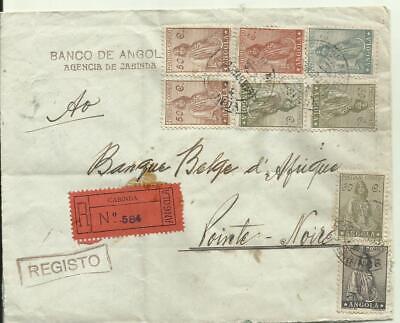
UNA CARTA DESDE ANGOLA: A los Cubanos que estuvieron en nuestro País. PHOTOS. * A LETTER FROM ANGOLA: To the Cubans who were in Our Country. PHOTOS.

s-l400 (1)

UNA CARTA DESDE ANGOLA: A LOS CUBANOS QUE ESTUVIERON EN NUESTRO PAIS. PHOTOS.
Por Nekubu Héritier, Luanda, Angola.

A los cubanos que estuvieron en nuestro país y todavia emplean el acrónimo RPA…

ES IMPORTANTE ACLARAR QUE ANGOLA YA NO ES REPÚBLICA POPULAR DE ANGOLA, NI TAMPOCO ES UN PAÍS SOCIALISTA…

En 1975, después que Portugal, la antigua metrópoli colonial, firmara los Acuerdos de Alvor con el Movimiento Popular para a Libertação de Angola (MPLA), el Frente Nacional para a Libertação de Angola (FNLA) y la União Nacional para a Independência Total de Angola (UNITA), lideradas por Agostinho Neto, Holden Roberto y Jonas Malheiro Savimbi, respectivamente, el nuevo estado fue proclamado con el nombre de REPÚBLICA POPULAR DE ANGOLA y, como se sabe, en ese acontecimiento histórico las fuerzas cubanas tuvieron un papel relevante. Ese día, es decir, casi a la medianoche del día 11 de noviembre, António Agostinho Neto – quien gobernaría el país desde 1975 hasta 1979 – proclamó la independencia de Angola y al MPLA como fuerza política de vanguardia del país, declarado a su vez estado de ideología socialista y fiel aliado de Cuba y Unión de las Repúblicas Socialistas Soviéticas.

Desde 1975 hasta inicios de la década de 90, más de 300.000 cubanos cumplieron misiones militares y civiles en ese país. Los angoleños nacidos antes, durante los años 70 y inicios de 80, en particular los que vivimos muy cerca de los cuarteles, nos hermanábamos con los jóvenes cubanos que llegaban a nuestra tierra de misiones…y todos fuimos testigos de una Angola socialista. Nosotros fuimos testigos de la presencia de asesores soviéticos, asesores de la República Democrática Alemana y una gran variedad de productos de fabricación soviética que llegaban a nuestro a país.

Como aliado de la URSS y de los países que constituían el bloque comunista, nuestro país se llamaba oficialmente República Popular de Angola, cuyo acrónimo era RPA. Marxismo-leninismo era la doctrina que se nos enseñaban en las escuelas. ‘A loja é do povo’ (La tienda es del pueblo), ‘A escola é do povo’ (La escuela es del pueblo), etc. eran frases bien conocidas por todos. Al nuestro vocabulario se incorporaron vocablos y frases netamente comunistas, tales como ”pioneiro”, ”camarada”, ”progressista”, ”[…] na construção do Socialismo, tudo pelo povo” y los usábamos de manera frecuente, casi dos décadas. La propriedad privada era casi inexistente; las familias tenían la ”caderneta o cartão de abastecimento” (libreta de abastecimiento). Era la época de las becas a Cuba, República Democrática Alemana, Unión Soviética y de las ”rusgas” (reclutamiento de servicio militar obligatorio).

Ese fue el escenario político-militar que se vivió en la República Popular de Angola en pleno periodo de la Guerra Fría que nosotros – angoleños y cubanos – también vivimos.

El 22 de diciembre de 1988 se firmaron en Nueva York, EEUU, los Acuerdos Tripartitos entre Angola, Cuba y Sudáfrica que permitió la retirada definitiva de las fuerzas cubanas, independencia de Namibia y fin del régimen de Apartheid… Después de tales conversaciones que dieron por terminada la contienda con Sudáfrica, solo la UNITA continuó enfrentando al MPLA, dirigido a partir de 1979 por José Eduardo dos Santos (segundo presidente de la RPA), quien, sin embargo, tuvo el tino de percatarse de la necesidad de cambio de gobernación y, por eso, en 1992 proclamó el fin de la REPÚBLICA POPULAR ANGOLA. ¡Se nos cayó el ”Popular”! Las instituciones públicas cuya P significaba ”popular” se vieron obligados a cambiar su significado o quitarlo. Fue el caso de la TPA (Televisão Popular de Angola) que empezó a llamarse Televisão Pública de Angola a partir de 1992. Ese año también se declaró el multipartidarismo y se legalizó la incorporación de la UNITA como fuerza política legítima que participaría en las primeras elecciones. Estas medidas politicas fueron acompañadas en lo económico por asimilación del libre mercado.

293232170_3177102715835282_2968012053002595552_n

Al proclamarse la REPÚBLICA DE ANGOLA, poco a poco fuimos olvidándonos las doctrinas, costumbres y expresiones heredadas del Socialismo. Hoy ya no forman parte del léxico angoleño palabras como socialismo, comunismo, marxismo-leninismo, imperialismo y sus derivados.
Cabe destacar también que, los jóvenes angoleños, los cuales nacidos en la década de 90, por desgracia, desconocen el aporte y participación de Cuba en la guerra civil de Angola. A algunos no se les enseñó en la universidad, otros jamás han tenido la oportunidad de conocer la geografía, historia, cultura de Cuba y su gente. Lo único que saben de Cuba, es el médico que trabaja en la clínica X e Y o de aquel cubano que – de manera informal – se dedica al suministro de agua, arena y piedras a los inúmeros proyectos de construcción que proliferan en la ciudad de Luanda y demás provincias; proyectos de construcción civil que en gran mayoría están en manos china y vietnamita.

¿Y qué decir de aquellos angoleños que aún niños llegaron a la isla caribeña como estudiantes? Hoy en día, por increíble que parezca, la mayoría de ellos casi no se ”acuerdan” de la tierra dónde se hicieron hombres. No la exaltan ni la divulgan, ¡lamentablemente!

1_nsoZxGS4yuKDyoAZ6JUlTw (1)

logo

A LETTER FROM ANGOLA: TO THE CUBANS WHO WERE IN OUR COUNTRY. PHOTOS.
By Nekubu Héritier, Luanda, Angola.

ng1085513

To the Cubans who were in our country and still use the acronym RPA…

IT IS IMPORTANT TO CLARIFY THAT ANGOLA IS NO LONGER THE PEOPLE’S REPUBLIC OF ANGOLA, NOR IS IT A SOCIALIST COUNTRY…

In 1975, after Portugal, the former colonial metropolis signed the Alvor Agreements with the Popular Movement for the Liberation of Angola (MPLA), the National Front for the Liberation of Angola (FNLA), and the National Union for Total Independence of Angola (UNITA), led by Agostinho Neto, Holden Roberto, and Jonas Malheiro Savimbi, respectively, the new state was proclaimed under the name of PEOPLE’S REPUBLIC OF ANGOLA and, as is known, Cuban forces played a relevant role in this historic event. That day, that is, almost at midnight on November 11, António Agostinho Neto – who would govern the country from 1975 to 1979 – proclaimed the independence of Angola and the MPLA as the vanguard political force of the country, declared, in turn, a state of socialist ideology and faithful ally of Cuba and the Union of Soviet Socialist Republics.

From 1975 to the early 1990s, more than 300,000 Cubans carried out military and civilian missions in that country. Angolans born before, during the 1970s and early 1980s, particularly those of us who lived very close to the barracks, fraternized with the young Cubans who came to our land of missions…and we all witnessed a socialist Angola. We witnessed the presence of Soviet advisers, advisers from the German Democratic Republic, and a wide variety of Soviet-made products arriving in our country.

As an ally of the USSR and the countries that made up the communist bloc, our country was officially called the People’s Republic of Angola, whose acronym was RPA. Marxism-Leninism was the doctrine that we were taught in schools. ‘A Loja é do Povo (The store belongs to the town), ‘A Escola é do Povo (The school belongs to the town), etc. They were phrases well-known to all. Clearly communist words and phrases were incorporated into our vocabulary, such as ”pioneer”, ”comrade”, ”progressist”, ”[…] na construção do Socialismo, Tudo Pelo povo” and we used frequently almost two decades. Private property was almost non-existent; the families had the ”caderneta or cartão de supply” (supply booklet). It was the time of the scholarships to Cuba, the German Democratic Republic, the Soviet Union and the ”rusgas” (recruitment for compulsory military service).

That was the political-military scenario that was lived in the People’s Republic of Angola in the middle of the Cold War period – Angolans and Cubans – also lived.

On December 22, 1988, the Tripartite Agreements between Angola, Cuba, and South Africa were signed in New York, USA, which allowed the definitive withdrawal of the Cuban forces, the independence of Namibia, and the end of the Apartheid regime… After such talks that ended the dispute with South Africa, only UNITA continued to confront the MPLA, led in 1979 by José Eduardo dos Santos (second president of the RPA), who, however, had the good sense to realize the need to change governorship and, for this reason, in 1992 it proclaimed the end of the ANGOLA PEOPLE’S REPUBLIC. We dropped the ”Popular”! Public institutions whose P stood for ”popular” were forced to change its meaning or remove it. This was the case of the TPA (Televisão Popular de Angola), which began to be called Televisão Pública de Angola in 1992. That year, multipartyism was also declared and the incorporation of UNITA was legalized as a legitimate political force that would participate in the first elections. . These political measures were accompanied economically by the assimilation of the free market.

images (9)

When the REPUBLIC OF ANGOLA was proclaimed, little by little we began to forget the doctrines, customs, and expressions inherited from Socialism. Today words such as socialism, communism, Marxism-Leninism, imperialism, and their derivatives are no longer part of the Angolan lexicon.
It should also be noted that young Angolans, who were born in the 1990s, unfortunately, are unaware of Cuba’s contribution and participation in the civil war in Angola. Some were not taught at the university, and others have never had the opportunity to learn about the geography, history, and culture of Cuba and its people. The only thing they know about Cuba is the doctor who works in the X and Y clinic or that Cuban who -in an informal way- is dedicated to supplying water, sand, and stones to the countless construction projects that proliferate in the city of Luanda and other provinces; civil construction projects that are largely in Chinese and Vietnamese hands.

And what about those Angolans who still came to the Caribbean island as students and children? Today, as incredible as it may seem, most of them hardly “remember” the land where they became men. They do not exalt or disclose it, unfortunately!

Agencies/ CartaDesdeAngola/ Nekubu Héritier, Luanda, Angola/ Extractos/ Excerpts/ Internet Photos/ Arnoldo Varona/ www.TheCubanHistory.com
THE CUBAN HISTORY, HOLLYWOOD.

6349cacf6b7b2377b9f18de6fba02299

logo