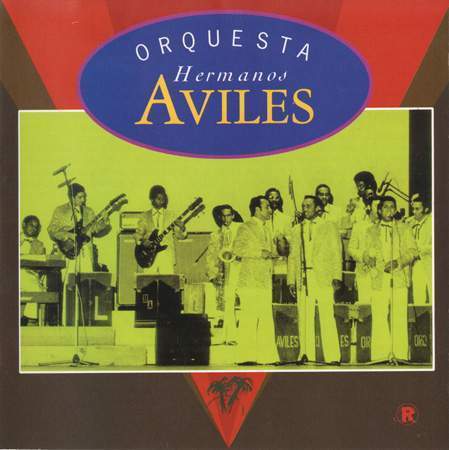
ORQUESTA de los Hermanos Aviles, la Agrupación Musical más Antigua de Latinoamerica. * ORCHESTRA of the Aviles Brothers. the Oldest Musical Group in Latin America. PHOTOS. VIDEOS.

Orquesta-Hermanos-Aviles

ORQUESTA DE LOS HERMANOS AVILES, LA AGRUPACION MUSICAL MAS ANTIGUA DE LATINOAMERICA. VIDEOS

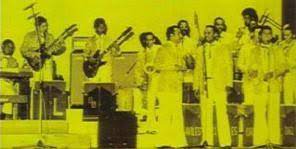
Orquesta Hermanos Avilés. Durante más de un siglo ha sido baluarte del patrimonio musical cubano. Es considerada la orquesta de música popular bailable más antigua de Cuba y América Latina con 140 años.

Fue fundada en Holguín, antigua provincia de Oriente, Cuba el 16 de octubre de 1882, por Manuel Avilés Lozano, con el nombre de La Bulla. En los inicios tuvo formato de charanga y es considerada la más antigua de música popular bailable de Cuba y América Latina con 128 años.

Manuel Avilés Lozano clarinetista y compositor fundó su orquesta con varios músicos locales como: Manuel Dositeo Aguilera, Jesús, Segundo y Walfrido Avilés Urbino, estos tres últimos primos suyos y de los cuales sólo Jesús dejó larga descendencia musical.

Integraron la orquesta 12 de los 14 hijos de Avilés Lozano, sobresaliendo Mauro y Borges Avilés Cruz. Mauro fue el primer saxofonista de la ciudad y durante 60 años integró la orquesta familiar. Borges abandonó la música por la medicina, considerado un virtuoso en el piano y el órgano, que los tocaba desde los 10 años.

VIDEOS- Hermanos Aviles en “Que Tira y Jala”…th

TRAYECTORIA MUSICAL…

Al inicio de la Guerra de Independencia de 1895, casi todos sus miembros se incorporaron al Ejército Libertador, en el que forman la Banda de Música del Ejército Invasor, al mando de Antonio Maceo, bajo la dirección del trombonista Manuel Dositeo Aguilera, que ostentaba en su uniforme mambí el grado de capitán del Ejército Libertador junto a Jesús Avilés Urbina (Chucho), orquestó el Himno invasor, compuesto por Enrique Loynaz del Castillo. Terminada la guerra la Orquesta resurgió a la vida civil amenizando las fiestas populares en distintas épocas y en 1928 adopta el formato de jazz-band, con el nombre de Orquesta Avilés. Entre sus nietos se distingue el pianista Luis Mariano Cancañón y Enrique Avilés Urbino, el compositor Danilo Avilés y el director de orquestas Cronides Avilés (1918-1997), dirige la orquesta en una de las épocas de mayor esplendor, incluye la visita a Venezuela en 1956 hasta 1980. El hijo y el nieto de Cronides, Julio y Pedro, excelentes saxofonistas que siguen haciendo del apellido Avilés reflejo de buena música.

Acompañó al violinista Claudio José Domingo Brindis de Salas, al cantante mexicano Jorge Negrete, el chileno Lucho Gatica, y a los cubanos Miguelito Valdés, Benny Moré, Fernando Álvarez, Rosita Fornés, Pacho Alonso y Rolo Martínez

Ha actuado junto a destacadas agrupaciones, como las orquestas Los Chavales de España, Orquesta Riverside y Aragón, los conjuntos Casino y Roberto Faz, y con Pedro Izquierdo (Pello el Afrokán).

En diferentes etapas integraron estas agrupación Juanito Márquez, guitarrista; Germán Piferrer, Tito Gómez y Onelio Pérez, cantantes; Miguel Villafruela, saxofonista; Jorge Varona, trompetista.

La primera gira nacional de la orquesta holguinera ocurrió en 1937, y después regresaría ya identificada como “La emperatriz del ritmo y la melodía”.

En 1956 realizó su primera presentación internacional que tuvo lugar en Caracas, Venezuela, donde alternó con Benny Moré y su Banda Gigante, entre otras famosas agrupaciones.
mqdefault

DISCOGRAFIA…

Tendrían que pasar 75 años para que la Avilés grabara su primer disco, que llevaría por título: “Juanito Márquez y la Orquesta Avilés”, con el sello Areito. “Mi querido Holguín”, segundo disco, fue grabado en 1982 en los estudios Siboney, de Santiago de Cuba, Cuba, el tema que hace referencia al titulo del disco fue compuesto por el inolvidable Manuel de Jesús Leyva, Koko. Su tercer disco, “Grandes Éxitos”, fue lanzado en 1995 en Portugal

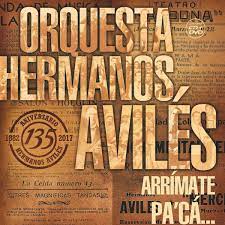
De las etapas más esplendorosas de la Avilés destaca la inclusión en su nómina de Juanito Márquez, compositor, arreglista e instrumentista de fama internacional, quien creó para la orquesta el ritmo Pa’ca, con exitosas piezas musicales como Arrímate pa’cá, Pituka la bella y Cuidado con la vela.

Actualmente anda con una salud excelente la orquesta Avilés, con su sello distintivo, para continuar siendo, lo que siempre ha sido, emblema de la cultura holguinera y cubana, lo que podrá apreciar el público en la gala de por las noches para celebrar sus ya 140 años de fundada.

RECONOCIMIENTOS

El Laurel, máxima distinción que entrega la UNEAC el 20 de Octubre de 2009 y el máximo reconocimiento que otorga la provincia de Holguín.
* RECOMIENDENOS A SUS AMISTADES * PREFIERA A NUESTROS SPONSORS *

* RECOMIENDENOS A SUS AMISTADES * PREFIERA A NUESTROS SPONSORS *

logo (1)

ORCHESTRA OF THE BROTHERS AVILES, THE OLDEST MUSICAL GROUP IN LATIN AMERICA. VIDEOS.

Aviles Brothers Orchestra. For more than a century it has been a bastion of Cuban musical heritage. It is considered the oldest popular dance music orchestra in Cuba and Latin America with 140 years.
images (47)

It was founded in Holguín, former province of Oriente, Cuba on October 16, 1882, by Manuel Avilés Lozano, with the name of La Bulla. In the beginning, it had a charanga format and is considered the oldest popular dance music in Cuba and Latin America for 128 years.

Manuel Avilés Lozano clarinetist and composer founded his orchestra with several local musicians such as: Manuel Dositeo Aguilera, Jesús, Segundo and Walfrido Avilés Urbino, these last three cousins ​​of his and of whom only Jesús left long musical descendants.

The orchestra was made up of 12 of the 14 sons of Avilés Lozano, standing out Mauro and Borges Avilés Cruz. Mauro was the first saxophonist in the city and for 60 years he was a member of the family orchestra. Borges abandoned music for medicine, considered a virtuoso on the piano and the organ, which he had played since he was 10 years old.

MUSICAL CAREER…

At the beginning of the 1895 War of Independence, almost all of its members joined the Liberation Army, in which they formed the Music Band of the Invading Army, commanded by Antonio Maceo, under the direction of trombonist Manuel Dositeo Aguilera, who held his mambí uniform the rank of captain of the Liberation Army together with Jesús Avilés Urbina (Chucho), orchestrated the Invading Anthem, composed by Enrique Loynaz del Castillo. After the war, the Orchestra resurfaced in civil life, entertaining popular festivals at different times, and in 1928 it adopted the jazz-band format, with the name of Orquesta Avilés. His grandchildren include the pianist Luis Mariano Cancañón and Enrique Avilés Urbino, the composer Danilo Avilés and the conductor Cronides Avilés (1918-1997), he conducts the orchestra in one of its most splendid times, including a visit to Venezuela in 1956 to 1980. The son and grandson of Cronides, Julio, and Pedro, excellent saxophonists who continue to make the Avilés surname a reflection of good music.

He accompanied the violinist Claudio José Domingo Brindis de Salas, the Mexican singer Jorge Negrete, the Chilean Lucho Gatica, and the Cubans Miguelito Valdés, Benny Moré, Fernando Álvarez, Rosita Fornés, Pacho Alonso and Rolo Martínez.

He has performed with outstanding groups, such as the orchestras Los Chavales de España, Orquesta Riverside and Aragón, the Casino and Roberto Faz ensembles, and with Pedro Izquierdo (Pello el Afrokán).

In different stages, these groups were made up of Juanito Márquez, guitarist; Germán Piferrer, Tito Gómez and Onelio Pérez, singers; Miguel Villafruela, saxophonist; Jorge Varona, trumpeter.

The first national tour of the Holguin orchestra took place in 1937, and later it would return already identified as “The empress of rhythm and melody”.

In 1956 he made his first international presentation that took place in Caracas, Venezuela, where he alternated with Benny Moré and his Giant Band, among other famous groups.
images (44)

DISCOGRAPHY…

It would take 75 years for Avilés to record its first album, which would be titled: “Juanito Márquez y la Orquesta Avilés”, with the Areito label. “My dear Holguín”, the second album, was recorded in 1982 at the Siboney studios, in Santiago de Cuba, Cuba, the song that refers to the title of the album was composed by the unforgettable Manuel de Jesús Leyva, Koko. His third album, “Grandes Éxitos”, was released in 1995 in Portugal

Of the most splendid stages of the Avilés, the inclusion in its payroll of Juanito Márquez, internationally famous composer, arranger and instrumentalist, who created the Pa’ca rhythm for the orchestra, with successful musical pieces such as Arrímate pa’cá, Pituka la beautiful and watch out for the candle.

The Avilés orchestra is currently in excellent health, with its hallmark, to continue being, what it has always been, an emblem of Holguin and Cuban culture, which the public will be able to appreciate at the evening gala to celebrate its already 140 years of foundation.

ACKNOWLEDGMENTS

The Laurel, the highest distinction awarded by the UNEAC on October 20, 2009, and the highest recognition awarded by the province of Holguín.

Agencies/ Ecured/ Extractos/ Excerpts/ Internet Photos/ YouTube/ Arnoldo Varona/ www.TheCubanHistory.com
THE CUBAN HISTORY,HOLLYWOOD.

* RECOMIENDENOS A SUS AMISTADES * PREFIERA A NUESTROS SPONSORS *
* RECOMIENDENOS A SUS AMISTADES * PREFIERA A NUESTROS SPONSORS *
logo (1)

AUTORIDADES de Cuba y Estados Unidos conversan en la Habana sobre Inmigración. PHOTOS. * AUTHORITIES from Cuba and the United States Talk in Havana on Immigration. PHOTOS.

USCuba1920

AUTORIDADES DE CUBA Y ESTADOS UNIDOS CONVERSAN EN LA HABANA SOBRE INMIGRACION. PHOTOS.

En las reuniones también se abordaron las salidas ilegales, el tráfico ilícito de drogas y las operaciones de búsqueda.

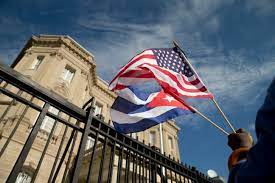
Autoridades de las Tropas Guardafronteras de Cuba y del Servicio de Guardacostas de Estados Unidos se reunieron en La Habana el jueves y este viernes para hablar sobre migración.

En el encuentro se trató de las formas para incrementar la cooperación entre ambos servicios para enfrentarse al tráfico ilícito de migrantes, de acuerdo con una nota publicada este viernes por el Ministerio del Interior.

También se trataron las salidas ilegales, el tráfico ilícito de drogas y las operaciones de búsqueda y salvamento marítimo.

“Las delegaciones de ambos países destacaron la utilidad de estos encuentros y coincidieron en la importancia de avanzar en la cooperación en esta área”, agrega la nota.

Asimismo, señala que el encuentro transcurrió en un clima “respetuoso y profesional”.

Una información publicada por el periódico oficial Granma cita que, según trascendió, “ambas partes acordaron continuar estos encuentros técnicos en el futuro”.

Estas conversaciones han tenido lugar en un momento en el que se ha disparado el éxodo de cubanos, tanto los que apuestan por las rutas migratorias por países de Centroamérica como los que se lanzan a la vía marítima en precarias embarcaciones. Todos con el objetivo de llegar a los Estados Unidos.

La Guardia Costera estadounidense ha detenido en las costas de Florida a unos 4.500 cubanos desde el 1 de octubre de 2021

La Guardia Costera estadounidense ha detenido en las costas de Florida a unos 4.500 cubanos desde el 1 de octubre de 2021, cuando dio inicio el actual año fiscal, según datos de la agencia de Protección de Aduanas y Frontera (CBP, en inglés).

El Departamento de Aduanas y Protección de Fronteras de EE.UU. (CBP, por sus siglas en inglés) ha registrado la llegada de 177.848 migrantes cubanos al territorio de ese país.

La cifra supera al hasta ahora mayor flujo de cubanos, reportado en 1980, cuando 125.000 personas salieron por el puerto del Mariel en apenas siete meses.

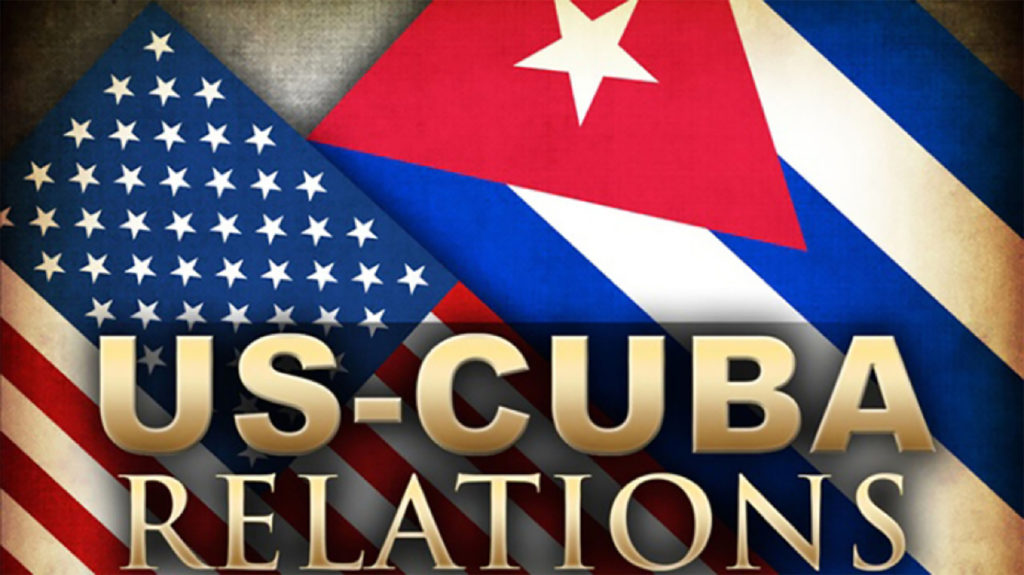
En abril pasado, delegaciones de Cuba y EE.UU. retomaron en Washington su diálogo bilateral sobre asuntos migratorios, el primero de alto nivel desde la llegada del presidente Joe Biden a la Casa Blanca en enero de 2021.

download - 2022-09-11T100449.294

Estas reuniones habían sido suspendidas en 2018 durante la Presidencia de Donald Trump (2017-2021), quien dio marcha atrás al histórico proceso de acercamiento con Isla lanzado por su predecesor, Barack Obama (2009-2017).

El Gobierno cubano calificó de “signo positivo” que EE.UU. mantuviese una reunión sobre temas migratorios con una delegación de su país, y, por su lado, la Administración Biden consideró que esas conversaciones migratorias entre ambas partes fueron “productivas”.

El Ejecutivo de La Habana culpa a Washington por el flujo irregular de ciudadanos cubanos y salidas ilegales por la vía marítima y otras rutas

El Gobierno demócrata estadounidense ha puesto en marcha recientemente varias medidas, entre ellas, el incremento de los servicios consulares de su embajada en la Isla y el restablecimiento de un programa de reunificación familiar que llevaba suspendido desde 2017.

No obstante, el Ejecutivo de La Habana culpa a Washington por el flujo irregular de ciudadanos cubanos y salidas ilegales por la vía marítima y otras rutas, y lo achaca al incumplimiento del acuerdo bilateral que estipula la entrega de 20.000 visas al año para cubanos.

Además, achaca el aumento de la migración a la vigencia de la Ley de Ajuste Cubano de 1966, que permite a los cubanos solicitar la residencia permanente en Estados Unidos al año y un día de permanecer en ese país.

Cuba atraviesa una grave crisis económica por la combinación de la pandemia, el endurecimiento de las sanciones estadounidenses y los errores internos en la gestión macroeconómica.

* RECOMIENDENOS A SUS AMISTADES * PREFIERA A NUESTROS SPONSORS *

* RECOMIENDENOS A SUS AMISTADES * PREFIERA A NUESTROS SPONSORS *

logo-1

AUTHORITIES FROM CUBA AND THE UNITED STATES TALK IN HAVANA ON IMMIGRATION. PHOTOS.

The meetings also addressed illegal departures, illicit drug trafficking, and search operations.

download - 2022-09-11T100455.998

AUTHORITIES from the Cuban Border Guard Troops and the United States Coast Guard Service met in Havana on Thursday and this Friday to talk about migration.

The meeting discussed ways to increase cooperation between the two services to deal with the smuggling of migrants, according to a note published this Friday by the Ministry of the Interior.

Illegal departures, illicit drug trafficking, and maritime search and rescue operations were also discussed.

“The delegations of both countries highlighted the usefulness of these meetings and agreed on the importance of advancing cooperation in this area,” the note adds.

Likewise, he points out that the meeting took place in a “respectful and professional” atmosphere.

Information published by the official newspaper Granma cites that, according to reports, “both parties agreed to continue these technical meetings in the future.”

These talks have taken place at a time when the exodus of Cubans has skyrocketed, both those who bet on the migratory routes through Central American countries and those who embark on the sea in precarious boats. All with the goal of reaching the United States.

The US Coast Guard has detained some 4,500 Cubans on the Florida coast since October 1, 2021

The US Coast Guard has detained some 4,500 Cubans on the Florida coast since October 1, 2021, when the current fiscal year began, according to data from the Customs and Border Protection agency (CBP).

The Department of Customs and Border Protection of the United States (CBP, for its acronym in English) has registered the arrival of 177,848 Cuban migrants to the territory of that country.

The figure exceeds the largest flow of Cubans so far, reported in 1980, when 125,000 people left through the port of Mariel in just seven months.

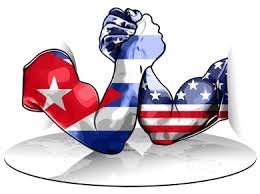
Last April, delegations from Cuba and the United States resumed their bilateral dialogue on migration issues in Washington, the first at a high level since the arrival of President Joe Biden at the White House in January 2021.

These meetings had been suspended in 2018 during the Presidency of Donald Trump (2017-2021), who reversed the historic rapprochement process with Isla launched by his predecessor, Barack Obama (2009-2017).

download - 2022-09-11T100506.645

The Cuban government described as a “positive sign” that the United States held a meeting on migration issues with a delegation from its country, and, for its part, the Biden Administration considered that these migration talks between both parties were “productive.”

The Havana Executive blames Washington for the irregular flow of Cuban citizens and illegal departures by sea and other routes

The US Democratic government has recently implemented several measures, including increasing the consular services of its embassy on the island and reestablishing a family reunification program that had been suspended since 2017.

However, the Executive in Havana blames Washington for the irregular flow of Cuban citizens and illegal departures by sea and other routes and attributes it to the breach of the bilateral agreement that stipulates the delivery of 20,000 visas a year for Cubans.

In addition, he attributes the increase in migration to the validity of the Cuban Adjustment Act of 1966, which allows Cubans to apply for permanent residence in the United States after one year and one day of staying in that country.

Cuba is going through a serious economic crisis due to the combination of the pandemic, the tightening of US sanctions, and internal errors in macroeconomic management.

Agencies/ EFE/ 14yMedio/ Extractos/ Excerpts/ Internet Photos/ Arnoldo Varona/ www.TheCubanHistory.com
THE CUBAN HISTORY, HOLLYWOOD.

* RECOMIENDENOS A SUS AMISTADES * PREFIERA A NUESTROS SPONSORS *
* RECOMIENDENOS A SUS AMISTADES * PREFIERA A NUESTROS SPONSORS *

logo-1

EL ESCUDO CUBANO, símbolo Representativo e Historico de la Nación. PHOTOS. * THE CUBAN SHIELD , symbol Representative and Historic of the Nation. PHOTOS.

i-405-cG.31628.1 (1)

EL ESCUDO CUBANO, SIMBOLO REPRESENTATIVO E HISTORICO DE LA NACION. PHOTOS.

El Escudo Nacional de Cuba es el símbolo patrio que, junto a la Bandera de la Estrella Solitaria y al Himno Nacional, representan el país desde el siglo XIX. Este símbolo fue adoptado por la República de Cuba en Armas durante la Asamblea Constituyente de Guáimaro (1869) y ratificado por las posteriores constituciones cubanas.

El escudo de Cuba, conocido como el de La Palma Real, fue creado en 1849 por Miguel Teurbe Tolón —quien también creó la bandera cubana— a petición del general Narciso López, para sellar los despachos y bonos que como jefe del gobierno provisional de Cuba emitió entre 1850 y 1851.

HISTORIA DEL ESCUDO NACIONAL CUBANO

El Escudo Nacional está inspirado en el que diseñó el poeta, bajo las ideas que le trasmitió Narciso López para la Bandera Nacional. Difiere algo del confeccionado originalmente en 1849 y que fue hecho para servir de viñeta al periódico La Verdad , dirigido por Teurbe en Nueva York y el cual fue empleado por López como jefe del gobierno provisional de Cuba.

La versión actual no es exactamente igual a la original, ya que se suprimieron algunos elementos que contenía aquel y que podían haberse asociado con ideas anexionistas. Las especificaciones de diseño del escudo fueron establecidas mediante decreto por el primer presidente de Cuba, Tomás Estrada Palma, el 21 de abril de 1906 y han permanecido sin modificaciones desde entonces.

Su forma vigente fue adoptada en la Asamblea de Guáimaro al crearse la República de Cuba en Armas. Actualmente su uso esta regulado por la Ley No. 42 de los Símbolos Nacionales de la Asamblea Nacional del Poder Popular de 1983, donde se indica que es un Símbolo de la Nación representativo de la misma.

CARACTERISTICAS

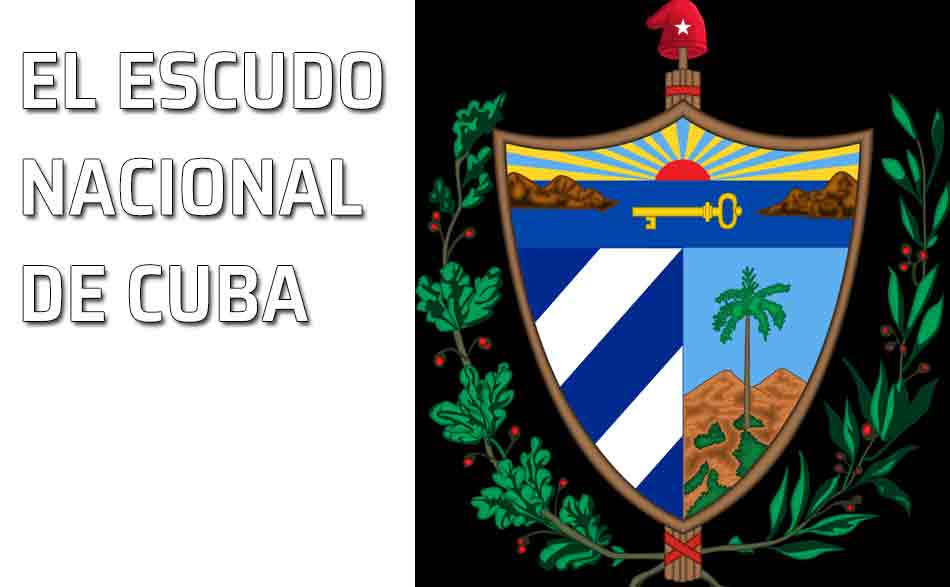
Tiene forma de adarga ojival formada por dos arcos de círculos iguales que se cortan volviendo la concavidad el uno al otro, dividido en tres cuerpos, espacios o cuarteles.

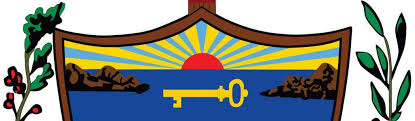
El cuerpo superior horizontal representa un mar con dos cabos, montañas o puntas terrestres a sus lados, lo cual simboliza la posición de Cuba entre las dos Américas y el surgimiento de una nueva nación. Cierra el estrecho una llave dorada de vástago macizo, colocada en un fondo azul marino, con la palanca hacia abajo. Al fondo un sol naciente esparce sus rayos por todo el cielo del paisaje, que recuerda el lugar de Cuba: la “llave del Nuevo Mundo”, el nexo entre América y Europa y entre el norte y el sur de América, así como el surgir luminoso del naciente estado.

El cuerpo inferior derecho tiene cinco bandas de igual ancho, alternadas de color azul turquí y blanco e inclinadas todas de izquierda a derecha, que se asocian a la bandera. Estas franjas blancas y azules ejemplifican la división departamental de la Isla en la época colonial.

En el cuerpo inferior izquierdo figura en el centro un paisaje de un verde suelo, llano y montañoso, en un cielo azul y claro, que simboliza el entorno cubano en lo más natural y propio de su contenido; este está presidido por la Palma Real, árbol que tipifica lo cubano, con el botón de su hoja central en lo más alto, emblema del carácter indoblegable del pueblo.

En el diseño aparece un gorro frigio de color rojo, emblema adoptado por la Revolución Francesa, vuelto hacia la derecha, que sobresale por la parte superior. Este gorro se había usado en la antigüedad para ser llevado por los hombres que habían obtenido la libertad; en él aparece en su parte central, una estrella blanca de cinco puntas, con una de ellas orientada hacia la parte superior y, al igual que en la Bandera de la Estrella Solitaria, representa el estado independiente.

images (43)

El Escudo se sostiene por un haz de once varillas, unidas por una cinta roja cruzada en equis que significa la unión de todos los cubanos, pues esta es la que da la fuerza.

Sin exceder la altura del escudo, una rama de laurel y otra de encina orlan a su izquierda y derecha, respectivamente. La primera representa la fortaleza y la segunda la victoria.

REGULACIONES Y USOS

– El Escudo Nacional es pintado o grabado en fachadas de edificios siempre colocado en un lugar acorde con lo que representa.
– Los tribunales, juzgados, oficinas, delegaciones, consulados y demás dependencia del Estado continuaran empleando el Escudo de Armas de la República actualmente en uso, para sellar sus despachos y documentos de toda clase y como ornamento de los edificios y locales cuando el decorado lo exija.
– Los autos oficiales lo llevan muchas veces impresos en sus puertas.
– Las monedas están acuñadas con el escudo.
– Los documentos lacrados, son sellados igualmente con él.
– En los cuños, sacos, papeles timbrados aparece el escudo.
– En todos los casos dondequiera que este aparezca significa que el objeto, sea el que sea está avalado por el Estado Cubano.

PROHIBICIONES.
– Como distintivo y anuncio.
– Como parte del vestuario, salvo a lo dispuesto para los uniformes de las instituciones armadas de la defensa.
– Pintado o grabado en vehículos, o reproducido en artículos de uso no oficial.
– En edificios particulares.
– En documentos no oficiales.
– Utilizado como parte de otras figuras.

El escudo, fue ratificado por la Constitución de 1940 y ha sido sucesivamente ratificado en las Constituciones adoptadas tras el triunfo de la Revolución de 1959.

* RECOMIENDENOS A SUS AMISTADES * PREFIERA A NUESTROS SPONSORS *

* RECOMIENDENOS A SUS AMISTADES * PREFIERA A NUESTROS SPONSORS *
logo (1)

THE CUBAN SHIELD, IS A HISTORICAL REPRESENTATIVE SYMBOL OF THE NATION. PHOTOS

images-5-1

The National Shield of Cuba is the national symbol that, together with the Lone Star Flag and the National Anthem, has represented the country since the 19th century. This symbol was adopted by the Republic of Cuba in Arms during the Constituent Assembly of Guáimaro (1869) and ratified by subsequent Cuban constitutions.

The coat of arms of Cuba, known as that of La Palma Real, was created in 1849 by Miguel Teurbe Tolón —who also created the Cuban flag— at the request of General Narciso López, to seal the offices and bonds that as head of the provisional government of Cuba issued between 1850 and 1851.

HISTORY OF THE CUBAN NATIONAL SHIELD

The National Shield is inspired by the one designed by the poet, under the ideas that Narciso López transmitted to him for the National Flag. It differs somewhat from the one originally made in 1849 and which was made to serve as a vignette for the newspaper La Verdad, directed by Teurbe in New York and which was employed by López as head of the provisional government of Cuba.

The current version is not exactly the same as the original, since some elements that it contained and that could have been associated with annexationist ideas were deleted. The shield’s design specifications were established by decree by Cuba’s first president, Tomás Estrada Palma, on April 21, 1906, and have remained unchanged ever since.

Its current form was adopted in the Assembly of Guáimaro when the Republic of Cuba in Arms was created. Currently, its use is regulated by Law No. 42 of the National Symbols of the National Assembly of People’s Power of 1983, where it is indicated that it is a Symbol of the Nation’s representative of it.

FEATURES

It has the shape of an ogival shield formed by two equal circular arcs that intersect by returning the concavity to each other, divided into three bodies, spaces, or barracks.

The upper horizontal body represents a sea with two capes, mountains, or points of land on its sides, which symbolizes Cuba’s position between the two Americas and the emergence of a new nation. The strait is closed by a solid shank golden key, placed on a navy blue background, with the lever facing downwards. In the background, a rising sun spreads its rays throughout the sky of the landscape, which recalls the place of Cuba: the “key to the New World”, the link between America and Europe and between North and South America, as well as the emergence light of the nascent state.

The lower right body has five bands of equal width, alternating turquoise blue and white and all sloping from left to right, which is associated with the flag. These white and blue stripes exemplify the departmental division of the Island in colonial times.

In the lower-left body there is a landscape in the center of a green, flat and mountainous land, in a clear blue sky, which symbolizes the Cuban environment in its most natural and typical content; this is presided over by the Royal Palm, a tree that typifies what is Cuban, with the button of its central leaf at the top, an emblem of the indomitable character of the people.

The design features a red Phrygian cap, an emblem adopted by the French Revolution, turned to the right, protruding from the top. This hat had been used in ancient times to be worn by men who had obtained freedom; it appears in its central part, a white five-pointed star, with one of them oriented towards the top and, as in the Lone Star Flag, represents the independent state.

images (42)

The Shield is supported by a bundle of eleven rods, joined by a crossed red ribbon that means the union of all Cubans since this is what gives strength.

Without exceeding the height of the shield, a branch of laurel and another of the oak border to its left and right, respectively. The first represents strength and the second is victory.

REGULATIONS AND USES

– The National Shield is painted or engraved on building facades, always placed in a place consistent with what it represents.
– The courts, tribunals, offices, delegations, consulates, and other dependencies of the State will continue to use the Coat of Arms of the Republic currently in use, to seal their offices and documents of all kinds and as an ornament of the buildings and premises when the decoration demand.
– Official cars often have it printed on their doors.
– The coins are minted with the shield.
– Sealed documents are also sealed with them.
– In the stamps, sacks, and stamped papers the shield appears.
– In all cases, wherever it appears, it means that the object, whatever it is, is endorsed by the Cuban State.

PROHIBITIONS.
– As a badge and advertisement.
– As part of the clothing, except as provided for the uniforms of the armed defense institutions.
– Painted or engraved on vehicles, or reproduced on articles for non-official use.
– In private buildings.
– In unofficial documents.
– Used as part of other figures.

The coat of arms was ratified by the 1940 Constitution and has been successively ratified in the Constitutions adopted after the triumph of the 1959 Revolution.

Agencies/ Wiki/ EscudoNacionalHist./ Extractos/ Excerpts/ Internet Photos/ Arnoldo Varona/ www.TheCubanHistory.com
THE CUBAN HISTORY, HOLLYWOOD.

* RECOMIENDENOS A SUS AMISTADES * PREFIERA A NUESTROS SPONSORS *
* RECOMIENDENOS A SUS AMISTADES * PREFIERA A NUESTROS SPONSORS *

logo-1