

 DESDE CUBA, OPINIÓN: La Venganza de la Escoria Cubana. PHOTOS. * FROM CUBA, OPINION: The Revenge of the Cuban Dross. PHOTOS
DESDE CUBA, OPINIÓN: LA VENGANZA DE LA ESCORIA CUBANA. PHOTOS
By Reinaldo Escobar, La Habana, Cuba.
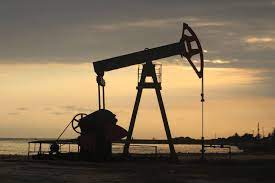
Las autoridades piden sacrificios a la población después de haber destrozado durante décadas el Sistema Energético Nacional.
HE ESCUCHADO CON PACIENCIA, hasta con el debido respeto, la intervención de este jueves de Miguel Díaz-Canel, donde tuvo el propósito de convencer a la teleaudiencia –entiéndase la población– de que los problemas que confronta el país con la generación eléctrica no son culpa del Gobierno, sino de un conjunto de circunstancias donde se incluye “el criminal bloqueo”, las dificultades del comercio internacional derivadas de la pandemia y otras causas.
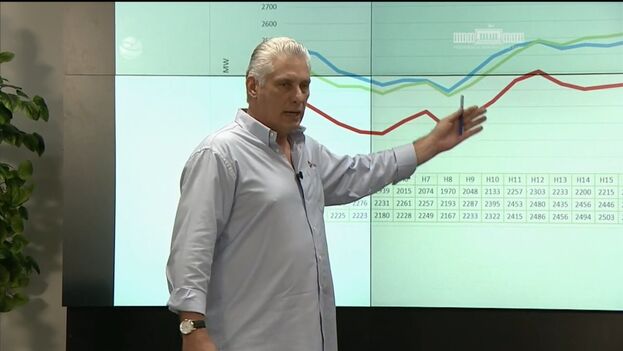
Miguel Díaz-Canel este jueves hablando del Sistema Energético cubano. (Cubadebate)
Debo confesar que, cuando lo vi frente a un gráfico explicando los detalles de cuál es la potencia nominal y la potencia disponible de las diferentes unidades de generación eléctrica en el país, me vino a la mente aquella histórica comparecencia de Fidel Castro, puntero en mano frente a un mapa de Cuba, explicando cómo la caña de ciertas áreas agrícolas sería molida por otros centrales, un poco más alejados, para así poder garantizar que se produjeran aquellos diez millones de toneladas de azúcar que por poco hacen naufragar definitivamente a la Isla y que, finalmente, nunca se lograron.
REPETICION DE UN DISCURSO ANTIGUO….
La analogía puede ser forzada, pero lo cierto es que tanto aquel ilusorio propósito de los diez millones, como este de garantizar la generación de electricidad están signados por la misma marca: el voluntarismo.
El petróleo que se extrae del subsuelo cubano contiene componentes que resultan agresivos para las calderas de las termoeléctricas. Puede que sea azufre, no lo sé, renuncio a dar pormenores técnicos, pero el que no me crea, que consulte los detalles.
Alguien, de cuyo nombre no quiero acordarme, decidió un mal día que el país no tenía que depender de las importaciones de petróleo para generar electricidad. Fue así que, en contra de la opinión de muchos especialistas, se impuso el criterio de usar el crudo nacional, como si fuera un reto patriótico, como si las máquinas entendieran la necesidad de ser envenenadas, corroídas en nombre de una exigencia de sacrificio.
PROBLEMAS DE NUESTRO PETROLEO…
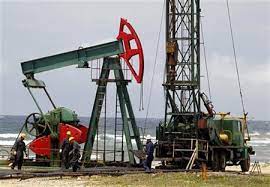
Nuestro petróleo, el del suelo patrio, resulta eficiente para producir asfalto y, quizás, para obtener otros derivados, pero cuando entra en las arterias de una termoeléctrica, diseñada para otro tipo de combustible, deja en sus paredes internas una costra que, tarde o temprano, debe ser retirada porque disminuye la capacidad de las calderas y porque, además, termina dañando los metales. Esa escoria indeseable obliga a reducir la frecuencia de mantenimientos. Si “normalmente” habría que hacer mantenimiento cada ciertos años, con ese combustible hay que llevarlo a cabo cada ciertos meses, de lo contrario, se producen apagones.
Aclaro que no soy especialista en el tema y estoy mencionando las generalidades que se le ocurren a un profano.
El mantenimiento es una palabra sagrada en la mecánica industrial. Se realiza con el propósito de no tener que hacer reparaciones.
Los productores de grandes maquinarias, como las refinerías o las termoeléctricas, garantizan el funcionamiento de su producto siempre y cuando se cumplan los protocolos de mantenimiento. Cada ciertas horas, días, meses o años de trabajo, cierta pieza debe ser sustituida. Si no se cumple ese requisito, los productores del ingenio no se sienten responsables de las averías o los desperfectos. Ocurre con los aviones y con otros artilugios.
Cuando por voluntad política se le impone a una máquina, a una herramienta, un régimen de trabajo que le resulta perjudicial, el mantenimiento pasa a convertirse en reparación
UNA NUEVA ROSCA A LA MISMA TUERCA…
Todo el que en Cuba ha participado en una tarea de mantenimiento sabe cuánto sufren las roscas de cada tuerca, o peor aún, cuántas tuercas se pierden y se dejan por desechables. “Bastan tres donde tocaban cinco”. Cuando se acumulan, año tras año, los efectos tienen consecuencias.
Pero no solo se le pide a las máquinas que tengan la vocación de sacrificio para funcionar con un combustible que las aniquila. La exigencia se traslada a los operarios, a quienes se demanda un mayor número de horas de trabajo continuo para poner a funcionar una planta en contra de sus requerimientos técnicos.
El sacrificio, finalmente, recae en los consumidores, a los que se les pide que pongan en marcha su espíritu revolucionario y apaguen uno, o mejor dos bombillos, porque eso le permite al país el lujo de la soberanía energética.
La escoria que se acumula en las paredes de las calderas no puede ser un obstáculo en la voluntad de vencer.

*RECOMIENDENOS A SUS AMISTADES*
*PREFIERA A NUESTROS SPONSORS*

FROM CUBA, OPINION: THE REVENGE OF THE CUBAN DROSS. PHOTOS
By Reinaldo Escobar, Havana, Cuba.
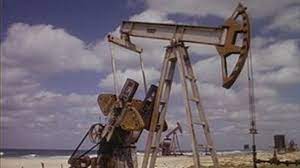
The authorities ask the population for sacrifices after having destroyed the National Energy System for decades.
I HAVE LISTENED PATIENTLY, even with due respect, to Miguel Díaz-Canel’s intervention this Thursday, where he had the purpose of convincing the television audience – understand the population – that the problems that the country faces with electricity generation are not the fault of the Government, but of a set of circumstances that includes “the criminal blockade”, the difficulties of international trade derived from the pandemic and other causes.

Miguel Díaz-Canel this Thursday talking about the Cuban Energy System. (Cubandebate)
I must confess that, when I saw him in front of a graph explaining the details of the nominal power and the available power of the different electricity generation units in the country, that historic appearance by Fidel Castro, pointer in hand, came to mind in front of a map of Cuba, explaining how the cane from certain agricultural areas would be milled by other mills, a little further away, in order to guarantee the production of those ten million tons of sugar that nearly wrecked the island for good and that, finally, were never achieved.
REPETITION OF AN OLD SPEECH…
The analogy may be forced, but the truth is that both that illusory purpose of the ten million and this one of guaranteeing the generation of electricity are marked by the same brand: voluntarism.
The oil that is extracted from the Cuban subsoil contains components that are aggressive for the boilers of the thermoelectric plants. It may be sulfur, I don’t know, I refuse to give technical details, but if you don’t believe me, check the details.
Someone, whose name I don’t want to remember, decided one bad day that the country didn’t have to depend on oil imports to generate electricity. It was thus that, contrary to the opinion of many specialists, the criterion of using national crude oil was imposed, as if it were a patriotic challenge as if the machines understood the need to be poisoned, corroded in the name of demand for sacrifice.
PROBLEMS WITH OUR OIL…
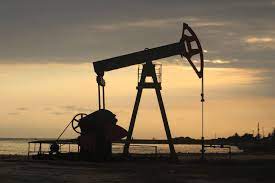
Our oil, that of the native soil, is efficient to produce asphalt and, perhaps, to obtain other derivatives, but when it enters the arteries of a thermoelectric plant, designed for another type of fuel, it leaves a crust on its internal walls that, sooner or later, early, it must be removed because it reduces the capacity of the boilers and because, in addition, it ends up damaging the metals. This undesirable slag makes it necessary to reduce the frequency of maintenance. If “normally” maintenance would have to be done every few years, with that fuel it must be carried out every few months, otherwise, blackouts occur.
I clarify that I am not a specialist in the subject and I am mentioning the generalities that occur to a layman.
Maintenance is a sacred word in industrial mechanics. It is done with the purpose of not having to make repairs.
The producers of large machinery, such as refineries or thermoelectric plants, guarantee the operation of their product as long as the maintenance protocols are followed. Every few hours, days, months, or years of work, a certain part must be replaced. If this requirement is not met, the sugar mill producers do not feel responsible for the breakdowns or damage. It happens with airplanes and with other contraptions.
When, by political will, a work regimen is imposed on a machine or a tool that is detrimental to it, maintenance becomes to repair.
A NEW THREAD ON THE SAME NUT…
Everyone who has participated in a maintenance task in Cuba knows how much the threads of each nut suffer, or worse still, how many nuts are lost and left as disposable. “Three are enough where five played.” When they accumulate, year after year, the effects have consequences.
But machines are not only asked to have the vocation of sacrifice to run on a fuel that annihilates them. The requirement is transferred to the operators, who are required to have a greater number of hours of continuous work to put a plant into operation against its technical requirements.
The sacrifice, finally, falls on the consumers, who are being asked to put their revolutionary spirit into action and turn off one, or better two, light bulbs, because that allows the country the luxury of energy sovereignty.
The slag that accumulates on the walls of the boilers cannot be an obstacle to the will to win.
Agencies/ 14yMedio/ (OPINION) Reinaldo Escobar, La Habana/ Extractos/ Excerpts/ Internet Photos/ Arnoldo Varona/ www.TheCubanHistory.com
THE CUBAN HISTORY, HOLLYWOOD.

*RECOMIENDENOS A SUS AMISTADES*
*PREFIERA A NUESTROS SPONSORS*
