 HISTORIA DE AMOR APASIONANTES QUE PASARON A LA HISTORIA CUBANA.
Este es un viaje por algunas de las historias de amor más apasionantes de la Historia de Cuba. Parejas de hombres y mujeres sacrificados que se amaron hasta llegar a ser recogidos por la historia como ejemplos de lazos inolvidables.
¿Dónde se conocieron? ¿Qué les unió? ¿Cuánto sacrificaron en pos de un deber mayor? Historias con distintos finales. Algunos felices, otros marcados por la tragedia.
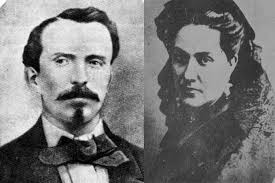
 MARTI Y CARMEN.
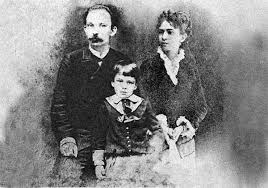
En la Ciudad México, José Martí y Carmen Zayas se conocieron. La joven quedó prendada con los modales finos del joven y él encontró en ella la calma que necesitaba.
En la residencia de Manuel Mercado contraerían matrimonio e iniciarían desde entonces un albúm de bodas, costumbre de la época similar a los carnés de baile o abanicos firmados, donde los amigos dedicaban algunas palabras a favor de los novios.
De su relación no exentan de contradicciones, nace el 22 de noviembre en la parroquia de Monserrate, el único hijo de la pareja.
Cuando Carmen conoció la noticia de su muerte reclamó sus restos mortales. Ella murió en 1928 en El Vedado y hasta sus últimos días conservó con sumo cuidado el álbum de bodas de su juventud.
 CESPEDES Y ANA.
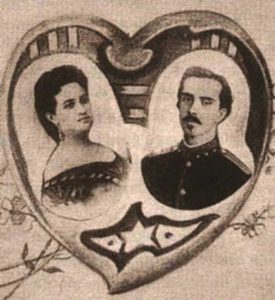
Carlos Manuel de Céspedes era un hombre culto, educado y con talento para la música. En cuestiones amorosas cosechó corazones y hasta ayudó a otros en sus conquistas.
La Bayamesa interpretada el 27 de marzo de 1848, contó con música compuesta por Carlos Manuel de Céspedes y Francisco Castillo Moreno.
Carlos conocería a Ana de Quesada y Loynaz durante un almuerzo en festejo de la Asamblea de Guáimaro invitado por el General Manuel de Quesada. El ya Presidente de la República en Armas se enamoró al instante.
Ella también cayó rendida ante sus encantos. El 4 de noviembre se casaron en San Diego del Chorrillo, en los campos de Cuba Libre.
Sufren privaciones, ella es tomada de rehén junto su hijo. Para evitar mayores riesgos se separan y Ana parte hacia Nueva York. Cuando Céspedes fue depuesto de la presidencia, pidió permiso para viajar junto a su esposa e hijos. Pero no se lo permitieron.
Rumores sobre otros amores del héroe en Cuba provocaron la ruptura de la relación, aunque ella sufriría su muerte con especial dureza y educó a los hijos con los valores del padre.
 AGRAMONTE Y AMALIA.
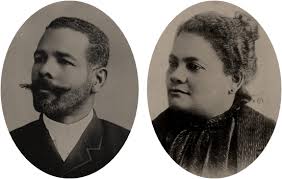
El romance de Ignacio Agramonte y Amalia Simoni, inició bajo la oposición férrea del padre de la joven, quien dudaba de si el muchacho sería un «buen partido».
El joven mostró su voluntad inamovible y ella categórica expresó que si no era con Ignacio «no me casaré con nadie». De no ser así, quizás no hubiesen contraído matrimonio.
Un detalle particular marcó la pareja: la distancia. Durante el noviazgo los separó la carrera de abogado en La Habana; y a los tres meses de matrimonio la lucha por la independencia.
En medio de la distancia las contantes cartas les mantienen unidos. Su epistolario describe casi todos los instantes de la relación: la pasión, la tristeza, los planes mutuos y el futuro a veces incierto.
En medio de las intermitencias de la guerra nace su primer hijo, Ernesto, el 26 de mayo de 1869.
Cuando su niño cumplía un año de vida, una columna española captura a la familia Agramonte Simoni. «[…] busqué en el monte y sólo encontré la seguridad de que el enemigo me había llevado mis tesoros únicos, mis tesoros adorados […]. Qué desolación, amor mío, […]», relata Ignacio en una misiva en el 6 de junio de 1870.
A este hecho sigue una etapa de separación prolongada durante la cual nacerá su hija Herminia, a quien conocerá solo por referencias de Amalia.
A pesar de todos los infortunios Ignacio Agramonte mantiene confianza en el triunfo. «[…]Ni un momento he dudado jamás que nuestra separación terminará, y volverá nuestra suprema felicidad con la completa libertad de Cuba», escribe el 19 de noviembre de 1872 en su última carta conocida.
Ante tanta temeridad, su esposa le suplica tener cuidado con su propia vida, por sus hijos, por ella y hasta por la Cuba, su patria. Incluso llegó a preguntarle «¿no me amas? ». Esta carta jamás llegó a manos del Mayor, quien murió 11 días después en Jimaguayú.
Ignacio Agramonte le profesó eterno amor a su esposa Amalia Simoni a través de cartas: «Te aseguro que vacilaría si alguna vez encontrara tu felicidad y mi deber frente a frente; creo que ya te lo dije en otra ocasión. Ojalá nunca se encuentren».
 MACEO Y MARIA.
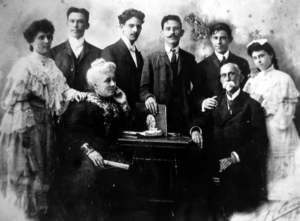
María Cabrales y Antonio Maceo contrajeron matrimonio el 16 de febrero de 1866. La joven pareja convertiría en su nidito de amor a la Finca La Esperanza, donde la calma apacible no duró mucho pues ambos estaban comprometidos con la independencia de Cuba y debieron marchar a la manigua.
María de la Caridad, Maceo Cabrales y José Antonio, sus pequeños hijos, fallecieron en la manigua. Junto a Mariana Grajales seguía a su esposo para, tras cada batalla, curar a los heridos.
Cuando finalizó la guerra del 68, viajaron por Jamaica, Honduras, Panamá… y se establecen en Costa Rica. Cuando Maceo volvió a la lucha, María le siguió durante la invasión de Oriente a Occidente.
Tras la muerte de Antonio y el fin de la guerra del 95, dirigió el Asilo de Huérfanos de la Patria que auspiciaron los veteranos de la región, tal vez para paliar los recuerdos del amado y la necesidad de sus pequeños.
De esta forma lo relata en una carta a Alejandro González el siete de marzo de 1897 publicada en la Revista de Historia Cubana y Americana.
 BERNARDA DEL TORO Y MAXIMO GOMEZ.
Muy joven empezó Bernarda Toro, Manana, su vida al lado de Máximo Gómez. Lo acompañó en la manigua en la Guerra de los Diez Años, y en ella perdieron a los dos primeros hijos que procrearon y vivieron los siguientes vástagos sus años iniciales. Lo sigue Manana en su peregrinar, luego de finalizada la contienda, hasta que se establecen en Montecristi, en la tierra dominicana del General.
Así comienza Ciro Bianchi un recorrido sintético por la vida de Bernarda, mujer que se transformó en símbolo de la fortaleza de las cubanas independentistas.
Máximo Gómez era un hombre que ya sobrepasaba los treinta años cuando en Jiguaní, Granma, la conoció. Ella se había incorporado a la guerra junto a sus madres y hermanos, y llevaba informaciones de los españoles a la Sierra Maestra, donde radicaba su cuartel según se describe en el libro Máximo Gómez… Revolución, Cuba y hogar.
Se casarían en una prefectura mambisa con Fernando Figueredo, el marqués de Santa Lucía y Salvador Cisneros Betancourt, como testigos de la unión.
«Tu madre nunca quiso abandonarme y me seguía a todas partes. ¡Cuánto no pasaría!», le escribió Máximo Gómez en una ocasión a su hija Clemencia, cuando ya llevaba 36 años de relaciones con Manana.
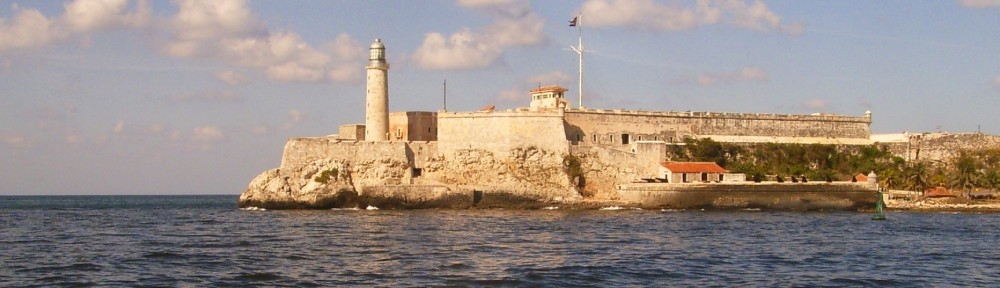

 PASSIONATE LOVE STORIES THAT REMAINED IN THE CUBAN HISTORY.
This is a journey through some of the most exciting love stories in Cuban History. Couples of sacrificed men and women who loved each other until they were picked up by history as examples of unforgettable ties.
Where did they meet? What brought you together? How much did they sacrifice for a greater duty? Stories with different endings. Some happy, others marked by tragedy.
MARTI AND CARMEN.
In Mexico City, José Martí and Carmen Zayas met. The young woman was captivated by the young man’s fine manners and he found in her the calm he needed.
At Manuel Mercado’s residence they would get married and from then on start a wedding album, a custom of the time similar to dance cards or signed fans, where friends dedicated some words in favor of the bride and groom.
Their relationship is not without contradictions, he was born on November 22 in the parish of Monserrate, the couple’s only son.
When Carmen heard the news of his death, she claimed her mortal remains. She died in 1928 in El Vedado and until her last days, she carefully kept the wedding album of her youth.
CESPEDES AND ANA.
Carlos Manuel de Céspedes was a cultured, educated man with a talent for music. In loving matters, he reaped hearts and even helped others in their conquests.
The Bayamesa performed on March 27, 1848, had music composed by Carlos Manuel de Céspedes and Francisco Castillo Moreno.
Carlos would meet Ana de Quesada and Loynaz during a lunch in celebration of the Guáimaro Assembly invited by General Manuel de Quesada. The already President of the Republic in Arms fell in love instantly.
She, too, fell at his charms. On November 4 they were married in San Diego del Chorrillo, in the fields of Cuba Libre.
They suffer deprivations, she is taken hostage with her son. To avoid greater risks, they split up and Ana left for New York. When Cespedes was deposed from the presidency, he asked permission to travel with his wife and children. But they did not allow it.
Rumors about other loves of the hero in Cuba caused the breakdown of the relationship, although she would suffer his death with special harshness and raised the children with the values of the father.
AGRAMONTE AND AMALIA.
The romance of Ignacio Agramonte and Amalia Simoni began under the fierce opposition of the young woman’s father, who doubted if the boy would be a “good match”.
The young man showed his immovable will and she categorically expressed that if it was not with Ignacio “I will not marry anyone”. If not, they might not have been married.
A particular detail marked the couple: the distance. During the courtship, they were separated by a career as a lawyer in Havana; and after three months of marriage the fight for independence.
In the middle of the distance, the constant letters keep them together. His epistolary describes almost every moment of the relationship: passion, sadness, mutual plans, and the sometimes uncertain future.
In the midst of the intermittencies of the war, his first son, Ernesto, was born on May 26, 1869.
When her boy was one year old, a Spanish column captures the Agramonte Simoni family. «[…] I searched the mountain and only found the assurance that the enemy had brought me my unique treasures, my beloved treasures […]. What desolation, my love, […] ”Ignacio relates in a letter on June 6, 1870.
This event is followed by a prolonged period of separation during which her daughter Herminia will be born, whom she will meet only by references from Amalia.
Despite all the misfortunes, Ignacio Agramonte remains confident in the victory. “[…] I have never doubted for a moment that our separation will end, and our supreme happiness will return with the complete freedom of Cuba,” he wrote on November 19, 1872, in his last known letter.
In the face of such recklessness, his wife begs him to be careful with his own life, for his children, for her and even for Cuba, his homeland. He even asked him “don’t you love me? ». This letter never reached the Mayor, who died 11 days later in Jimaguayú.
Ignacio Agramonte professed eternal love for his wife Amalia Simoni through letters: «I assure you that I would hesitate if I ever found your happiness and my duty face to face; I think I already told you another time. I hope they never meet.
MACEO AND MARIA .
María Cabrales and Antonio Maceo were married on February 16, 1866. The young couple would make Finca La Esperanza their love nest, where the peaceful calm did not last long as they were both committed to the independence of Cuba and had to go to manigua.
María de la Caridad, Maceo Cabrales and José Antonio, their young children, died in the jungle. Along with Mariana Grajales, she followed her husband to heal the wounded after each battle.
When the war of ’68 ended, they traveled through Jamaica, Honduras, Panama … and settled in Costa Rica. When Maceo returned to the fight, Maria followed him during the invasion from East to West.
After Antonio’s death and the end of the ’95 war, he directed the Homeland Orphan Asylum sponsored by the region’s veterans, perhaps to alleviate the memories of the beloved and the need for their little ones.
In this way, he relates it in a letter to Alejandro González on March 7, 1897, published in the Magazine of Cuban and American History.
BERNARDA DEL TORO AND MAXIMO GOMEZ.
Bernarda Toro, Manana, began her life very young with Máximo Gómez. He accompanied him in the jungle in the Ten Years’ War, and in it they lost the first two children who procreated and lived the following offspring in their initial years. Manana follows him on his pilgrimage, after the contest is over, until they settle in Montecristi, in the Dominican land of the General.
This is how Ciro Bianchi begins a synthetic journey through the life of Bernarda, a woman who became a symbol of the strength of the Cuban independence movement.
Máximo Gómez was a man who was already over thirty when he met her in Jiguaní, Granma. She had joined the war with her mothers and brothers and took information from the Spanish to the Sierra Maestra, where her headquarters was located as described in the book Máximo Gómez … Revolution, Cuba, and home.
They would marry in a Mambisa prefecture with Fernando Figueredo, the Marquis of Santa Lucía and Salvador Cisneros Betancourt, as witnesses to the union.
«Your mother never wanted to abandon me and she followed me everywhere. How much would not happen! »Máximo Gómez once wrote to his daughter Clemencia, when she had already been in Manana for 36 years.
Agencies/ RHC/ Dailene Dovale/ Extractos/ Excerpts/ Internet Photos/ Arnoldo Varona/ www.TheCubanHistory.com
THE CUBAN HISTORY, HOLLYWOOD.


 CORONA VIRUS EN CUBA: RECONOCE GOBIERNO CUBANO PRIMEROS CASOS DE TRANSMISION INTERNA DEL COVID-19.
 CORONA VIRUS IN CUBA: CUBAN GOVERNMENT RECOGNIZES FIRST CASES OF INTERNAL TRANSMISSION OF COVID-19.