 < WILL EXHIBIT Worldwide "Our Cónsul in Havana" a Cuban-Portuguese Production. VIDEO.
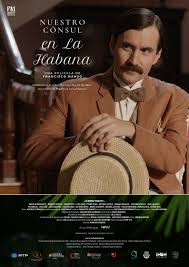 SE ESTRENA MUNDIALMENTE “NUESTRO CONSUL EN LA HABANA” UNA COPRODUCCION CUBANO-PORTUGUESA.
En el marco de la celebración del centenario de las relaciones diplomáticas entre Cuba y Portugal se exhibirá, en función única, la coproducción cubano-portuguesa Nuestro cónsul en La Habana, adaptación resumida, para salas cinematográficas, de la serie que actualmente se está televisando en Portugal.
La serie, y la película derivada, narran la vida del escritor y diplomático portugués Eça de Queiroz (1845-1900), sobre todo su estancia en Cuba. El maestro de la literatura realista en habla portuguesa cuenta con las novelas El crimen del Padre Amaro (1875) y Los Maias (1888).
El filme se concentra en el período en que Eça de Queiroz fue cónsul de Portugal en Cuba en la época colonial española, y trabajó en defensa de los chinos de Macao (conocidos como “culíes”), pues eran explotados por los dueños de las plantaciones.
La mayor parte de los incidentes que cuenta la película Nuestro cónsul en La Habana se aluden o se relatan en la correspondencia enviada por el autor a Portugal, en la cual se reflejan igualmente momentos de soledad, enfermedad y escepticismo. También se cuenta el romance con Mollie, la hija del general estadounidense Robert Bidwell. La acción de la película se desarrolla entre Portugal y Cuba, cuenta con el guión de Antonio Torrado y la presencia de Inti Herrera como productor ejecutivo por la parte cubana.
Independientemente de lo que cuente la película, el escritor nunca se sintió bien en La Habana. En una carta de 1873 la considera una “ciudad estúpida, fea, sucia, odiosa, innoble.” Y añade: “!Oh! la gente grosera. (…) Esta ciudad (…) ¡qué miserable aldea es, con todos sus palacios, con todos sus trenes arrastrados por cuatro caballos cubiertos de plata! ¡Ah! La miserable, subalterna, rastrera manera de estos espíritus. Detesto esta ciudad verdeada y millonaria, sombría y ruidosa ―este depósito de tabaco, este charco de sudor, este estúpido palillero de palmeras. (…)Disculpe mi cólera ―ella nace de un tedio sin límites y de un despecho cruel: el despecho de sentirme un pobre diablo artista, encajado en una función oficial, y tener que ajustar el sentido artístico al código de los cónsules.”
El director de Nuestro cónsul en La Habana, Francisco Manso visitó también el Café de la Columnata Egipcia, en la calle Mercaderes, un lugar recientemente recuperado por la Oficina del Historiador de la Ciudad. El Café era frecuentado por el escritor portugués.
El mismo día que se exhibe el filme, el Teatro Raquel Revuelta acogerá la obra ‘Mise en Abîme’, a cargo del Grupo de Teatro D’DOS, que recorre la vida del escritor y diplomático portugués, gracias al texto y la dirección de Julio César Ramírez.

 WILL EXHIBIT WORLDWIDE “OUR CONSUL IN HAVANA” A CUBAN-PORTUGUESE COPRODUCTION.
In the framework of the celebration of the centenary of diplomatic relations between Cuba and Portugal, the Cuban-Portuguese co-production Our Consul in Havana will be exhibited, a summary adaptation for cinemas, of the series that is currently being televised in Portugal.
The series and the derivative film narrate the life of the Portuguese writer and diplomat Eça de Queiroz (1845-1900), especially his stay in Cuba. The teacher of realistic literature in Portuguese speaks with the novels El crimen del Padre Amaro (1875) and Los Maias (1888).
The film focuses on the period when Eça de Queiroz was Portugal’s consul in Cuba during the Spanish colonial era, and worked in defense of the Macao Chinese (known as “coolies”), as they were exploited by the owners of the plantations.
Most of the incidents that the film tells Our Consul in Havana are alluded to or reported in correspondence sent by the author to Portugal, which also reflects moments of loneliness, illness, and skepticism. The romance is also told with Mollie, the daughter of the American general Robert Bidwell. The action of the film is developed between Portugal and Cuba, has the script of Antonio Torrado and the presence of Inti Herrera as executive producer on the Cuban side.
Regardless of what the film tells, the writer never felt well in Havana. In a letter of 1873, he considers it a “stupid, ugly, dirty, hateful, ignoble city.” He adds: “Oh! the rude people. (…) This city (…) what a miserable village it is, with all its palaces, with all its trains dragged by four horses covered in silver! Oh! The miserable, subaltern, creeping way of these spirits. I hate this green and millionaire city, dark and noisy – this tobacco deposit, this puddle of sweat, this stupid palillero of palm trees. (…) Excuse my anger – she is born of boundless boredom and cruel spite: the spite of feeling like a poor artist devil, fitted into an official function, and having to adjust the artistic sense to the code of the consuls. ”
The director of Our Consul in Havana, Francisco Manso, also visited the Egyptian Colonnade Café on Mercaderes Street, a place recently recovered by the Office of the City Historian. The Café was frequented by the Portuguese writer.
The same day that the film is shown, the Raquel Revuelta Theater will host the play ‘Mise en Abîme’, by the D’DOS Theater Group, which covers the life of the Portuguese writer and diplomat, thanks to the text and address of Julio César Ramírez.
Agencies/ CiberCuba/ Joel del Rio/ YouTube/ Internet Photos/ Arnoldo Varona/ www.TheCubanhistory.com
THE CUBAN HISTORY, HOLLYWOOD.