 < MEMORIES of the "Acuarelista of the Antillana Poetry", Luis Carbonell. VIDEOS.
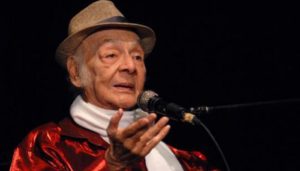 RECUERDOS DEL ACUARELISTA DE LA POESIA ANTILLANA, LUIS CARBONELL. VIDEOS.
Luis Carbonell falleció en La Habana el 24 de mayo de 2014 y sus restos descansan en su ciudad natal desde el 27 de marzo de 2017.
Si pudiera decirles quién fue Luis Carbonell… pero ni él mismo lo sabía. No ando buscando palabras. Una madrugada irrepetible, en el salón del aeropuerto Antonio Maceo, me lo confesó: “Yo no conozco a Luis Carbonell, yo aprendo con él, me sorprendo, lo ando descubriendo todavía”. Le pregunté cómo lograba aprenderse aquellos poemazos y sobrevino la respuesta lacónica: “Estudiar”. Algo debió notar en mi rostro, alguna sombra, cuando decidió agregar. “En realidad, se necesitan tres cosas: estudiar, estudiar y estudiar”.
No voy a repetir la biografía de este artista, nacido el 26 de julio de 1923, en Santiago de Cuba. Vengo a rendirle tributo.
https://youtu.be/1KD5bEugR6s
Si me dieran a escoger un rasgo de su estirpe, tomaría un suceso antológico de la discografía cubana. Cuando en 1955 se graba Esther Borja canta a dos, tres y cuatro voces, se necesitaba una disciplina inquebrantable, un nivel de detalle milimétrico.
Ambas cosas las tenía Luis y las tenía la intérprete, unidos por una amistad hermosa; sin que olvidemos jamás la hazaña, la brujería (casi) del grabador Medardo Montero.
Acometió los arreglos musicales para la ocasión, el montaje de las voces, el acompañamiento pianístico (junto a Numidia Vaillant) y la redacción de las notas. Luis era un artista total. Participó en la formación de varios cuartetos. Muchas agrupaciones siguieron consultándole en las décadas siguientes.
Permítaseme otro salto. Después que Santiago de Cuba fuera arrasada por el huracán Sandy en 2012, se fue a su ciudad natal para estrenar una estampa de Santiago Carnago.
Se necesitaban todas las voces, todas las manos. El artista estaba dispuesto a recoger piedras si era preciso, y así lo hizo saber a las máximas autoridades del territorio. Así era su desprendimiento de cualquier fatuidad.
Luis Mariano Carbonell Pullés nació para enseñar, aunque no fuese Derecho ni Medicina como quería su madre. Y en ese camino no solo escaló, sino que espantó una montaña de prejuicios.
Vivió de la poesía, lo que no puede decirse de nadie, de casi nadie. Y lo mejor, nos hizo vivir con ella. Le extrajo el zumo a cada frase, llevó cada palabra al límite. De la cáscara a la médula descarnó el poema, y luego lo vistió, capa por capa, dando la gentil impresión de no haberlo tocado nunca.
Pepe Biondi, el artista argentino, le confesó un día: “Usted no recita. Usted dibuja los versos, los pinta. Usted es un acuarelista de la poesía”. Y aquel bautismo, con el aderezo antillano, la acompañó para siempre en escenarios del Caribe, América del Sur, Estados Unidos, Europa.
Hizo a Lorca y a Camín, a Palés Matos y a Eloy Blanco, a Tallet y a Ballagas, a Arturo Liendo y a Félix B. Caignet. Hizo grandes poemas y grandes autores; aunque también insufló vida a obras que no parecían mucho. Las hizo levitar.
Se empeñó en decir que no escribió poesía, intentó demostrárnoslo; pero ya sabemos que la palabra rodaba por la punta de sus dedos, nos recorría, nos trajinaba, nos llevaba donde quería y luego… le bastaba halar el cordel.
Si pudiera decirles quién fue Luis Carbonell, pero no hará falta. Véanle cruzar los brazos. Véanle mecer al bebé… diente de merengue, bemba de caimito… Mirad como sube el olor de la madera, el olor a hembra, a macho, a rústico barracón… como se dibuja el aire, como un llamado elástico hace el milagro: Fulóooo. Y como llega aquel Niño, con guantes y to, che ché; como aplaude, como grita, como pronuncia su nombre, igual que el niño Valdés.

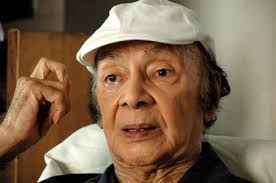 MEMORIES OF THE ACUARELISTA OF THE ANTILLANA POETRY, LUIS CARBONELL. VIDEOS.
Luis Carbonell died in Havana on May 24, 2014, and his remains rest in his hometown since March 27, 2017.
If I could tell you who Luis Carbonell was … but he didn’t even know it. I’m not looking for words. Unrepeatable dawn, in the Antonio Maceo airport lounge, he confessed to me: “I don’t know Luis Carbonell, I learn with him, I’m surprised, I’m still discovering him”. I asked him how he managed to learn those poems and came to the laconic response: “Study.” Something must have noticed on my face, some shadow when he decided to add. “Actually, three things are needed: study, study, and study.”
I will not repeat the biography of this artist, born on July 26, 1923, in Santiago de Cuba. I come to pay tribute.
https://youtu.be/v3F99_clGo8
If they gave me a feature of their lineage, I would take an anthological event from Cuban discography. When Esther Borja sings two, three and four voices in 1955, an unbreakable discipline was needed, a level of detail millimeter.
Both things Luis had and the interpreter had them, united by a beautiful friendship; without ever forgetting the feat, the witchcraft (almost) of the engraver Medardo Montero.
He undertook the musical arrangements for the occasion, the assembly of the voices, the piano accompaniment (together with Numidia Vaillant) and the writing of the notes. Luis was a total artist. He participated in the formation of several quartets. Many groups continued to consult him in the following decades.
Allow me another jump. After Santiago de Cuba was razed by Hurricane Sandy in 2012, he went to his hometown to release a stamp by Santiago Carnago.
All voices were needed, all hands. The artist was willing to collect stones if necessary, and so he informed the top authorities of the territory. That was his detachment from any fatness.
Luis Mariano Carbonell Pullés was born to teach, even if it was not Law or Medicine as his mother wanted. And on that road, he not only climbed but frightened a mountain of prejudices.
He lived on poetry, which cannot be said of anyone, of almost anyone. And the best, made us live with her. He extracted the juice from each sentence, took each word to the limit. From the shell to the core, the poem disembodied, and then dressed it, layer by layer, giving the gentle impression of never having touched it.
Pepe Biondi, the Argentine artist, confessed one day: “You don’t recite. You draw the verses, you paint them. You are a watercolorist of poetry.” And that baptism, with the Antillean dressing, accompanied her forever on stages in the Caribbean, South America, United States, Europe.
He made Lorca and Camín, Palés Matos and Eloy Blanco, Tallet and Ballagas, Arturo Liendo and Félix B. Caignet. He made great poems and great authors; although it also breathed life into works that did not seem much. He made them levitate.
He insisted on saying that he did not write poetry, he tried to prove it to us; but we already know that the word rolled down the tips of his fingers, it crossed us, it brought us, it took us where it wanted and then … it was enough to pull the string.
If I could tell you who Luis Carbonell was, but it won’t be necessary. Watch him cross his arms. Watch the baby rock … meringue tooth, camo bemba … Look how the smell of wood rises, the smell of female, male, rustic hut … how the air is drawn, like an elastic call It works the miracle: Fulóooo. And how that Child arrives, with gloves and to, che ché; how he claps, how he shouts, how he pronounces his name, just like el Niño Valdés.
Agencies/ RHC/ Reinaldo Cedeño / Internet Photos/ YouTube/ Arnoldo Varona/ www.TheCubanHistory.com
THE CUBAN HISTORY, HOLLYWOOD.