 < TRAVELING all Along the Fifth Avenue (Quinta Avenida), La Havana, Cuba. Fotos.
 RECORRIENDO LA QUINTA AVENIDA, LA HABANA, CUBA. FOTOS.
La Quinta Avenida inicialmente llamada Avenida de las Américas, fue inaugurada en 1930, se extiende desde el túnel que la conecta con la calle Calzada y Malecón en El Vedado, hasta el río Santa Ana, en la localidad de Santa Fe donde se convierte en Carretera Panamericana que llega a la ciudad de Mariel, en la provincia de Artemisa.
Su diseño, a cargo del arquitecto norteamericano John F. Duncan, autor del monumento al presidente Grant, en Estados Unidos, junto al arquitecto cubano Leonardo Morales, graduado en la Universidad de Columbia, resultó ser un factor importante para el desarrollo y florecimiento del reparto Miramar, del Country Club Park, actual Siboney, y del reparto Playa de Marianao.
Se usaron medidas de 100 a 200 metros para las manzanas imitando las de la Quinta Avenida, de Manhattan.
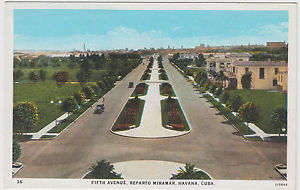
La Quinta Avenida (1950)
La Habana.
La clase adinerada de la sociedad habanera de la época se mudó progresivamente de lugares como el Paseo del Prado, en el casco histórico y construyeron sus mansiones y palacetes más al oeste, traspasando la barrera natural del río Almendares, con el uso primero de un puente, y más tarde de dos túneles viales, dando origen al barrio Miramar .
Las residencias de la 5ta Avenida se caracterizaron desde un principio por su fastuosidad, edificadas principalmente por graduados de la recién creada Escuela de Arquitectura de Cuba (1910), cuyos alumnos estaban muy influenciados por el renacimiento italiano y francés.
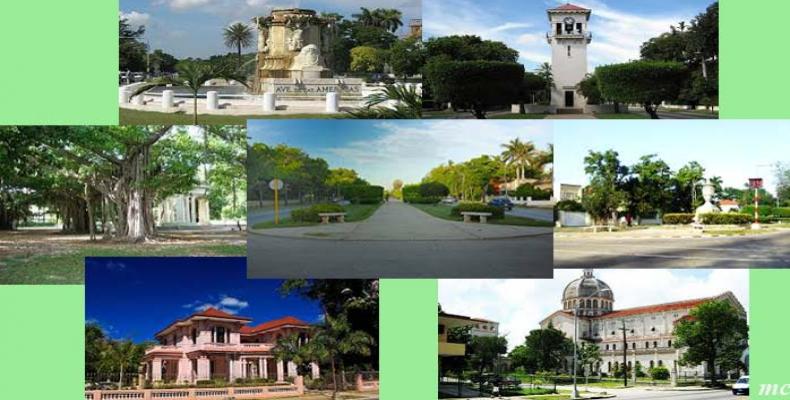
En su comienzo, a la salida del túnel de acceso al Malecón se erige la Fuente de las Américas, diseñada por el arquitecto neoyorquino John Wilson. Más allá se encuentra la Torre del Reloj, símbolo del municipio de Playa.
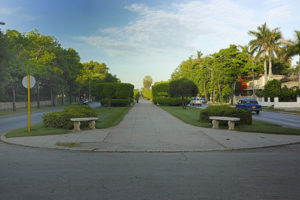
A la altura de la calle 42 se halla La Copa, del escultor José Oliva Michelene, que da nombre a la zona, y que fue donada por Carlos Miguel de Céspedes Ortiz en sus días de ministro de Obras Públicas del dictador Gerardo Machado
La avenida posee un paseo central arbolado y un parque con grandes jagüeyes de boscosas ramas y raíces aéreas, el parque de Emiliano Zapata.
En 5ta Avenida pueden apreciarse algunas construcciones religiosas entre las que se destaca la Iglesia Jesús de Miramar, el mayor templo católico del país, además se observan las magníficas estructuras de otros recintos religiosos: Iglesia de Santa Rita, el Santuario Nacional de San Antonio de Padua, perteneciente a la orden de los franciscanos.
La Quinta Avenida se le conoce como la más bella y extensa avenida de la capital cubana.

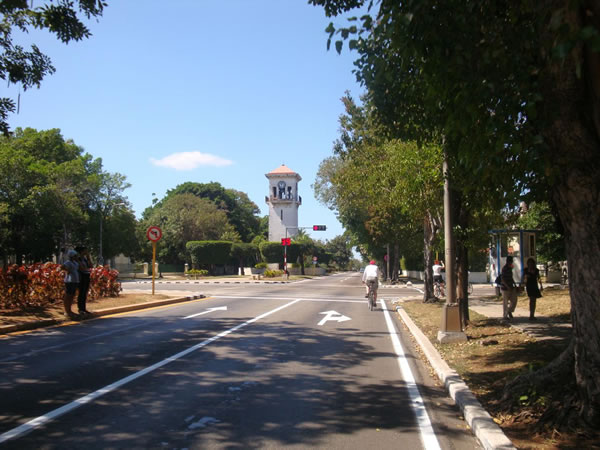 TRAVELING ALL ALONG THE FIFTH AVENUE, HAVANA, CUBA. PHOTOS.
Fifth Avenue, initially called Avenida de las Américas, was inaugurated in 1930, extends from the tunnel that connects it with Calzada Street and Malecón in El Vedado, to the Santa Ana River, in the town of Santa Fe where it becomes Carretera. Panamericana that arrives at the city of Mariel, in the province of Artemisa.
Its design, by the American architect John F. Duncan, author of the monument to President Grant, in the United States, together with the Cuban architect Leonardo Morales, a graduate of Columbia University, proved to be an important factor for the development and flourishing of the cast. Miramar, from Country Club Park, currently Siboney, and from the beach of Marianao.
Measures of 100 to 200 meters were used for the apples imitating those of Fifth Avenue, of Manhattan.
The wealthy class of the Havana society of the time progressively moved from places like the Paseo del Prado, in the historic quarter and built their mansions and mansions further west, crossing the natural barrier of the Almendares River, with the use of a bridge first , and later of two road tunnels, giving rise to the Miramar neighborhood.
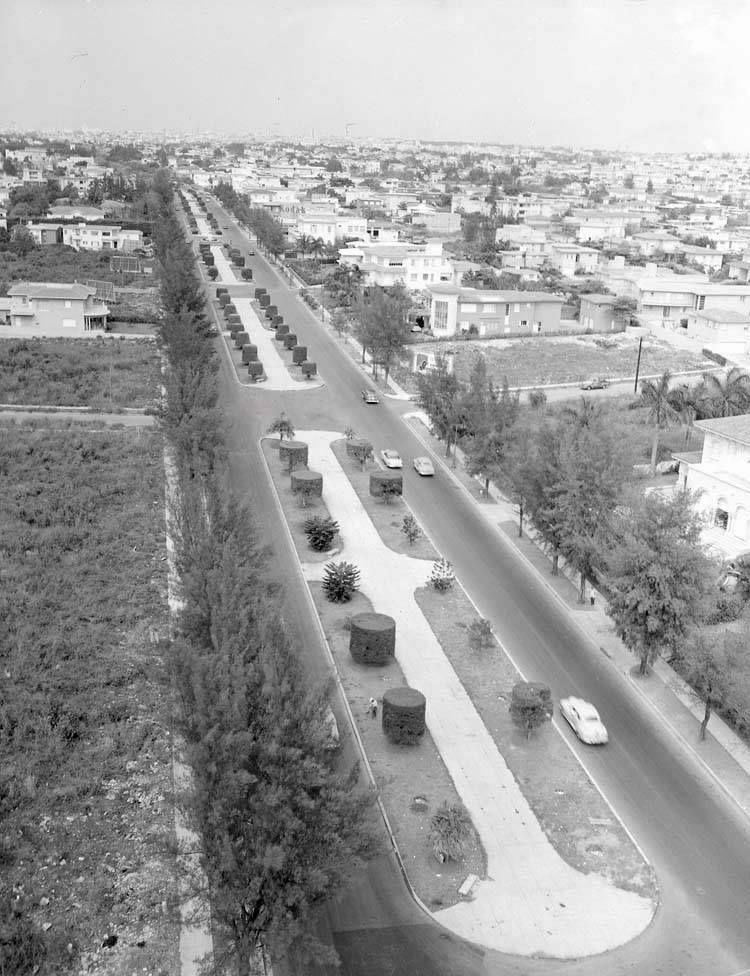
Fifth Avenue (1950) La Havana, Cuba.
The residences of the 5th Avenue were characterized from the beginning by their magnificence, built mainly by graduates of the newly created School of Architecture of Cuba (1910), whose students were very influenced by the Italian and French Renaissance.
In its beginning, at the exit of the access tunnel to the Malecon, the Fountain of the Americas is erected, designed by the New York architect John Wilson. Beyond is the Clock Tower, symbol of the municipality of Playa.
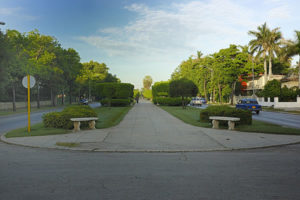
At the height of 42nd Street is La Copa, by the sculptor José Oliva Michelene, who gives its name to the area, and which was donated by Carlos Miguel de Céspedes Ortiz in his days as Minister of Public Works of the dictator Gerardo Machado
The avenue has a central wooded promenade and a park with large jagüeyes of wooded branches and aerial roots, the park of Emiliano Zapata.
On 5th Avenue you can see some religious buildings, among which the Jesus of Miramar Church, the largest Catholic church in the country, and the magnificent structures of other religious sites: Church of Santa Rita, the National Sanctuary of San Antonio de Padua , belonging to the order of the Franciscans.
Fifth Avenue is known as the most beautiful and extensive avenue in the Cuban capital.
Agencies/ RHC/ Internet Photos/ Arnoldo Varona/ www.TheCubanHistory.com
THE CUBAN HISTORY, HOLLYWOOD.