– BRIEF History of “The Gardens of the Tropical”, Havana Forgotten World. <> BREVE Historia de “LOS JARDINES DE LA TROPICAL”, un mundo Olvidado de la Habana. VIDEO.

W1siZiIsInVwbG9hZHMvcGxhY2VfaW1hZ2VzLzQ4YjhjZWNhZmRhNThmMTU1NF9qYXJkaW40LmpwZyJdLFsicCIsInRodW1iIiwiMTIwMHg-Il0sWyJwIiwiY29udmVydCIsIi1xdWFsaXR5IDgxIC1hdXRvLW9yaWVudCJdXQBRIEF HISTORY OF “THE GARDENS OF THE TROPICAL”, HAVANA FORGOTTEN WORLD.

Perhaps the most effective commercial strategy of the first half of the twentieth century was the construction of the Jardines de La Tropical, fruits of an extraordinary Spanish-Cuban industry that stimulated factory development in Cuba with its commitment and sound economic policy, so which reached great excellence, inside and outside of Cuba, with its products and services. This is what the historian Yaneli Leal of the Eye of the Cross affirms in her excellent work Los Jardines de La Tropical, which also provides valuable information that highlights the importance and scope of the Gardens within Cuban culture. Its conception and development is due to the Blanco Herrera family, owner and main shareholder of La Tropical.

Thus, Cosme Blanco Herrera, then president of the company, bought La Tropical, former property of Andrés Fernández, which expanded and modernized, inaugurating it in 1897 and producing a beer of excellent quality. At the beginning of the 20th century, it also acquired the Havana Brewery, for which the Tivoli brand began to be produced and commercialized as the second most important brand of the New Ice Factory S.A. Well positioned as the first and largest industry of its kind in Cuba, the Nueva Fábrica de Hielo SA, came to belong to the most prestigious industrial organizations in the country, was awarded in several international exhibitions and became the main source of employment for hundreds of workers , in addition, well remunerated and with their own association: in 1917 the Society of Employees of the New Factory of Ice was created. In Palatino No. 7, the Cosme Blanco Herrera School was founded on the initiative of the owners of the factory for their children and their employees.
W1siZiIsInVwbG9hZHMvcGxhY2VfaW1hZ2VzLzQ4YjhjZWNhZmRhNThmMTU1NF9qYXJkaW4uanBnIl0sWyJwIiwidGh1bWIiLCIxMjAweD4iXSxbInAiLCJjb252ZXJ0IiwiLXF1YWxpdHkgODEgLWF1dG8tb3JpZW50Il1d

PALACETE AND GARDENS

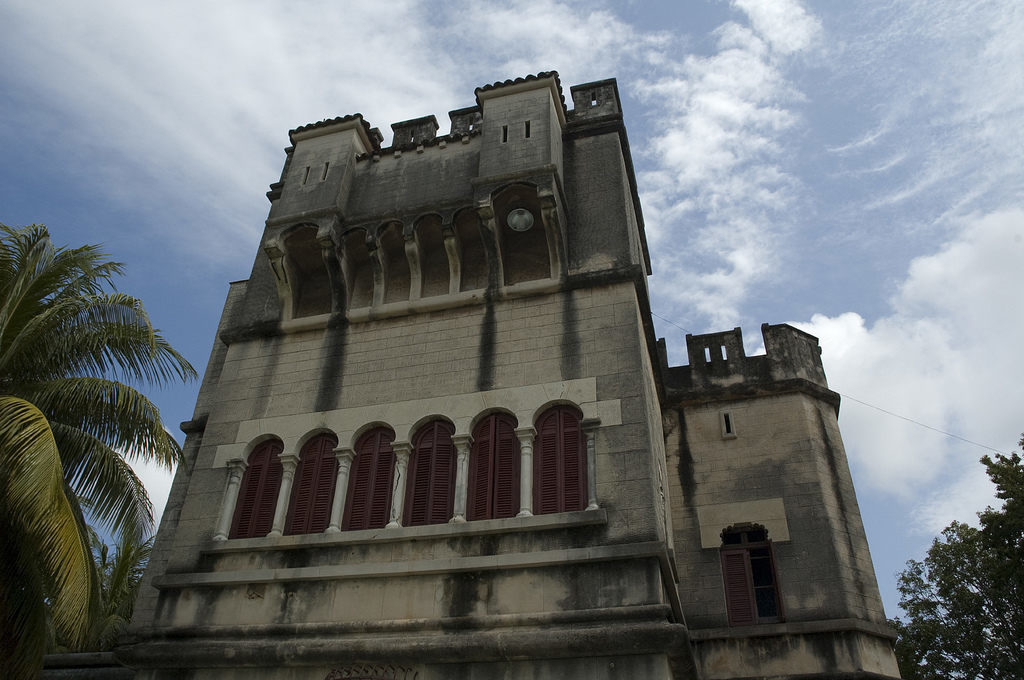
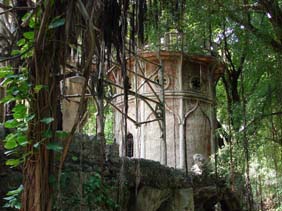
The Gardens of the Tropical have for additional charm a small palace that remembers the Nasrid buildings of the Alhambra of Granada, in Spain; scenario created by the La Tropical beer factory in 1912, according to some data, others say in 1904.

The Havana market of that time in search of cold drinks of maximum quality asked to counteract the tropical climate with liquids of its taste and this is how La Tropical emerged.

Its gardens are located on the east bank of the Almendares River, the longest one that crosses the capital city and is 48.8 kilometers long. This recreational complex has interesting architectural objects integrated into the exuberant natural landscape that is still preserved in very good condition. On a terrace above the area was built a neo-Arab style castle with interior decorations and a profuse ornamentation on roofs and capitals in the style of the pavilions of the Alhambra in Granada.

In its external source the water gushed, in its original times, as well as being completed with an eclectic façade, which reminds us of a medieval castle.

During the 90s of the last century this park had a repair and the castle was adapted to restaurant, but then, the economic difficulties made the oblivion.

During the 90s of the last century this park had a repair and the castle was adapted to restaurant, but then, the economic difficulties made the oblivion. Despite this peculiarity of time and the lack of love of many humans for nature, even Los Jardines retains a very special raw charm that can be exploited.

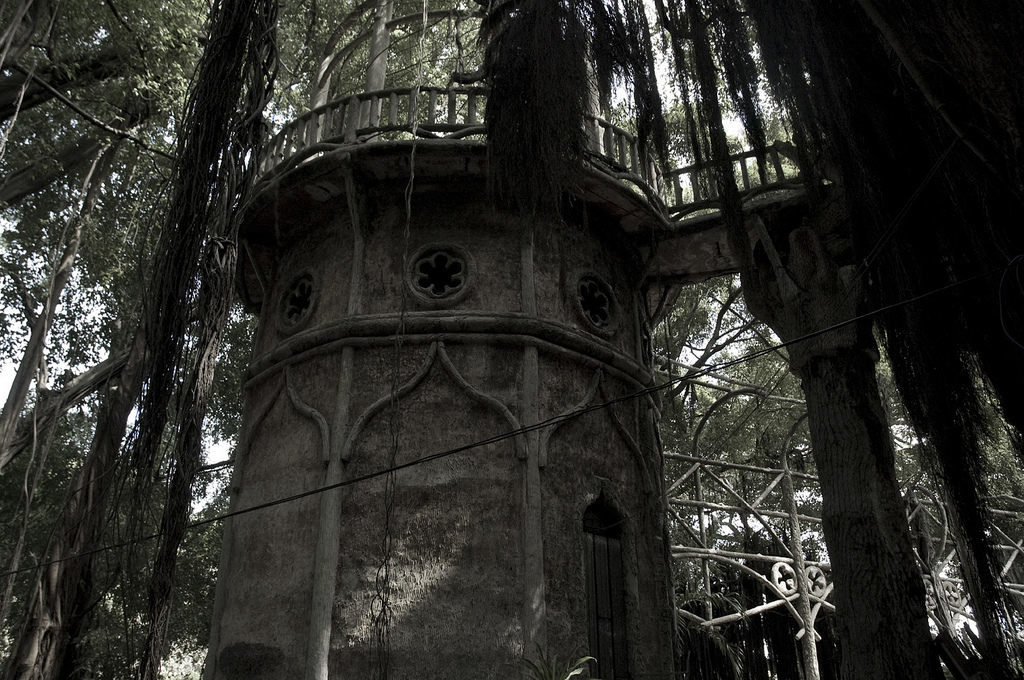
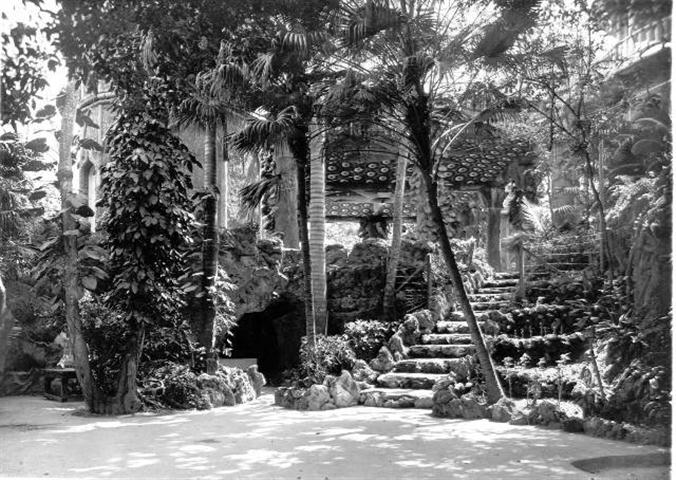
In its good times -yet it retains many details-, the set possessed grottos, labyrinths, waterfalls, arbors, cafeterias and a spacious ballroom with a capacity for 500 couples.

The place is accessed by Avenida 51, in the neighborhood of Marianao, near an area called Puentes Grandes. Also, and should not be confused, there is the Pink Room of La Tropical, which is a space for dancers, as it always was, on Avenida 41.

Finally, it can be said that Los Jardines is now part of the Metropolitan Park of Havana and there are plans to rescue it and recover it as an ecological zone of the Almendares River. Meanwhile, it has many values, an indisputable beauty, the privacy of these places and the possibility of allowing professional or amateur photographers to portray nature and enjoy structures intelligently integrated into the landscape.

logo

Salida-del-Salón-Ensueño-SmallBREVE HISTORIA DE “LOS JARDINES DE LA TROPICAL”, UN MUNDO OLVIDADO DE LA HABANA.

Quizás la estrategia comercial más efectiva de la primera mitad del siglo XX, fue la construcción de los Jardines de La Tropical, frutos de una extraordinaria industria hispano-cubana que estimuló el desarrollo fabril en Cuba con su empeño y su acertada política económica, por lo cual alcanzó gran excelencia, dentro y fuera de Cuba, con sus productos y servicios. Así lo afirma la historiadora Yaneli Leal del Ojo de la Cruz en su excelente trabajo Los Jardines de La Tropical, en el que además se aporta valiosa información que realza la importancia y alcance de los Jardines dentro de la cultura cubana. Su concepción y desarrollo se le debe a la familia Blanco Herrera, dueña y accionista principal de La Tropical.
Así, Cosme Blanco Herrera, entonces presidente de la compañía, compró La Tropical, antigua propiedad de Andrés Fernández, la cual amplió y modernizó, inaugurándola en 1897 y produciendo una cerveza de excelente calidad. A principios del siglo XX, adquirió también la Havana Brewery, por lo que la marca Tivoli empezó a producirse y comercializarse como la segunda marca más importante de la Nueva Fábrica de Hielo S.A. Bien posicionada como la primera y más grande industria de su tipo en Cuba, la Nueva Fábrica de Hielo S.A., llegó a pertenecer a las organizaciones industriales más prestigiosas del país, resultó premiada en varias exposiciones internacionales y devino principal fuente de empleo para cientos de obreros, además, bien remunerados y con su propia asociación: en 1917 se creó la Sociedad de Empleados de la Nueva Fábrica de Hielo. En Palatino Nº 7, se fundó la Escuela Cosme Blanco Herrera por iniciativa de los dueños de la fábrica para sus hijos y los de sus empleados.

PALACETE Y JARDINES

Los Jardines de la Tropical tienen por encanto adicional un palacete que recuerda los edificios nazaríes de la Alhambra de Granada, en España; escenario creado por la fábrica de la cerveza La Tropical en 1912, según unos datos, otros dicen en 1904.

El mercado habanero de ese entonces en busca de bebidas frías de máxima calidad pedía contrarrestar el clima tropical con líquidos de su gusto y así fue como surgió La Tropical.

W1siZiIsInVwbG9hZHMvcGxhY2VfaW1hZ2VzLzQ4YjhjZWNhZmRhNThmMTU1NF9qYXJkaW4yLmpwZyJdLFsicCIsInRodW1iIiwiMTIwMHg-Il0sWyJwIiwiY29udmVydCIsIi1xdWFsaXR5IDgxIC1hdXRvLW9yaWVudCJdXQ

Sus Jardines se encuentran en la ribera este del río Almendares, el de mayor extensión que atraviesa la ciudad-capital y posee 48,8 kilómetros de largo. Ese complejo recreativo cuenta con interesantes objetos arquitectónicos integrados al exuberante paisaje natural que aun se conserva en muy buen estado. En una terraza superior del área se edificó un castillo de estilo neoárabe con decorados interiores y una profusa ornamentación en techos y capiteles al estilo de los pabellones de La Alhambra de Granada.

En su fuente exterior el agua brotaba, en sus tiempos originales, además de completarse con una ecléctica fachada, que más bien nos rememora un castillo medieval.


En estas condiciones se encuentra el pequeño museo y la entrada de la emblemática fábrica de cerveza “La Tropical”, fundada en La Habana en 1888 y que hoy son almacenes.

Durante los años 90 del pasado siglo tuvo este parque una reparación y el castillo se adaptó a restaurante, pero luego, las dificultades económicas hicieron el olvido.

Durante los años 90 del pasado siglo tuvo este parque una reparación y el castillo se adaptó a restaurante, pero luego, las dificultades económicas hicieron el olvido. Pese a esta peculiaridad del tiempo y el desamor de muchos humanos por la naturaleza, aun Los Jardines conservan un encanto en bruto muy especial que bien puede aprovecharse.

En sus buenos tiempos -aun conserva muchos detalles-, el conjunto poseía grutas, laberintos, saltos de agua, cenadores, cafeterías y un espacioso salón de baile con capacidad para 500 parejas.

W1siZiIsInVwbG9hZHMvcGxhY2VfaW1hZ2VzLzQ4YjhjZWNhZmRhNThmMTU1NF9qYXJkaW41LmpwZyJdLFsicCIsInRodW1iIiwiMTIwMHg-Il0sWyJwIiwiY29udmVydCIsIi1xdWFsaXR5IDgxIC1hdXRvLW9yaWVudCJdXQ

Al lugar se accede por la Avenida 51, de barrio de Marianao, cerca de una zona llamada Puentes Grandes. También, y no se debe confundir, existe El Salón Rosado de La Tropical, que es un espacio para bailadores, como siempre lo fue, por la Avenida 41.

Finalmente se puede decir que Los Jardines, ahora forman parte del Parque Metropolitano de La Habana y existen planes de rescatarlo y recuperarlo como zona ecológica del Río Almendares. Mientras tanto, tiene muchos valores, una belleza indiscutible, la intimidad propia de estos lugares y la posibilidad de permitir a fotógrafos profesionales o aficionados retratar la naturaleza y disfrutar estructuras integradas de manera inteligente al paisaje.

Agencias/Quinta Esencia/Campos y Rodríguez/Internet Photos/ YouTube/ Arnoldo Varona/ TheCubanHistory.com
THE CUBAN HISTORY, HOLLYWOOD.

logo

maxresdefault

– REMEMBERING “Bola de Nieve” at 47 Years of his Dead. VIDEOS. <> RECORDANDO a Bola de Nieve a los 47 años de su Partida. VIDEOS.

Bola_de_NieveREMEMBERING “BOLA DE NIEVE” AT 47 YEARS OF HIS DEAD.

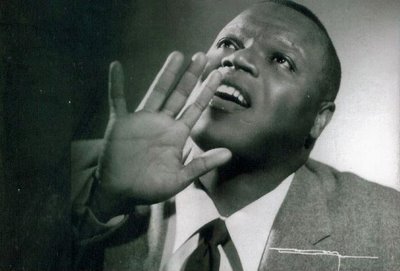
Ignacio Jacinto Villa Fernández “Bola de Nieve” (Nickname Snowball) began studying music at the age of 8 at the Conservatorio de Guanabacoa, later he began to study teaching, but music called him more strongly, first as a silent film pianist or accompanist of renowned figures, and then as an exceptional performer. of Afro music, but also of lullabies and romantic songs.

Very early, Bola de Nieve learned a lot from the French chansonnier, and then adapted to the Cuban idiosyncrasy, an interpretative style that included the declamation and the interpretation of a character, so that he penetrated the song, discovered his spirit, and he returned it to the public with unparalleled grace, rhythm, expressiveness and honesty.

To all this was added the artist’s ability to interpret songs in different languages ​​such as Catalan, Portuguese, English, French and Italian, without ever leaving his style, at the same time very Cuban and universal. Among his anthological interpretations is Tu no sabe inglé, Vito Manué, by Eliseo Grenet and Nicolás Guillén, who inclined his repertoire to this kind of mocking songs of those who think they are more than what they are.

Foto_Bola_de_Nieve

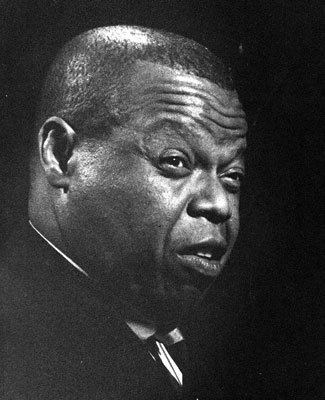
At the opposite extreme, there is his masterful, dramatic interpretation of Vete de mí, because El Bola was a man tormented by lack of love, racial issues and by his homosexual inclination. And yet he managed to give his audience a lot of joy. As a composer, we owe some beautiful songs like If you could love me, Oh, love and, You have to love me, among others, covered by dozens of Cuban and foreign singers.

He was ambassador of Cuban music, very recognized in Europe, South America and the United States, where he came to appear at the Carnegie Hall in New York, where the applause made him go out nine times to the stage to thank the audience that cheered him.

Bola de Nieve was one of the few artists who maintained an undeniable popularity before and after the triumph of the Revolution. In 1950 he started on the radio CMQ The great show of Bola de Nieve. At the end of the sixties and the beginning of the seventies he appeared regularly on television, while cultivating a select group of admirers in the Monseñor restaurant, as an essential figure of the Havana bohemian.

Miriam Ramos or Pancho Céspedes have dedicated entire albums to Bola de Nieve, while Carlos Varela paid tribute to him in one of his most popular songs of the nineties, the one that describes him, with undoubted love and respect, as “negro piano man, with the voice already spent so early in the morning ”

The death surprised Ignacio Villa in Mexico City, traveling to South America, where he would continue his concert tour on October 2, 1971 and his body was moved to Cuba and buried in his beloved Guanabacoa, where he was born on September 11 of 1911. Ernesto Lecuona and Rita Montaner were also born in Guanabacoa, also linked to the best of Cuban music in the first half of the 20th century.

logo

bola-de-nieve-a14e38e0-5109-4c7e-8f76-f3ac353c7a1-resize-750RECORDANDO A “BOLA DE NIEVE” A LOS 47 AÑOS DE SU PARTIDA.

Ignacio Jacinto Villa Fernández “Bola de Nieve” empezó a estudiar música a los 8 años en el Conservatorio de Guanabacoa, más tarde empezó a estudiar magisterio, pero la música lo llamó con más fuerza, primero como pianista del cine silente o acompañante de figuras reconocidas, y luego como intérprete excepcional de la música afro, pero también de canciones de cuna y románticas.

Muy temprano, Bola de Nieve aprendió mucho de los chansonnier franceses, y luego adaptó a la idiosincrasia cubana, un estilo interpretativo que incluía la declamación y la interpretación de un personaje, de modo que se adentraba en la canción, descubría su espíritu, y se la devolvía al público con una gracia, un ritmo, una expresividad y una honestidad inigualables.

A todo ello se sumaba la capacidad del artista para interpretar canciones en distintos idiomas como catalán, portugués, inglés, francés e italiano, sin salirse nunca de su estilo, al mismo tiempo cubanísimo y universal. Entre sus antológicas interpretaciones se cuenta Tu no sabe inglé, Vito Manué, de Eliseo Grenet y Nicolás Guillén, que inclinó su repertorio a este tipo de canciones burlonas de quien cree ser más de lo que es.

En el extremo opuesto, está su magistral, dramática interpretación de Vete de mí, porque El Bola fue un hombre atormentado por el desamor, los temas raciales y por su inclinación homosexual. Así y todo se las arregló para darle muchísima alegría a su público. Como compositor, le debemos algunas bellísimas canciones como Si me pudieras querer, Ay, amor y, Tú me has de querer, entre otras, versionadas por decenas de cantantes cubanos y extranjeros.

Fue embajador de la música cubana, muy reconocido en Europa, Suramérica y Estados Unidos, donde llegó a presentarse en el Carnegie Hall de Nueva York, donde los aplausos lo hicieron salir nueve veces al escenario a agradecer al público que lo ovacionaba.

Bola de Nieve fue de los pocos artistas que mantuvo una popularidad indeclinable antes y después del triunfo de la Revolución. En 1950 se inició en la radio CMQ El gran show de Bola de Nieve. A finales de los años sesenta y principios de los setenta se presentaba con asiduidad en la televisión, mientras cultivaba un selecto grupo de admiradores en el restaurante Monseñor, como figura imprescindible de la bohemia habanera.

Miriam Ramos o Pancho Céspedes le han dedicados álbumes enteros a Bola de Nieve, mientras Carlos Varela le rindió homenaje en una de sus canciones más populares de los años noventa, aquella que lo describe, con indudable cariño y respeto, como “negro piano man, con la voz gastada ya de tanto madrugar”

be4e4fd1bcb87d92f342f6e3e3e1d9e2_XL

La muerte sorprendió a Ignacio Villa en Ciudad México, en viaje hacia América del Sur, donde continuaría su gira de conciertos un 2 de Octubre de 1971 y su cadáver fue trasladado a Cuba y sepultado en su querida Guanabacoa, donde había nacido un 11 de septiembre de 1911. En Guanabacoa nacieron también Ernesto Lecuona y Rita Montaner, también ligados a lo mejor de la música cubana en la primera mitad del siglo XX.

Agencies/ CiberCuba/ Joel Del Río/ Internet Photos/ YouTube/ Arnoldo Varona/ TheCubanHistory.com
THE CUBAN HISTORY, HOLLYWOOD.
logo

foto-rondreis1

– EXCHANGE or Sell, the Cuban Real Estate dilema. Photos. <> LA REALIDAD CUBANA: Permutar o Vender, el Dilema Inmobiliario Cubano. Photos.

137517059_15389603869851nLA REALIDAD CUBANA: PERMUTAR O VENDER, DILEMA INMOBILIARIO CUBANO.

137517059_15389603867951n
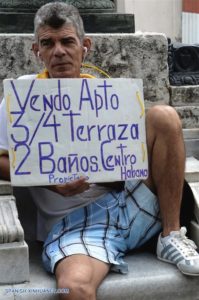
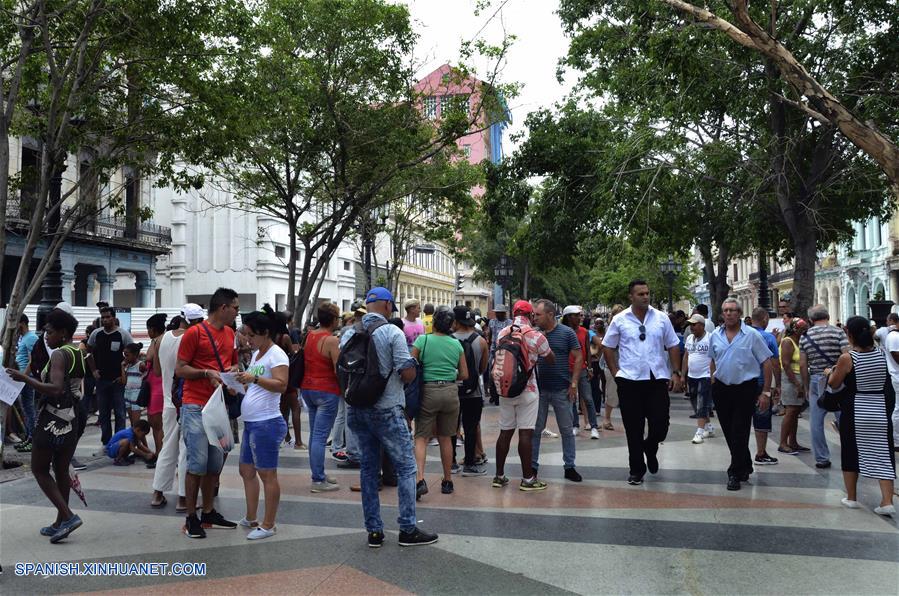
LA HABANA, octubre 7, 2018 — Imagen del 6 de octubre de 2018, de un hombre sosteniendo un cartel que promueve la venta de una vivienda, en la Bolsa de Permuta de Prado, en La Habana, Cuba. La conocida Bolsa de Permuta de Prado es un espontáneo lugar de intercambio de casas ubicado en el Paseo del Prado, una de las más viejas avenidas de la capital cubana.

137517059_15389603869551n
LA HABANA, octubre 7, 2018 — Imagen del 6 de octubre de 2018, de un hombre sosteniendo un cartel que promueve la venta o permuta de una vivienda, en la Bolsa de Permuta de Prado, en La Habana, Cuba.
Allí, bajo la sombra de frondosos árboles, cientos de personas se dan cita todos los fines de semana en un informal mercado de viviendas donde, con carteles escritos a mano, muchos promueven los inmuebles que ofrecen y lo que necesitan. Los llamados “corredores de permutas” o “permuteros”, como también se les conoce popularmente, son personas que se dedican a gestionar los intercambios de vivienda y cobran por esos servicios una parte del dinero involucrado en la transacción.
137517059_15389603868451n

Agencies/Xinhua/ Joaquín Hernández/ Internet Photos/ Arnoldo Varona/ TheCubanHistory.com
THE CUBAN HISTORY, HOLLYWOOD.
logo

entrada-majestuosa-del