 EL BANQUERO, EL LISTERO Y EL APUNTADOR: LA LOTERÍA (BOLITA) EN CUBA.
En febrero de 1959, a un mes y medio del triunfo de la Revolución, Fidel Castro anunció la supresión de la próspera Lotería Nacional, a la cual consideraba una fuente de corrupción, inmoralidad y manejos políticos de toda índole. Durante muchos años la bolita, su variante clandestina, fue perseguida con saña. Sin embargo, hoy es tolerada como un vicio tan nacional como orinar en las calles, gritar por cualquier razón o propalar noticias falsas, las famosas “bolas”.
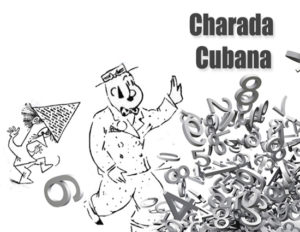
La lotería se inició en Cuba a principios del siglo XIX, durante el mandato español sobre la isla. Los inmigrantes chinos popularizaron la primera charada o chifá, en la cual los números se representaban con animales o cosas. Debido a esto la lotería comenzó a ser llamada “el juego del bicho”, vocablo con el cual todavía se le conoce en algunos países de América Latina.
El nombre por el que se conoce en Cuba a la lotería ilegal, “bolita”, es un término de invención bastante moderna. Tiene que ver con las pequeñas bolas numeradas que se colocaban en una tómbola y luego, en presencia de público, eran extraídas por niños provenientes de las instituciones de caridad. Estas esferas determinaban no solo los premiados, sino también la cuantía del premio.
El número premiado tiene tres cifras. Si acierta las dos últimas, por cada peso que apostó le pagarán 60. Si acierta las tres cifras, como se dice en buen cubano: “Lo coge con centena”, entonces cada peso se multiplicará por 400.

El juego de la bolita lo controlan los banqueros; pero a ellos nadie los conoce. Son perseguidos por la ley y, si los capturan, les pueden expropiar todo el dinero que han amasado y, además, aplicarle el artículo 219.1 del Código Penal: “El banquero, colector, apuntador o promotor de juegos ilícitos es sancionado con privación de libertad de 1 a 3 años o multa de 300 a 1000 cuotas o ambas”.
Por eso existe un intermediario entre los banqueros y sus colectores, el llamado cabeza de banco o mensajero. Este es responsable de pagar a los listeros, repartir los premios, así como atender cualquier reclamación o problema que surja en el ámbito del juego.
Los listeros le pagan 25% de lo que recojen. O sea, “si entrego 300 pesos al cabeza de banco, él me da 75. Hay días malos, que solo le llevo 80 pesos, y tengo que conformarme con 20” dice una de las participantes del socorrido en Cuba juego de la Bolita.
En Oriente los banqueros ponen límites a las listas. Por ejemplo, dicen que a ningún número se le puede apostar más de 30 pesos y eso frena la cantidad de dinero. En La Habana, no hay ese problema. Se entiende porque si alguien apuesta 30 pesos a un número y lo coge con centena haya que pagarle 12 mil. “Lo malo es que nos afectan a nosotros” nos dice.

Los jugadores de bolita se conocen todos entre sí. Hablan sobre los números bonitos, esos que salen con mayor frecuencia: el 33, 54, 37, 90, 82 y el 12. También hay números malos —me explica—. Nosotros los llamamos «bola de banco» porque casi nunca salen: el 26, 92, 76 y el 72.
José Antonio Saco y José Martí satanizaron los juegos de azar. Este último, Héroe Nacional de Cuba, afirmó que la lotería era incompatible con el ideal de Cuba libre porque: “en nuestra patria organizada rechazaremos sin duda por la debilidad que produce en el carácter del hombre la esperanza en otra fuente de bienestar que no sea el esfuerzo de su persona”.
—¿Y cómo saben qué número salió?
“En La Habana se enteran por el radio, Internet o la gente que tiene televisión por cable. Ellos llaman para acá y lo dicen. A las ocho de la noche ya se sabe, pero yo demoro en enterarme. A veces son las ocho y media y todavía no sé qué número salió.
Este sistema, bastante rudimentario, tiene sus fallas.

“Hace un tiempo en la televisión de Miami premiaron el 33, pero en la página de Internet salió el 83. El 83 era el correcto. Algunos bancos habían mandado a pagar el otro número y se embarcaron. El banco mío, por ejemplo, pagó los dos porque la gente que cobró el 33 no quiso devolver el dinero. Aquí no hay nada más en qué entretenerse: la televisión está en candela, no se puede ir a ningún lado. La bolita es la única esperanza que uno tiene para conseguir dinero y vivir desahogado un tiempo”, nos dice Pedro otro jugador empedernido de la celebre Bolita Cubana.
“Dicen que la gente oye el número por la radio y yo no encuentro un radio que coja esas emisoras de afuera. ¡Y mira que lo he buscado!, pero aquí no venden ese tipo de radio” nos dice. Los buenos son los radios antiguos, marca VEF —asegura Mario, un mulato gordo y socarrón. Ellos sintonizan Radio Martí, La Poderosa, las emisoras que dicen el número premiado.
“En realidad, los americanos hacen cuatro tiros de lotería: uno a las seis de la mañana, otro a las ocho, está el de las dos de la tarde y el de la noche. Yo nada más juego por la noche, los demás no. Imagínese usted, sería demasiado”. Mario sigue la bolita hace más de 30 años, desde que volvió de la Unión Soviética, donde estudiaba una especialidad relacionada con la mecanización agrícola.—Yo juego por cábalas. No sé si usted sabe que es una palabra hebrea, significa “recibir”.
“Los jóvenes de hoy no juegan mucho a la bolita, por lo menos no como en mis tiempos. Están para otra cosa, se lo digo yo. En esta ciudad las cábalas se dan bien. Cada vez que hay un ahorcado en los alrededores, sale el 92. Si vienen los huevos tienes el 75 % de probabilidades de que tiren el 60. Eso es un buen average”. Otro de los jugadores nos dice..”Los jóvenes sí juegan, verdad que son los menos. Más del 70% son mayores. La bolita se ha convertido en un juego de viejos”.

“Lo del banco es que entre su dinero. Además, uno da un golpe grande una vez cada cien años. Por eso no se puede jugar bolita con miseria. Para ganar hay que tener entrada, que te manden dinero de afuera o un trabajo como el mío, que dé resultado. El que juega para comer —prende los ojos como dos faros— siempre pierde”. termina diciendo.
Después que cesó el mandato español sobre la isla el presidente Estrada Palma se negó a legalizarla nuevamente. Los fanáticos de la lotería tuvieron que esperar que José Miguel Gómez, apasionado de las apuestas, la trajera de vuelta cuando llegó a la presidencia en 1909. En la República la bolita llegó a ser tan estimada que sus billetes se imprimían en Cultural S.A., la misma empresa que editaba los libros escolares, los sellos de correo y los papeles del gobierno.

 THE BANKER, THE LISTERO AND THE POINTER: THE LOTTERY (BOLITA) IN CUBA.
In February 1959, a month and a half after the triumph of the Revolution, Fidel Castro announced the suppression of the prosperous National Lottery, which he considered a source of corruption, immorality and political maneuvers of all kinds. For many years the ball, its clandestine variant, was pursued with viciousness. However, today it is tolerated as a national vice as urinating in the streets, screaming for any reason or spreading false news, the famous “balls”.
The lottery began in Cuba at the beginning of the 19th century, during the Spanish mandate on the island. The Chinese immigrants popularized the first charade or chifa, in which the numbers were represented with animals or things. Due to this the lottery began to be called “the game of the bug”, a term with which it is still known in some Latin American countries.
The name by which the illegal lottery is known in Cuba, “bolita”, is a fairly modern invention term. It has to do with the small numbered balls that were placed in a tombola and then, in the presence of the public, they were taken by children from the charitable institutions. These spheres determined not only the winners, but also the amount of the prize.
The winning number has three figures. If you hit the last two, for each peso you bet you will be paid 60. If you hit the three figures, as it is said in good Cuban: “Take it with a hundred”, then each peso will multiply by 400.
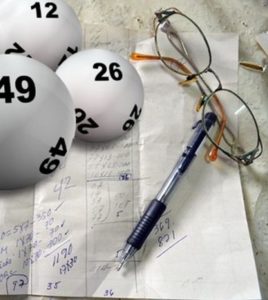
The game of the ball is controlled by bankers; but nobody knows them. They are prosecuted by law and, if they are caught, they can expropriate all the money they have amassed and, in addition, apply article 219.1 of the Penal Code: “The banker, collector, pointer or promoter of illegal games is punished with deprivation of liberty from 1 to 3 years or a fine of 300 to 1000 installments or both. ”
That is why there is an intermediary between the bankers and their collectors, the so-called bank or messenger head. This is responsible for paying the listeros, distribute the prizes, as well as address any claim or problem that arises in the field of the game.
The listeros pay 25% of what they collect. In other words, “if I give 300 pesos to the head of the bank, he gives me 75. There are bad days, which only took him 80 pesos, and I have to settle for 20” says one of the participants of the Cuban aid in La Bolita.
In the East bankers put limits on the lists. For example, they say that no number can be bet more than 30 pesos and that slows down the amount of money. In Havana, there is no such problem. It is understood because if someone bets 30 pesos on a number and catches it with a hundred, he has to pay 12 thousand. “The bad thing is that they affect us,” he says.
Ball players know each other. They talk about nice numbers, those that come out most frequently: 33, 54, 37, 90, 82 and 12. There are also bad numbers, he explains. We call them “banco de banco” because they almost never come out: on 26, 92, 76 and 72.
José Antonio Saco and José Martí demonized games of chance. The latter, National Hero of Cuba, affirmed that the lottery was incompatible with the ideal of free Cuba because: “in our organized homeland we will no doubt reject the weakness that man’s hope produces in another source of well-being that is not the effort of his person “.

-And how do you know what number came out?
“In Havana they find out about the radio, the Internet or the people who have cable television, they call here and they say it, at eight o’clock in the night you know, but I take time to find out. I still do not know what number came out.
This system, quite rudimentary, has its flaws.
“Some time ago on television in Miami they awarded the 33, but on the website it was 83. The 83 was the right one, some banks had sent the other number and they boarded, my bank, for example, paid both because the people who charged the 33 did not want to return the money, there’s nothing else to be entertained here: the television is on fire, you can not go anywhere, the ball is the only hope you have to get money and live a relaxed time, “Pedro tells us another inveterate player of the celebrated Cuban Bolita.
“They say that people hear the number on the radio and I can not find a radio that picks up those stations from the outside, and look, I’ve searched for it, but they do not sell that kind of radio here,” he says. The good ones are the old radios, VEF brand, says Mario, a fat and sarcastic mulatto. They tune into Radio Martí, La Poderosa, the stations that say the winning number.
“Actually, the Americans make four lottery shots: one at six in the morning, another at eight, the one at two in the afternoon and the night, I only play at night, the others do not Imagine you, it would be too much. ” Mario follows the ball more than 30 years ago, since he returned from the Soviet Union, where he studied a specialty related to agricultural mechanization.-I play by cabals. I do not know if you know it’s a Hebrew word, it means “receive.”
“Today’s young people do not play much at the ball, at least not like in my time, they are for something else, I tell you, in this city, the cabals are good, every time there is a hanged man in the surroundings, The 92 comes out. If the eggs come, you have a 75% chance of shooting the 60. That’s a good average. ” Another player tells us … “Young people do play, they are the least, more than 70% are older, the little ball has become a game of old people”.
“The thing about the bank is that between your money, you give a big blow once every hundred years, that’s why you can not play ball with misery, to win you have to have an entrance, send you money from outside or a job like mine, that works, the one who plays to eat-he learns the eyes like two lighthouses-always loses. ” ends by saying.
After the Spanish mandate on the island ceased, President Estrada Palma refused to legalize it again. Lottery fans had to wait for José Miguel Gómez, passionate about betting, to bring it back when he became president in 1909. In the Republic the ball became so dear that his tickets were printed in Cultural SA, the same company that edited school books, postage stamps and government papers.
Agencies/El Toque/ Yandrey Lay/ Extractos/ Internet Photos/ Arnoldo Varona/ TheCubanHistory.com
THE CUBAN HISTORY, HOLLYWOOD.



 HACE 150 AÑOS, UN 10 DE OCTUBRE EN CUBA.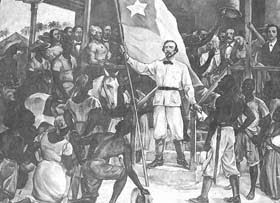

 IN CUBA 150 YEARS AGO, OCTOBER 10.


