

 THE RUMBA QUEENS. MARÍA ANTONIETA PONS STORY.
The journalist Fernando Muñoz Castillo in a book he wrote in 1993 called them “Las Reinas del Trópico” or “Queens of Rumba”. Four of them were born in Cuba.
Five women are considered the queens of rumba movies. They are: María Antonieta Pons, Meche Barba, Amalia Aguilar, Ninón Sevilla and Rosa Carmina. The five triumphed in the Mexican cinema of the 40s and 50s.
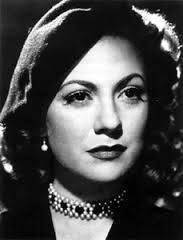
Today we are going to refer, tell you, some history of one of the most daring, beautiful and outstanding rumberas in those years of triumphs, was María Antonieta Pons. Also versatile actress of Mexican cinema. She was born on June 11, 1922 in Havana, Cuba.
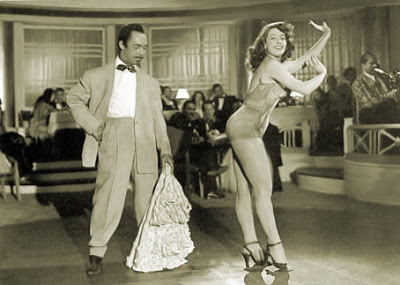
One of “The Queens of the Tropics”, versatile actress who worked in various film genres such as drama, comedy, musical, fantasy, romance and “thriller”, alongside great actors like Sara Garcia. Thus, the Cuban, along with Ninón Sevilla, Meche Barba, Rosa Carmina and Amalia Aguilar, was the pioneer of the so-called “rumberas del cine” and protagonist of numerous musical films.
He began his film career in his native land, in 1938, after the release of the film “The red snake”, starring Aníbal de Mar in the role of “Chan-Li / Po”. Time later traveled to Mexico and during the decade of the 40 and 50 was recognized as “The first rumba of the cinematography.”
The exuberant movement of hip and shoulders took possession of the screens of the world to head the group of rumberas also integrated by Meche Barba, Ninón Sevilla and Rosa Carmina, nicknamed “The Queens of the Tropics”. His career was long and successful, which began in 1942 with “La última aventura de Chaflán”, in which he played the role of “La cubanita”.
María Antonieta Pons began with only three feature films in 1946 to reach her greatest number in 1950, when 50 films of this modality are produced.
https://youtu.be/_XyP7s6KmAA
The actress appeared in six of these productions between 1947 and 1950 and was the central figure in the new version of “La mujer del puerto”, which Andrea Palma had made in the 1930s. She also appeared in a movie made in Puerto Rico, entitled “Romance in Puerto Rico”. In addition, he played a nun and “Cleopatra” in “The intimate life of Marco Antonio and Cleopatra”, a film in which comedian Luis Sandrini also intervenes.
At the end of the 1950s, the rumberas Mexican cinema became extinct. It seemed that within the new cinematographic tendencies there was no place for the wild eroticism of these women of fire and dangerous beauty. Then, some retired and others went on television. Sometimes they made special appearances on the big screen.
At the end of the cabaret cycle and directed by her second husband, Ramón Pereda, Maria Antonieta dabbled in rancheras and children’s productions.
He acted alongside the great figures of the time such as Pedro Armendáriz, Sara García, Germán Valdés “Tin Tan”, Enrique Rambal, Blanca Estela Pavón, Manuel Dondé, Luis Aguilar and Lola Beltrán, in a trajectory of nearly three decades.
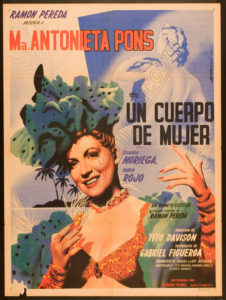
Her career ended in 1965 when she led the cast of “Caña brava”, after almost 30 years of presence in Mexican cinema with an interpretive trajectory that made her repeat more than any other role as cabaret, in what was called “cycle of the cabareteras in the Mexican cinema. ”
Highlights among his filmography “Red Konga”, “Long live my misfortune!”, “Rosalinda”, “The queen of the tropics”, “The insatiable”, “Maria Cristina”, “The queen of mambo”, “Crime theater” , “Flor cinnamon” and “Caña brava”. As well as “A star and two stars,” “The thousand and one nights,” “Theater of crime,” “Charmed Antillean,” “Stormy passions,” “The mysteries of the underworld,” “Bulls, love and glory” and ” Cruel destiny “.
The Cuban actress and dancer died in Mexico City on August 20, 2004 at 82 years of age, leaving a legacy that made her the greatest rumba in history.

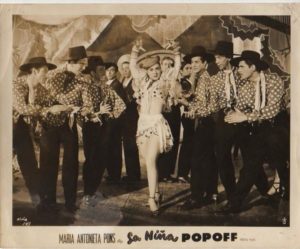 LAS REINAS DE LA RUMBA. MARIA ANTONIETA PONS..
El periodista Fernando Muñoz Castillo en un libro que escribió en 1993 las llamó “Las reinas del Trópico” o “La Reinas Rumberas”. De ellas cuatro de ellas nacieron en Cuba.
Cinco mujeres están consideradas las reinas de las películas de rumberas. Ellas son: María Antonieta Pons, Meche Barba, Amalia Aguilar, Ninón Sevilla y Rosa Carmina. Las cinco triunfaron en el cine mexicano de las décadas del 40 y el 50.
Hoy nos vamos a referir, contarles, algo de historia de una de las rumberas mas atrevidas, bellas y destacadas en esos anos de triunfos, fue María Antonieta Pons.también versatil actriz del cine mexicano. Nació el 11 de junio de 1922 en La Habana, Cuba.
Una de “Las reinas del trópico”, actriz versátil que trabajó en diversos géneros fílmicos como drama, comedia, musical, fantasía, romance y “thriller”, al lado de grandes actores como Sara García. Así, la cubana, junto a Ninón Sevilla, Meche Barba, Rosa Carmina y Amalia Aguilar, fue la pionera de las llamadas “rumberas del cine” y protagonista de numerosas películas musicales.
https://youtu.be/ECHSEabtdgo
Inició su carrera en cine en su tierra natal, en 1938, tras el lanzamiento de la película “La serpiente roja”, protagonizada por Aníbal de Mar en el papel de “Chan-Li/Po”. Tiempo después viajó a México y durante la década de los 40 y 50 fue reconocida como “La primera rumbera de la cinematografía”.
El exuberante movimiento de cadera y hombros se posesionó de las pantallas del mundo para encabezar el grupo de rumberas integrado también por Meche Barba, Ninón Sevilla y Rosa Carmina, apodadas “Las reinas del trópico”. Su trayectoria fue larga y exitosa, que inició en 1942 con “La última aventura de Chaflán”, en la que hizo el papel de “La cubanita”.
María Antonieta Pons comenzó con sólo tres largometrajes en 1946 para alcanzar su mayor número en 1950, cuando se producen 50 filmes de esta modalidad.
La actriz apareció en seis de estas producciones entre 1947 y 1950 y fue la figura central de la nueva versión de “La mujer del puerto”, que había realizado Andrea Palma en los años 30. También apareció en una película hecha en Puerto Rico, titulada “Romance en Puerto Rico”. Además, interpretó a una monja y a “Cleopatra” en “La vida íntima de Marco Antonio y Cleopatra”, filme en el que también interviene el cómico Luis Sandrini.
https://youtu.be/m_-oEgQlpYI
A finales de la década de 1950, el cine mexicano de rumberas se extinguió. Parecía que dentro de las nuevas tendencias cinematográficas no había lugar para el erotismo silvestre de estas mujeres de fuego y peligrosa belleza. Entonces, algunas se retiraron y otras pasaron a la televisión. En ocasiones hicieron apariciones especiales en la pantalla grande.
Al finalizar el ciclo cabaretero y dirigida por su segundo esposo, Ramón Pereda, Maria Antonieta incursionó en producciones rancheras e infantiles.
Actuó junto a las grandes figuras de la época como Pedro Armendáriz, Sara García, Germán Valdés “Tin Tan”, Enrique Rambal, Blanca Estela Pavón, Manuel Dondé, Luis Aguilar y Lola Beltrán, en una trayectoria de cerca de tres décadas.
Su carrera concluyó en 1965 cuando encabezó el reparto de “Caña brava”, tras casi 30 años de presencia en el cine mexicano con una trayectoria interpretativa que la hizo repetir más que ningún otro papel el de cabaretera, en lo que se llamó “ciclo de las cabareteras en el cine mexicano”.
Destacan entre su filmografía “Konga roja”, “¡Viva mi desgracia!”, “Rosalinda”, “La reina del trópico”, “La insaciable”, “María Cristina”, “La reina del mambo”, “Teatro del crimen”, “Flor canela” y “Caña brava”. Así como “Una estrella y dos estrellados”, “Las mil y una noches”, “Teatro del crimen”, “Embrujo antillano”, “Pasiones tormentosas”, “Los misterios del hampa”, “Toros, amor y gloria” y “Cruel destino”.
La actriz y bailarina cubana murió en la ciudad de México el 20 de agostó de 2004 a los 82 años de edad, dejando un legado que la convirtió en la más grande rumbera de la historia.
Agencies/Wiki/Various/Sarmiento/Internet Photos/YouTube/ Arnoldo Varona/ TheCubanHistory.com
THE CUBAN HISTORY, HOLLYWOOD.
