> CUBAN CHARACTERS: Silvano Schueg “El Chori”, percussionist. <> PERSONAJES CUBANOS: Silvano Schueg ” EL CHORI”. Percusionista. (FOTOS).

EL CHORI

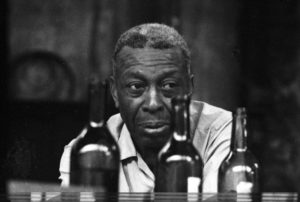
Silvano Schueg was the name of “El Chori”, a picturesque character, percussionist born in Santiago de Cuba and who arrived in Havana in 1927 and began playing timbales, drums and cowbells in different cabarets on Marianao Beach. Percussed the instruments in a very peculiar way and came to take part in several films such as A Stranger on the Ladder and The Gang of Bribery. He was also the author of two sones: La choricera and Hallaca de Maíz and many famous people visited him to see his performance, including Marlon Brando, a percussionist.

Chori lacked resources and instruction. I lived in a lot in Old Havana, and I used to eat at the restaurant La Zaragozana, which would be a real luxury in modern times. The Chori made music to any object, with the most improbable artifacts put together a show in front of the audience performing all kinds of melodies. What is now called a genuine showman.
Panorama_sin_título111

Ernest Hemingway, Marlon Brando and Errol Flynn, frequented those places, looking for in them the most autochthonous Cuban popular music, and that’s how they met El Chori, who received a work contract abroad. The Chori, according to his friends, preferred to stay in the Marianao slum instead of receiving applause and recognition abroad, as did Benny Moré, Rita Montaner, Bola de Nieve, Celia Cruz, Olga Guillot, just to mention some illustrious ones. They were ambassadors of our music on international stages.

For these small-time scenarios passed glories of our music as Benny Moré, Antonio Arcaño, Chano Pozo, Miguelito Valdés, Arsenio Rodriguez, Senén Suárez, Carlos Embale, Tata Güines and, it is said, a very young Juan Formell with Changuito. And also dozens of lesser-known artists like Evelio Rodríguez, El Trovador Espirituano, the “sevillanita” Obdulia Breijo or the forgotten transvestite Musmé.

Your Famous Admirers

In 1932 the famous American composer George Gershwin arrived in Havana with a group of friends. He was very attracted by the musical life of the capital in particular Marianao Beach, which became assiduous in a few days and spoke of the madness that was El Chori before the timbales.

Impacted by his experiences in Havana, Gershwin composed his symphonic piece Cuban Overture, which included excerpts from the famous Echale Salsita (Ignacio Piñeiro) and El Manisero (Moisés Simons), whose most striking versions would probably be played on Marianao Beach. for El Chori.

Cab Calloway.

Cab Calloway.

Cab Calloway the first jazzman to perform in Havana. He was hired by the cabaret Montmartre in 1949 and was enthralled with the music of Chori.

Marlon Brando, who is said to have already enjoyed playing in New York, came to Havana only for three days in 1956, in which the famous actor enrolled in an excursion to the underworld of Marianao Beach to see play the Chori.

In 1957, a world-famous musician, and perhaps as few, could ponder the real value of Silvano Shueg as an instrumentalist: the famous Puerto Rican timbalero Tito Puente, when recounting his life, did not hide the fascination presence of the legendary Cuban timbalero, or the repeated occasions when he came to see him. Puente did not hesitate to describe it as “never seen, the best”.
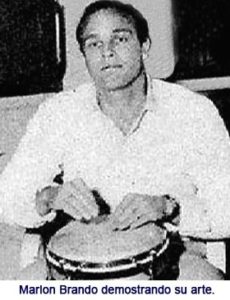
image15

Shortly after the triumph of the revolution, the nightclubs of Marianao were closed by the government and Chori’s footprints are lost there. For a time they continued to appear on the walls and walls of Havana with his name, in capital letters, supposedly of his authorship.

The Chori died in Havana, in 1974, without being able to specify the exact day of his death. As far as we know, he never recorded a record: his genius did not interest any of the record companies before or after, and only in a few filmic moments his image and the sound he knew how to get out of any percussive element was left in front of him.
chori-1967

Surely at some point they will value what they owe the son and rumba of cajón, to that school of popular musicians, to that essential stage that for Cuban music were Las Fritas de Marianao, and particularly El Chori, on Fifth Avenue of Havana.

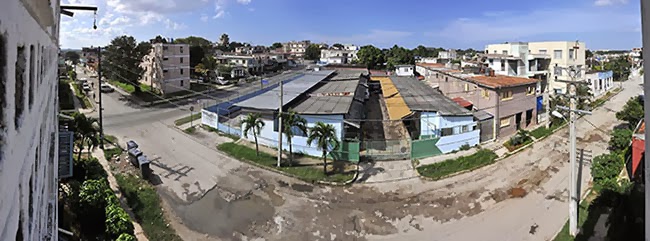
The Marianao Beach now has a gray color. He will no longer be El Chori, the eccentric Chori, outlandish, red handkerchief and cross to the neck, who mounted a chilling show with almost nothing, just with his talent.

logo

PERSONAJES CUBANOS: SILVANO SCHUEG ” EL CHORI”, PERCUSIONISTA. (Photos).

Silvano Schueg era el nombre de El Chor, pintoresco personaje, percusionista nacido en Santiago de Cuba y que llegó a La Habana en 1927 y comenzó a tocar timbales, tambores y cencerros en distintos cabarets de la Playa de Marianao. Percutía los instrumentos en forma muy peculiar y llegó a tomar parte en varias películas como Un Extraño en la Escalera y La Pandilla del Soborno. Fue también autor de dos sones: La choricera y Hallaca de Maíz y muchos personajes famoso lo visitaron para ver su actuación, entre ellos Marlon Brando, amante de la percusión.

CHORI-Botellas

El Chori carecía de recursos y de instrucción. Vivía en un solar de La Habana Vieja, y solía comer en el restaurante La Zaragozana, lo cual sería un verdadero lujo en los tiempos actuales. El Chori le sacaba música a cualquier objeto, con los artefactos más inverosímiles armaba un show frente al público interpretando todo tipo de melodías. Lo que ahora se llama un genuino showman.

Ernest Hemingway, Marlon Brando y Errol Flynn, frecuentaban aquellos sitios, buscando en ellos lo más autóctono de la música popular cubana, y así fue como conocieron a El Chori, quien recibió un contrato de trabajo en el extranjero. El Chori, según sus amigos, prefirió quedarse en el tugurio de Marianao en vez de recoger aplausos y reconocimientos en el exterior como hicieron Benny Moré, Rita Montaner, Bola de Nieve, Celia Cruz, Olga Guillot, por tan sólo mencionar algunos ilustres, que fueron embajadores de nuestra música en los escenarios internacionales.
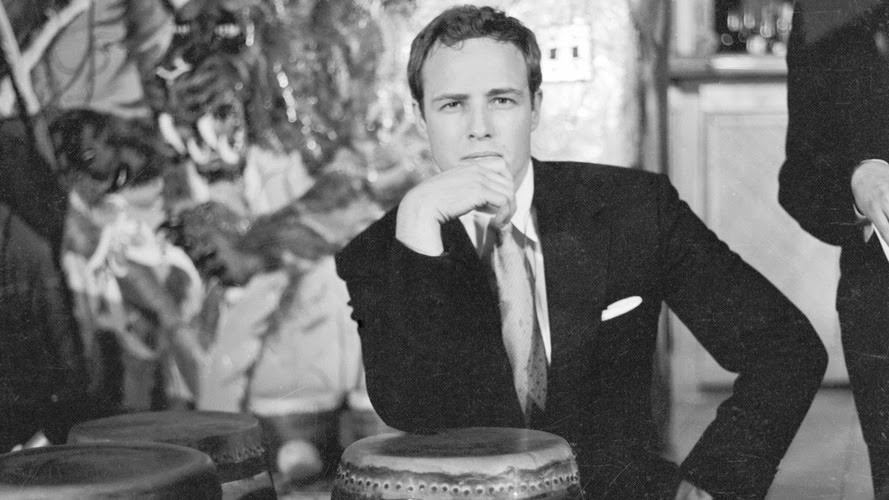
Marlo Brandon mostro su arte y admiracion por el Chori en la Habana.

Marlo Brandon mostro su arte y admiracion por el Chori en la Habana.

Por estos escenarios de poca monta pasaron glorias de nuestra música como Benny Moré, Antonio Arcaño, Chano Pozo, Miguelito Valdés, Arsenio Rodríguez, Senén Suárez, Carlos Embale, Tata Güines y, se dice, un muy joven Juan Formell con Changuito. Y también decenas de artistas menos conocidos como Evelio Rodríguez, El Trovador Espirituano, la “sevillanita” Obdulia Breijo o el olvidado travesti Musmé.

Sus Famosos Admiradores.

En 1932 el célebre compositor norteamericano George Gershwin llegó a La Habana con un grupo de amigos. Se sintió muy atraído por la vida musical capitalina en particular la Playa de Marianao, de la que se hizo asiduo en breves días y hablaba de la locura que era El Chori ante los timbales.

Impactado por sus experiencias habaneras más tarde Gershwin compone su pieza sinfónica Cuban Overture, en la que incluye fragmentos de los famosos Echale Salsita (Ignacio Piñeiro) y El Manisero (Moisés Simons), cuyas versiones más impactantes, probablemente escucharía en la Playa de Marianao tocadas por El Chori.

Cab Calloway el primer jazzman que actuó en La Habana. Vino contratado por el cabaret Montmartre en 1949 y estaba embobado con la música del Chori.
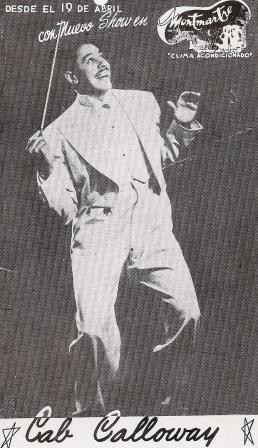
CC-1951-BR

Marlon Brando, de quien dicen que ya desde Nueva York, le gustaba tocar tumbadora, llegó a La Habana sólo por tres días en 1956, en los que el afamado actor se enroló en una excursión a los bajos fondos de la Playa de Marianao para ver tocar al Chori.

En 1957, un músico de fama mundial, y que, quizás como pocos, podía ponderar la real valía de Silvano Shueg como instrumentista: el famoso timbalero puertorriqueño Tito Puente, al hacer el recuento de su vida no ocultó la fascinación que le produjo estar en presencia del mítico timbalero cubano, ni las reiteradas ocasiones en que acudió a verle. Puente no vaciló en calificarlo como “lo nunca visto, lo mejor”.

Poco después del triunfo de la revolución, los centros nocturnos de Marianao fueron clausurados por el gobierno y ahí se pierden las huellas de Chori. Durante un tiempo siguieron apareciendo en los muros y paredes de La Habana letreros con su nombre, en letras mayúsculas, supuestamente de su autoría.

El Chori murió en La Habana, en 1974, sin que haya podido precisarse el día exacto de su deceso. Hasta donde se sabe, nunca grabó un disco: su genialidad no interesó a ninguna de las casas discográficas ni antes ni después, y sólo se conserva en pocos momentos fílmicos su imagen y el sonido que supo sacar a cuanto elemento percusivo se le pusiera por delante.
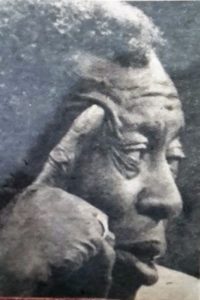
Chori-Bohemia-1960br

Seguramente que en algún momento se valorará lo que deben el son y la rumba de cajón, a aquella escuela de músicos populares, a ese escenario imprescindible que para la música cubana fueron Las Fritas de Marianao, y particularmente a El Chori, en la Quinta Avenida de La Habana.

La Playa de Marianao tiene ahora un color gris. Ya no estará más El Chori, el excéntrico Chori, de atuendo estrafalario, pañuelo colorado y cruz al cuello, que montaba un show escalofriante con prácticamente nada, solo con su talento.

Agencies/MemoriasCubanas/Internet Photos/Arnoldo Varona/TheCubanHistory.com
THE CUBAN HISTORY, HOLLYWOOD.

habana_11

> (OPINION) MR. TRUMP: I was not born in shitty Country. <> (OPINIÓN) MR. TRUMP: Yo No Nací en un País de Mierda.

cuba-hero-banner-2
 
Some, fortunately few, in their eagerness to surpass their support for Trump, shout that they were born or come from a shitty country, they forget that they do not want them here either. I, like many, was not born in a shitty country; I come from the most beautiful land that human eyes have seen.

I am proud to the last of my cells, to the last subatomic particle that forms my body, to be Cuban. I love my Island dearly; I owe everything I am to her. I am 100% Cuban, I feel Cuba in my soul and in my skin.

How the fuck is someone able to want to include us in the supposed list of “fucking countries”? Who did Miami? Who invented a homeland at 90 miles and with a strength and tenacity of three pairs rose from nothing and made history? Who made the pearl of the Caribbean shine? The homeland is made up of her children and we owe it to her.

Nobody, absolutely nobody has the right to call a country, “shitty country”. Countries may have governments and shit presidents, there are examples that speak for themselves, but no one should fall so low to call a country, country of shit and less to yours, who made man and prepared and formed to be what is today, the country of his parents, where his first joys and sorrows are stored, where memories and lives live; never any country can be a country of shit. Hope and the future do not smell like shit, although some insist on being characters in the Cuban film, “Alice in Wonderland.”

I always remember the words of the Archbishop Primate of Santiago de Cuba, Pedro Meurice Estiu, at that historic mass during the visit of John Paul II, “I also present to a growing number of Cubans who have confused the Homeland with a party, the nation with the historical process that we have lived in the last decade and the culture with an ideology “. Before calling country shit to the homeland, we must review stories and consciences and avoid in a show of support for Trump, saying clumsiness or nonsense.

Luckily, the Homeland, mother at last, is capable of forgiving everything, until they want to spit it out of shit in a salpafuera or chaos of extreme professionals. The older mother wears her best Cuban robe, red, white and blue, looks at her beautiful landscapes, the blue of her sky, the waves that break against her, look at the sky and whisper; forgive them sir, they do not know what they say.

You can be right-wing and even fascist-like if you want, but buddy, do not leave poop calling Cuba, country of shit. The presidents pass and forget, the country is forever. Long live Cuba, Carajo!

logo

(OPINIÓN) MR. TRUMP: YO NO NACÍ EN UN PAÍS DE MIERDA.

Algunos, por suerte pocos, en su afán de sobrepasarse en su apoyo a Trump, gritan que nacieron o vienen de un país de mierda, se olvidan que a ellos tampoco los quieren aquí. Yo, al igual que muchos, no nací en un país de mierda; vengo de la tierra mas hermosa que ojos humanos han visto.

Estoy orgulloso hasta la última de mis células, hasta la última partícula subatómica que forma mi cuerpo, de ser cubano. Amo a mi Isla entrañablemente; todo cuanto soy se lo debo a ella. Soy cubano 100%, siento a Cuba en mi alma y en mi piel.

¿Cómo carajo alquien es capaz de querer incluirnos en la supuesta lista de “paises de mierda”? ¿Quienes hicieron a Miami? ¿Quienes se inventaron una patria a 90 millas y con una fuerza y un tesón de tres pares se levantaron de la nada e hicieron historia? ¿Quienes hicieron brillar la perla del Caribe? La patria la conforman sus hijos y a ella nos debemos.

Nadie, absolutamente nadie tiene el derecho de llamar a un país, “país de mierda”. Los países podrán tener gobiernos y presidentes de mierda, hay ejemplos que hablan por sí solos, pero nadie debe caer tan bajo de llamar a un país, país de mierda y menos al suyo, al que lo hizo hombre y lo preparó y formó para ser lo que es hoy, el país de sus padres, donde estan guardadas sus primeras alegrías y tristezas, donde habitan recuerdos y vidas; nunca ningún pais podrá ser un país de mierda. La esperanza y el futuro no huelen a mierda, aunque algunos se empeñen en ser personajes de la película cubana, “Alicia en el pueblo de maravillas “.

Siempre recuerdo las palabras del Arzobispo primado de Santiago de Cuba, Pedro Meurice Estiu, en aquella historica misa durante la visita de Juan Pablo II,”Le presento además, a un número creciente de cubanos que han confundido la Patria con un partido, la nación con el proceso histórico que hemos vivido en las últimas década y la cultura con una ideología“. Antes de llamar país de mierda a la patria, debemos repasar historias y conciencias y evitar en un alarde de apoyo a Trump, decir torpezas o sandeces.

Por suerte la Patria, madre al fin, es capaz de perdonarlo todo, hasta que la quieran salpicar de mierda en un salpafuera o desmadre de proTrumpistas a ultranza. La madre mayor viste su mejor bata cubana, roja, blanca y azul, mira sus hermosos paisajes, el azul de su cielo, las olas que rompen contra ella, mira al cielo y susurra; perdónalos señor, no saben lo que dicen.

Usted puede ser de ultraderecha y hasta fascistoide si quiere, pero compadre, no se autoembarre de caca llamando a Cuba, país de mierda. Los presidentes pasan y se olvidan, la patria es para siempre. ¡Viva Cuba, carajo!

Agencies/José Iturriaga/CiberCuba/ Internet Photos/ Arnoldo Varona/ TheCubanHistory.com
THE CUBAN HISTORY, HOLLYWOOD.

nonfeatured-cuba-travel-tips

> MEMORIES, STORIES AND COVER of Yesterday’s Cuba Magazines. (Photos).<> RECUERDOS, HISTORIAS Y PORTADAS de Revistas de la Cuba de Ayer. (Fotos).

f6be6e0b8f51d4551c863f7ed628479101bcab0eb66b9bc679d088e4c65adad7

The Image of Cuba (1940’s)

Free design merges with snapshot and a photographic image that is closest to the stylistic canons of the decade is obtained.

Shortly before the end of the 40s ‘, in 1947 , on the cover of Bohemia hovering figure that combines an exclusive , first in the
allegorical film , two techniques : photography and drawing.

1947-1-225x300

This allegory insists on the use of classic clothing, the Phrygian cap and the bundle of rods from the shield. Similar in gesture to Home 1939 apathetic reflection is seen in her eyes.

The Republic in rags
Posters , August 1933 , Allegory of Cuba

In August 1933 , on the cover of posters, the Republic lost his joviality . After the overthrow of Machado , the nation is in tatters , ruined, but with raised fist.

1933-agosto-1-222x300

The visual impact strength lies in the simplicity of its elements. The background of the flag, the tearing of the garments of the Republic Reborn , closing his fist hard and upward , alluding to the resurrection and the opportunity to rebuild what was lost , once defeated the tyrant .

This cover matches the general mood of the time , as it relates to the allegorical covers Bohemia this year, also focused on representing the end of Machadato and the need for a new beginning.

The history of tobacco
Alberto Denis / Arrajatabla.

In Vuelta Abajo, in the westernmost region of Cuba, are the most famous vegas of tobacco in the world. The tobacco, planted by the first inhabitants of Cuba in small sites of land called conucos, was a miraculous medicine, and also an essential element. in religious, political and social ceremonies, as well as an important factor in primitive agriculture.

images

The Spanish conquerors discovered this plant upon arrival on the island in 1492 and very soon, a true passion for tobacco was aroused in Europe, mainly in the Iberian peninsula, where the habit of smoking had a large following.

Fame soon spread to distant nations such as Persia, Japan, Turkey and Russia, and on April 11, 1717, the Spanish sovereign Felipe V organized the royal monopoly of Cuban tobacco, a decision that marked the extermination of the honest small planters of the Caribbean island.

Although counted in tight synthetics, the history of Cuban tobacco is very long, and according to the aromatic leaf comes from South America, although the time of its arrival in the Antilles is not known exactly, but without doubt, it was among the 3000 or 2000 years before Jesus Christ.

Figaro on May 20, 1902
The Figaro, May 20, 1902

The May 20, 1902 the constitutional government and the Figaro is set echoes the event. The May issue stands on its surface by a spectacular structure: a young woman runs a curtain with national flag and reveals a sculptural effigy of victory.

figaro-1902-1-225x300

The seated sculpture carries a pike , alluding to military success , a table that simulates the Constitution , the Lone Star and a laurel wreath on his head, attribute the victory.
 
The Figaro Republic legend gives no room for doubt : it is an allegory of the Republic of Cuba .
 
Young dressed in Roman robes and symbolic attributes of Victoria are used to highlight the success and institutionalization of a democratic , modern and western , patriotic status in other (notice the redundancy in the backdrop banner at the foot of the figure sculpture ) that opens an unprecedented cycle in history.
 
With this new staging of the nation that defines itself by the allegorical method opens .

38b9d7e8bf04f4db0d55278eb69acb0a--hemingway-cuba-ernest-hemingway95b9aa3efc1ac7d21f9ebc5f8e6d7eb0 (1)

logo

HISTORIAS, RECUERDOS Y PORTADAS DE REVISTAS CUBANAS DEL AYER. (FOTOS).
 1ddb2c29e27c1958da34da260b77205c

La imagen de Cuba en los años 50′
Bohemia

1947-1-225x300

Un poco antes de finalizar la década del 40′, en 1947, en la portada de Bohemia asoma una figura exclusiva que conjuga, por primera vez en la lámina alegórica, dos técnicas: la fotografía y el dibujo.

El diseño libre se fusiona con la instantánea fotográfica y se obtiene una imagen que está más cercana a los cánones estilísticos de la década posterior.

Esta alegoría insiste en el uso de vestimentas clásicas, el gorro frigio y el haz de varillas proveniente del escudo. Similar en el gesto a la portada de 1939, la reflexión apática se percibe en su mirada.

La República en harapos
Carteles, agosto de 1933, alegoría de Cuba

1933-agosto-1-222x300

En agosto de 1933, en la portada de Carteles, la República pierde su jovialidad. Tras el derrocamiento de Machado, la nación se representa en harapos, arruinada, pero con el puño levantado.

La fuerza del impacto visual radica en la simplicidad de sus elementos. El fondo de la bandera, el desgarramiento de las vestiduras de la República que renace, que cierra con fuerza su puño y lo alza, aluden a la resurrección y a la oportunidad de reconstruir lo perdido, una vez vencido el tirano.

Esta portada concuerda con el ánimo general de la época, puesto que se relaciona con las portadas alegóricas de Bohemia de este año, enfocadas también en representar el fin del Machadato y la necesidad de un nuevo comienzo.

La historia del tabaco
Alberto Denis/Arrajatabla.

En Vuelta Abajo, en la región más occidental de Cuba, se encuentran las más afamadas vegas de tabaco del mundo.El tabaco, sembrado por los primeros habitantes de Cuba en pequeños sitios de terreno llamados conucos, era una medicina milagrosa, y además elemento esencial en las ceremonias religiosas, políticas y sociales, así como factor importante en la agricultura primitiva.

tabaco-kceH--620x349@abc

Los conquistadores españoles descubrieron esta planta a su llegada a la isla en 1492 y muy pronto, una verdadera pasión por el tabaco se despertó en Europa, principalmente en la península ibérica, donde el hábito de fumar tuvo una gran cantidad de seguidores.

La fama pronto se extendió incluso a lejanas naciones como Persia, Japón, Turquía y Rusia, y el 11 de abril 1717, el soberano español Felipe V organizó el monopolio real del tabaco cubano, decisión que marcó el exterminio de los pequeños plantadores honestos de la isla caribeña.

Aunque contada en apretada sintesís, la historia del tabaco cubano es muy larga, y según se plantea la aromática hoja proviene de América del Sur, aunque el momento de su llegada a las Antillas no se sabe con exactitud, pero siin duda, fue entre los años 3000 o 2000 antes de Jésus Cristo.

El 20 de mayo de 1902
El Fígaro, 20 de mayo de 1902

figaro-1902-1-225x300

El 20 de mayo de 1902 se establece el gobierno constitucional y El Fígaro hace eco del acontecimiento. El número de mayo se distingue en su superficie por una estructura escenográfica: una joven corre un telón con la bandera nacional y deja al descubierto una efigie escultórica de la victoria.

La escultura sedente porta una pica, en alusión al éxito militar; una tabla que simula la Constitución; la estrella solitaria y una corona de laurel sobre su cabeza, atributo de la victoria.

La leyenda Fígaro República no da margen a la duda: es una alegoría de la República de Cuba.

Las jóvenes vestidas con túnicas romanas y los atributos simbólicos de la Victoria se utilizan para subrayar el éxito y la institucionalización de un estado democrático, moderno y occidental, patriótico por demás (nótese la redundancia de la bandera en el telón y a los pies de la figura escultórica) que inaugura un ciclo inédito en la historia.

Con esta imagen se estrena una nueva puesta en escena de la nación, que se define a sí misma mediante el procedimiento alegórico.

33281955chc51600000030001001

Agencies/Alegorias/Internet Photos/Arnoldo Varona/thecubanhistory.com

THE CUBAN HISTORY, HOLLYWOOD.

1800x1000-10-night-cuba-intensive-havana (1)