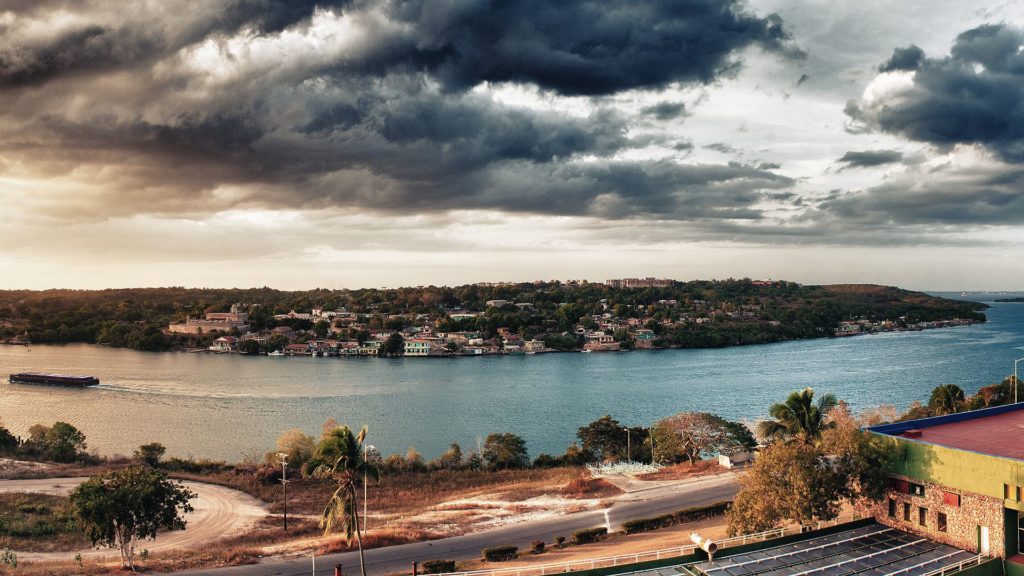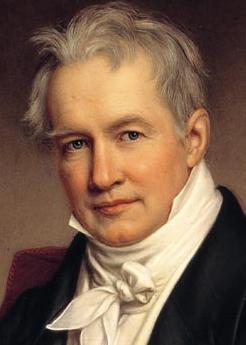
The German Geographer Alejandro Humbolt stunned the scientific world of his time with his spectacular trips through Central and South America together with the French botanist Aimé Bonpland. They traveled, from l799 to l804, Venezuela, Cuba, Ecuador, Colombia, Peru and Mexico, on foot, on horseback, by canoe or by sailboat, suffering great hardships, but they gave us an enormous treasure of experiences and knowledge.
Humboldt was born on September 14, 1769, in Berlin, and was considered in his time as one of the most eminent naturalist, geographer and geologist of all time.
Humboldt, made extensive scientific research trips through the Antilles, fruit of which are important works such as political essay on the island of Cuba, as well as a map of our country, which is considered the most complete of that time. His trip in the first decade of the nineteenth century was a magnificent summary of his days in the largest of the Antilles.
His personality and the details of his visit, his contributions to science, his relationships with our national life and humanist conceptions, has been the subject of varied and multiple interpretations by those who in one way or another have been linked to 19th century Cuban history .
Humboldt is considered the founder of several sciences, including climatology, comparative meteorology and terrestrial morphology. He also made inestimable contributions to other sciences such as Astronomy, Botany, Zoology and Mineralogy.
Two centuries have passed since Humboldt’s visit to Cuba, but his brilliant personality has not been overshadowed by time. His life, his work, his links with our country, have reached us, being able to verify that progressive and revolutionary thinking advances, interest in the life of this great man intimately linked to Cuba’s past and therefore to his present increases and future.

José de la Luz y Caballero, referring to the famous German, said that he had been the Second Discoverer of Cuba, and the eminent Cuban polygrapher summarized with these words his views on Alejandro de Humboldt: “Humboldt was a faithful servant of science. Neither tried to wrap it in a network of prejudices nor to lead it along a path of accommodation. In all his enormous labor, when observing the social phenomena, for example, the slavery in Cuba, like the laws of the Cosmos, Humboldt was always a naturalist, and his thought subjected him to the coordinates that the experience was drawing him “.
In their travels suffering great hardships, the two brave men of thirty years took measurements, made drawings and observations, investigated in the spheres of geography, cultural history, ethnography, philology, economics and politics.
The chapter against slavery in the book Political Essay on the Island of Cuba, aroused great interest. Soberly, bluntly, he describes the horrible methods of the traffickers and the African slave trade and its exploitation in Cuba. He speaks of the “odious principle of the colonial system” and writes: “Undoubtedly, slavery is the greatest evil that has ever plagued humanity.” With energy he formulates his revulsion against all kinds of racial discrimination, which he describes as a violation of human dignity and as an insurmountable obstacle to the country’s development.
Simón Bolívar once said: “Humboldt has been more useful for America than all its conquerors” so we will always remember the indefatigable traveler who bequeathed us valuable treasures of knowledge.
Today, the science and the transforming action, living reality of our country, open step, without obstacles, to the price of work and the effort of our best children and it is the best tribute that can be rendered to the eminent German sage.
Alejandro de Humboldt, died on May 6, 1859.

EL SEGUNDO DESCUBRIDOR DE CUBA: ALEJANDRO HUMBOLT.
El Geografo Aleman Alejandro Humbolt dejó atónito al mundo científico de su época con sus espectaculares viajes por centro y sur América junto con el botánico francés Aimé Bonpland. Recorrieron, de l799 a l804, Venezuela, Cuba, Ecuador, Colombia, Perú y México, a pie, a caballo, en canoa o en barco de vela, sufriendo grandes privaciones, pero nos legaron un enorme tesoro de experiencias y conocimientos.
Humbolt nacio el 14 de septiembre de 1769, en Berlín, y fue considerado en su tiempo como uno de los mas eminente naturalista, geógrafo y geólogo de todos los tiempos.

Humboldt, realizó extensos viajes de investigación científica por las Antillas, fruto de los cuales son importantes obras como Ensayo político sobre la Isla de Cuba, así como un mapa de nuestro país, que se considera el más completo de aquella época. Su viaje en la primera década del siglo XIX fue un magnífico resumen de sus días en la mayor de las Antillas.
Su personalidad y los pormenores de su visita, sus aportes a la ciencia, sus relaciones con nuestra vida nacional y concepciones humanistas, ha sido objeto de variadas y múltiples interpretaciones por quienes de una forma u otra se han relacionado con la historia cubana del siglo XIX.
A Humboldt se le considera fundador de varias ciencias, entre ellas la climatología, meteorología comparada y morfología terrestre. Hizo además, inestimables aportes a otras ciencias como la Astronomía, Botánica, Zoología y Mineralogía.
Han transcurrido dos siglos de la visita de Humboldt a Cuba, pero su brillante personalidad no se ha opacado a través del tiempo. Su vida, su obra, sus vínculos con nuestro país, han llegado hasta nosotros, pudiendo comprobar que según avanza el pensamiento progresista y revolucionario, aumenta el interés por la vida de este gran hombre íntimamente ligado al pasado de Cuba y por tanto a su presente y futuro.

José de la Luz y Caballero, al referirse al célebre alemán, dijo que había sido el Segundo Descubridor de Cuba, y el eminente polígrafo cubano resumió con estas palabras sus apreciaciones sobre Alejandro de Humboldt: “Humboldt fue un fiel servidor de la ciencia. Ni trató de envolverla en red de prejuicios ni de conducirla por senda de acomodamiento. En toda su ingente labor, al observar los fenómenos sociales, por ejemplo, la esclavitud en Cuba, como las leyes del Cosmos, Humboldtfue siempre naturalista, y su pensamiento lo sometió a las coordenadas que la experiencia le iba trazando”.
En sus viajes sufriendo grandes privaciones, los dos hombres valerosos de treinta años tomaron medidas, hicieron dibujos y observaciones, investigaron en las esferas de la geografía, la historia cultural, la etnografía, la filología, la economía y la política.
El capítulo contra la esclavitud en el libro Ensayo Político sobre la Isla de Cuba, despertó gran interés. En forma sobria, sin rodeos, describe los horribles métodos de los traficantes y del comercio de esclavos africanos y su explotación en Cuba. Habla del “odioso principio del sistema colonial” y escribe: “Sin dudas la esclavitud es el mayor de los males que han azotado jamás a la humanidad”. Con energía formula su repulsión contra todo tipo de discriminación racial, que califica de violación de la dignidad humana y como obstáculo insuperable para el desarrollo del país.
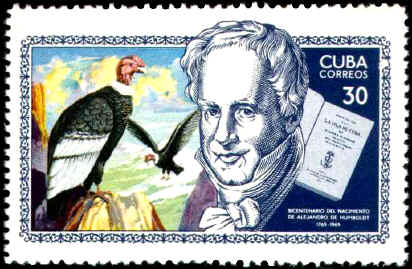
Simón Bolívar dijo una vez: “Humboldt ha sido más útil para América que todos sus conquistadores” por eso siempre recordaremos al viajero infatigable que nos legó valiosos tesoros de conocimiento.
Hoy, la ciencia y la acción transformadora, realidad viviente de nuestra patria se abren paso, sin trabas, al precio del trabajo y el esfuerzo de nuestros mejores hijos y es el mejor homenaje que se puede rendir al eminente sabio alemán.
Alejandro de Humboldt, murió el 6 de mayo de 1859.
Agencies/SierraMaestra/Nereyda Fundora/Excerpts/Internet Photos/Arnoldo Varona/TheCubanHistory.com
THE CUBAN HISTORY, HOLLYWOOD.