

It runs the year 1877 and arrives in San Cristobal de La Habana a restless young man, native of La Estrada, Galician county.
His name is Waldo Álvarez Insúa (1856-1938) and, although he graduated in Laws, he will not be remembered for his practice as a spokesman in the forum. No, his university degree will often remain useless and shelved, as the restless son of Galicia has to shine in the media and as organizer and nucleus of his compatriots in Havana.
Since the age of fourteen, Waldo has already used the first journalistic weapons in his native Galicia, by collaborating, says a biographer, in journals more fleeting than a meteorite. And he gets to edit one with a title as chilling as it is promising: The Vampire.
That twenty-year-old only makes it to Havana and creates the weekly Eco de Galicia, the first newspaper with a stable exit that had in America the immigrants of that region. In its pages Álvarez Insúa, with courage, fought against those who brought to Cuba immigrants Galician in conditions of semisclavity.
From El Eco …, on October 12, 1879, he addressed to his compatriots a call to found the institution that was to be known as “the very illustrious Galician Center of Havana.”
Thousands add up. And they long for their land of chestnuts and walnuts. They die of saudade by Orense, Pontevedra, Lugo and Corunna. That is why the call that Álvarez Insúa directs his countrymen in Havana receives immediate and unanimous support.
In the same year that the initiative arose, on the eve of Christmas Day, at one o’clock in the afternoon, a group of immigrants will meet at the Teatro Tacón, which will establish the Galician Center of La Habana.
A gacetillero of the time left a journalistic note not only curious to report the fact, but because the author defended the repeated and crazy theory about the Columbus born in Galicia: “They are not many, but they are good and of unshakable resolution [.. . Acometen the immense effort to constitute a common place in the for them loving Cuban land, exponent of the virtues of the creative race of the discoverer of a world “.
On January 11, 1880, the inaugural party is celebrated: the Galician Center already has a building, even if it is only a rickety garage, whose owner has agreed to rent it, as long as they pay the monthly payments – a dozen of ounces – in gold and in advance.
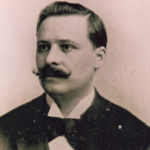
Waldo Alvarez Insúa.
The institution, which would have to spend the time with one of the most robust credits of the country, begins its life with an almost franciscan budget, that in spite of its modestia throws an initial deficit of three thousand pesos.
One of the first gestures of the newborn entity consists of a collection in favor of the poet Rosalía de Castro. How not to help her, if she had been the best voice interpreter of the soul of the emigrant. How not to help the sick poet, if in her verses translated the bitterness of the galleguita saw the emigrant leave ?
In 1885 the Centro Gallego began to provide medical services to its associates. Eight years later, the institution acquires the fifth health La Benefica. Already the partners total about six thousand.
After the convulsive stage of the War of Independence, in 1902 the entity recovers and reaches ten thousand members.
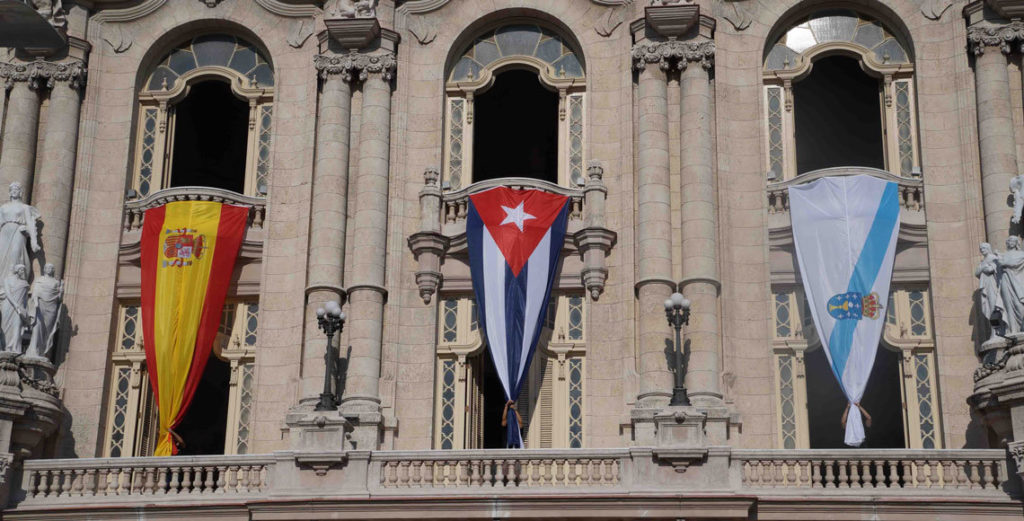
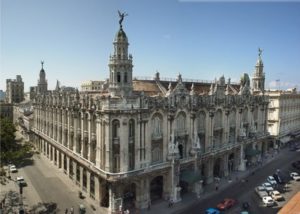
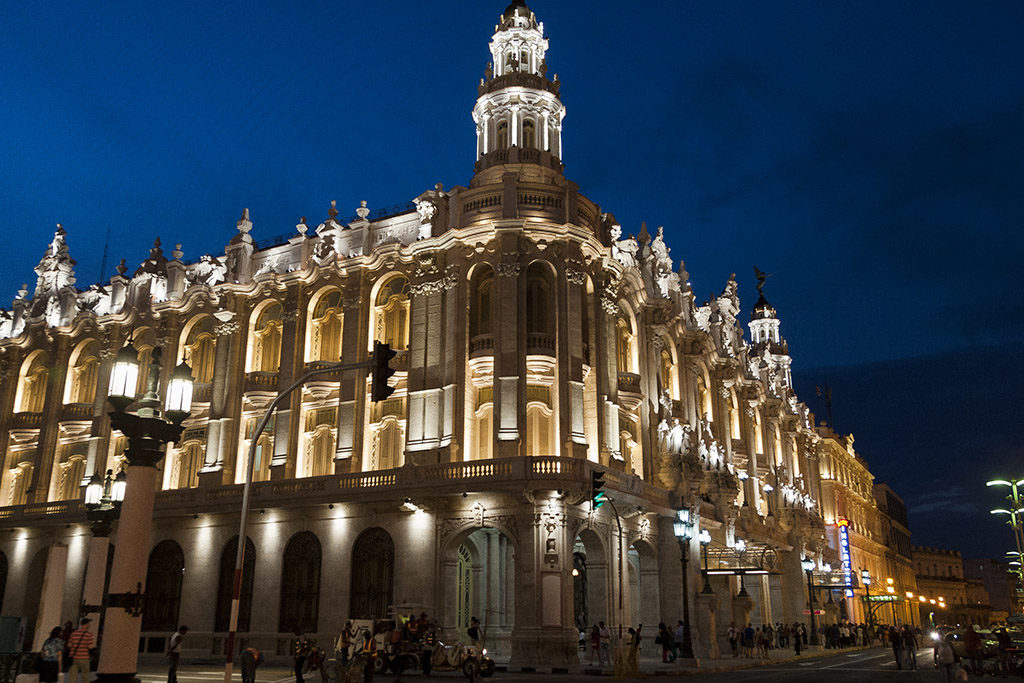
The first of January of 1906 is signed the writing by which the lands limited by the streets Prado, San Rafael, San Jose and Consulate are acquired, rectangle that contains to the National Theater, before Heel. In 1914, the imposing neo-baroque building that we admire today, the work of the Belgian architect Paul Beleu, is completed. At its base, as a first stone, lies a granite block, carved in the quarries of Lugo, and which rests there as a symbol of longing for the native land and as proof that they have not let Gallego die.
None of this was witnessed by Waldo Álvarez Insúa. The journalist from Pontevedra loved – without doubts – this land, starting with his wife, the Cuban Sara Escobar, with whom he had six children. But he did not understand our eagerness to breathe free lung, so when the Metropolis goes to retreat he leaves the Island, never to return. He writes to a brother-in-law: “I could not see, without a mortal sadness, another flag in the Morro that was not the Spanish one. Call it selfishness or fanaticism but, I repeat, if I do not go I die. ”
Anyway, on August 10, 1938, when he closes his eyes for the last time in Madrid, he surely knows that he has bequeathed us, for all the centuries, a majestic element of the Havana landscape.

CUBA TODAY * HOY – CUBA LEGACY * SU PASADO – THE CUBAN HISTORY.COM
EL MUY “ILUSTRE CENTRO GALLEGO DE LA HABANA”.
Corre el año de 1877 y llega a San Cristóbal de La Habana un inquieto joven, natural de La Estrada, comarca gallega.
Se llama Waldo Álvarez Insúa (1856-1938) y, aunque se graduó en Leyes, no será recordado por su ejercicio como picapleitos en el foro. No, su título universitario a menudo permanecerá inútil y engavetado, pues el intranquilo hijo de Galicia ha de brillar en las lides periodísticas y como organizador y núcleo de sus coterráneos en La Habana.
Desde los catorce años, ya Waldo ha esgrimido las primeras armas periodísticas en su natal Galicia, al colaborar —dice un biógrafo— en revistas más fugaces que un aerolito. Y llega a editar una con un título tan escalofriante como prometedor: El Vampiro.
Aquel veinteañero no hace más que llegar a La Habana y crea el semanario Eco de Galicia, el primer periódico con salida estable que tuvieron en América los inmigrantes de esa región española. En sus páginas Álvarez Insúa, con valentía, combatió contra quienes traían a Cuba inmigrantes gallegos en condiciones de semiesclavitud.
Desde El Eco…, el día 12 de octubre de 1879, dirige a sus coterráneos un llamado para fundar la institución que iba a ser conocida como “el muy ilustre Centro Gallego de La Habana”.
Suman miles. Y añoran su tierra de castaños y nogales. Se mueren de saudade por Orense, Pontevedra, Lugo y La Coruña. Por eso, el llamado que Álvarez Insúa dirige a sus paisanos en La Habana recibe apoyo inmediato y unánime.
En ese mismo año en que surgiera la iniciativa, durante la víspera del día de Navidad, a la una de la tarde se reúne en el Teatro Tacón un grupo de inmigrantes que fundará el Centro Gallego de La Habana.
Un gacetillero de la época dejó una nota periodística no solo curiosa por reportar el hecho, sino porque el autor defendía la repetida y disparatada teoría en cuanto al Colón nacido en Galicia: “No son muchos, pero son buenos y de resolución inquebrantable […] Acometen el inmenso empeño de constituir un lugar común en la para ellos amorosa tierra cubana, exponente de las virtudes de la raza creadora del descubridor de un mundo”.
En Prado y Dragones, el 11 de enero de 1880, se celebra la fiesta inaugural: ya el Centro Gallego cuenta con un inmueble, aunque solo sea una desvencijada cochera, cuyo propietario ha accedido a alquilarla, siempre que le paguen las mensualidades —una docena de onzas— en oro y por adelantado.
La institución, que habría de contar al transcurrir el tiempo con uno de los más robustos créditos del país, comienza su vida con un presupuesto casi franciscano, que a pesar de su modestia arroja un déficit inicial de tres mil pesos.
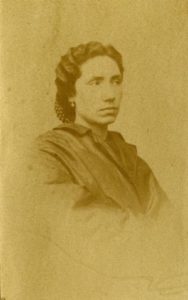
Poetisa Rosalia Castro.
Uno de los primeros gestos de la recién nacida entidad consiste en una colecta a favor de la poetisa Rosalía de Castro. Cómo no socorrerla, si ella había sido la mejor voz intérprete del alma del emigrante. ¿Cómo no auxiliar a la poetisa enferma, si en sus versos se tradujo la amargura de la galleguita que vio partir al emigrante?:
En 1885 el Centro Gallego comienza a prestar servicios médicos a sus asociados. Ocho años después la institución adquiere la quinta de salud La Benéfica. Ya los asociados suman unos seis mil.
Tras la convulsa etapa de la Guerra de Independencia, en 1902 la entidad se recupera y alcanza los diez millares de socios.
El primero de enero de 1906 se firma la escritura por la cual se adquieren los terrenos limitados por las calles Prado, San Rafael, San José y Consulado, rectángulo que contiene al Teatro Nacional, antes Tacón. En ese lote urbano se concluye, en 1914, el imponente edificio neobarroco que hoy admiramos, obra del arquitecto belga Paul Beleu. En su base, como primera piedra, yace un bloque granítico, tallado en las canteras de Lugo, y que allí reposa como un símbolo de la saudade por la tierra natal y como una prueba de que no han dejado morir a la galleguidad.
Nada de esto lo presenció Waldo Álvarez Insúa. El periodista pontevedrés amó —sin dudas— a esta tierra, empezando por su esposa, la cubana Sara Escobar, con la cual tuvo seis hijos. Pero no entendió nuestras ansias de respirar a pulmón libre, por lo cual, cuando la Metrópoli va de retirada él abandona la Isla, para no regresar jamás. Le escribe entonces a un cuñado: “No podría ver, sin una tristeza mortal, otra bandera en el Morro que no fuera la española. Llámale a esto egoísmo o fanatismo pero, te lo repito, si no me marcho me muero”.
De todas maneras, el 10 de agosto de 1938, cuando en Madrid cierra los ojos por vez postrera, de seguro sabe que nos ha legado, para todos los siglos, un majestuoso elemento del paisaje habanero.
Agencies/Argelio Santiesteban/Internet Photos/Excerpts/ Arnoldo Varona/ TheCubanHistory.com
THE CUBAN HISTORY, HOLLYWOOD.
CUBA TODAY * HOY – CUBA LEGACY * SU PASADO – THE CUBAN HISTORY.COM