

 SANTIAGO DE CUBA, carrying its Five Centuries with Pride. (PHOTOS). + SANTIAGO DE CUBA, con sus Cinco Siglos a Cuesta. (FOTOS).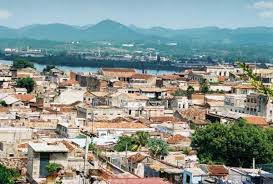
SANTIAGO DE CUBA, CON SUS CINCO SIGLOS A CUESTA.
El calor es el primer saludo que le ofrece la ciudad de Santiago de Cuba, un vaho de aire enrarecido que el ventilador no logra disipar.
Muchos títulos, frases, apodos… tiene la ciudad de Santiago de Cuba, pero pocos la describen tan bien como “Capital del Caribe”.
Para lo más común de los santiagueros es la de moverse en una ciudad de medio milenio, de calles zigzagueante, onduladas y con pendientes que hacen dudar hasta un atleta, aunque le aportan una singularidad espectacular a la urbe. Aquí los santos ayudan a bajar, como en cualquier lugar, pero para arriba, ni el panteón yoruba completo empinan el coraje.

Dicen que las escalinatas fueron una solución técnica a lo abrupto de la topografía, para ayudar a los transeúntes, otros aseguran que fue una estrategia defensiva para evitar el desplazamiento de la artillería pesada de los invasores por las arterias citadinas en la época colonial. Yo prefiero creer que son uno de los tantos detalles que hacen única a la urbe, evidencia del diálogo entre las personas que han vivido aquí por cinco siglos y lo escarpado del relieve. Ahí está Padre Pico, sin dudas la más famosa, pero no la única.
Es Santiago de Cuba una ciudad edificada en terrazas, en niveles, y laberíntica, hasta el que la conoce como su palma de la mano se ha sorprendido en algún giro inesperado de sus calles, en algún callejón o recoveco pintoresco.
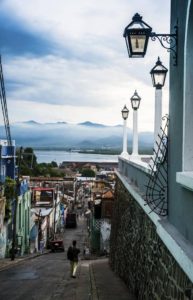
Pero esa misma condición le aporta paisajes que desafían la imaginación, desde el Cobre, el del Cementerio, cualquier ambiente urbano, y sus increíbles desniveles: por eso es una ciudad paisaje, mirador y anfiteatro, que creció en perenne diálogo con el terreno y confinada entre el mar y las montañas.
Completan el fresco las montañas de las cordilleras de El Cobre, Boniato y la Gran Piedra que dominan una parte del entramado urbano y sirven de cierre visual de muchas de sus calles, un hermoso trasfondo, verde intenso casi todo el año, y donde se pueden encontrar algunos de los vestigios más importantes del patrimonio cafetalero, considerado Patrimonio de la Humanidad.
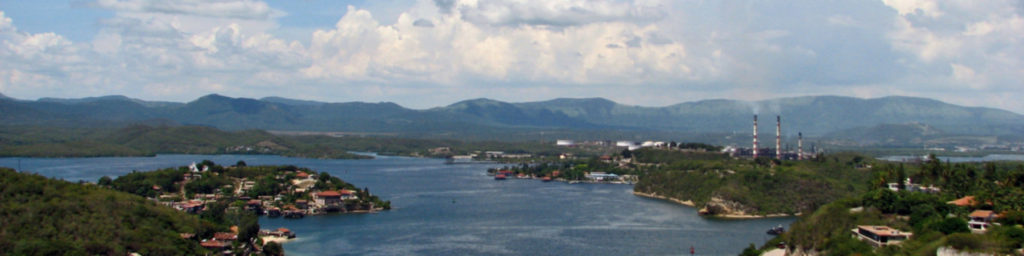
En el otro extremo el mar, una profunda bahía de bolsa, de aguas oscuras y tranquilas, que aporta el sentido marinero a la ciudad, matices que hoy se redescubren porque el santiaguero vuelve a mirar a su rada y se reconcilia con ella. ¡Menos mal!
La Fortaleza de San Pedro de la Roca, nuestro Morro, domina, como nadie, el paisaje costero de Santiago de Cuba. Imponente, majestuoso, prístino…
Ese sabor se siente en la manera de vestir, en el calor de la gente, en el mestizaje, en las tradiciones, en la forma de hablar, de pregonar, un acervo cultural que tiene cúspides como la Tumba Francesa (Obra Oral e Inmaterial de la Humanidad), las congas, los carnavales (Patrimonio Cultural de la Nación), la Fiesta del Fuego…

«Capital de la Música» también le llaman a Santiago de Cuba y razones hay muchas: cuna de géneros como la trova y de músicos como Compay Segundo, Ñico Saquito y Miguel Matamoros , y aunque lugares como la Casa de la Trova, sin dudas reverencian el pasado sonoro, hay quienes extrañan cuando las más dulces melodías brotaban en la calle cual si fueran piropos.
Sin embargo, creo que nadie es más jovial y parrandero que el santiaguero, pueblo orgulloso de su ciudad, de su historia y su cultura, adicto al café y tomador por excelencia, un poco violento a la hora de hablar y gesticular, pero igual muy sincero, muy religioso –en su más amplio sentido–, y siempre dado a la conversación y a charlar de su cotidianidad.
El santiaguero, en algunas cuadras, vive más de la puerta para fuera que en el interior del hogar, siempre con la cafetera lista, igual que las chancletas para correr y meterse en la conga o presenciar cualquier pelea en el barrio.

Vivimos hacia fuera, intensamente, hablamos bien alto, gritando, y reímos más alto aún, y siempre con una ocurrencia, con una picardía y un chiste clamando salir y hacer la delicia de los amigos y vecinos. El santiaguero siempre ríe, por muy mala que esté la cosa.
Es una locura intentar resumir aquello que identifica o resulta singular en la ciudad de Santiago de Cuba. Mientras que a otras quizás le falten atractivos, a la «tierra caliente» le sobran. Desde sus calles, cual serpentinas que coquetean o danzan con el terreno, hasta sus edificaciones, sus tres componentes del patrimonio de la humanidad e historia desparramada por doquier, aquí todo parece haber sido bendecido.
Somos, sin lugar a dudas, santiagueros, el término es casi un adjetivo, no hay otra forma de resumirlo.

ENGLISH articles follow those in Spanish – ARTICULOS en Inglés siguen a los de Español.
SANTIAGO DE CUBA CARRYING ITS FIVE CENTURIES WITH PRIDE.

The heat is the first greeting that offers the city of Santiago de Cuba, a rarefied air mist that the fan does not manage to dissipate.
Many titles, phrases, nicknames … have the city of Santiago de Cuba, but few describe it as well as “Capital of the Caribbean”.
For the most common of the people of Santiago is to move in a city of half a millennium, zigzag streets, undulating and with slopes that make doubts even an athlete, although they bring a spectacular singularity to the city. Here the saints help to descend, as in any place, but up, nor the full Yoruba pantheon steep courage.

They say that the stairs were a technical solution to the abrupt topography, to help passers-by, others say it was a defensive strategy to avoid the heavy artillery displacement of the invaders by the city arteries in colonial times. I prefer to believe that they are one of the many details that make the city unique, evidence of the dialogue between the people who have lived here for five centuries and the sheer relief. There is Padre Pico, undoubtedly the most famous, but not the only one.
Santiago de Cuba is a city built on terraces, in levels, and labyrinthine, to the one that knows it like his palm has been surprised in some unexpected turn of its streets, in some alley or picturesque recess.
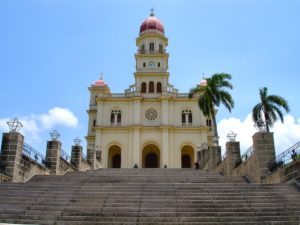
But that same condition contributes landscapes that defy the imagination, from El Cobre, the Cemetery, any urban environment, and its incredible unevenness: that is why it is a city landscape, lookout and amphitheater, that grew in perennial dialogue with the land and confined Between the sea and the mountains.
The mountains of the El Cobre, Boniato and Gran Piedra mountain ranges dominate a part of the urban structure and serve as a visual closure of many of its streets, a beautiful backdrop, intense green almost all year round, and where you can To find some of the most important vestiges of the patrimony of the coffee, considered Patrimony of the Humanity.
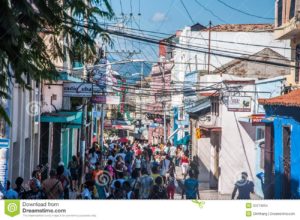
At the other end the sea, a deep bay of bag, dark and calm waters, which brings the sense sailor to the city, nuances that today are rediscovered because the Santiago returns to look at his side and is reconciled with it. Goodness!
The Fortress of San Pedro de la Roca, our Morro, dominates, like no other, the coastal landscape of Santiago de Cuba. Awe-inspiring, majestic, pristine …
That flavor is felt in the way of dressing, in the heat of the people, in mestizaje, in the traditions, in the way of speaking, of proclaiming, a cultural collection that has cusps like the French Tumba (Oral and Intangible Work of The Humanity), the congas, the carnivals (Cultural Patrimony of the Nation), the Feast of the Fire …

“Capital of Music” also call Santiago de Cuba and there are many reasons: cradle of genres such as trova and musicians such as Compay Segundo, Ñico Saquito and Miguel Matamoros, and although places like the House of Trova, no doubt reverence The sonorous past, there are those who miss when the sweetest melodies came out in the street as if they were compliments.
However, I believe that nobody is more jovial and parrandero than the Santiago, proud people of his city, its history and its culture, addict to the coffee and drinker par excellence, a little violent when talking and gesturing, but equally very Sincere, very religious – in its broadest sense – and always given to the conversation and to chat about their daily lives.
In a few blocks, Santiago lives more than the door outside than inside the home, always with the coffee maker ready, just like the flip-flops to run and get into the conga or witness any fight in the neighborhood.
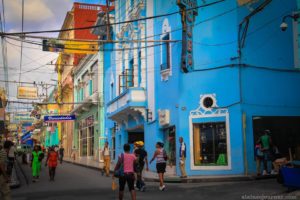
We live outwards, intensely, we speak loudly, screaming, and we laugh even higher, and always with an occurrence, with a mischievousness and a joke clamoring to leave and make the delight of friends and neighbors. The Santiago always laughs, however bad the thing is.
It is crazy to try to summarize what it identifies or is unique in the city of Santiago de Cuba. While others may lack appeals, the “hot land” is left over. From its streets, like streamers that flirt or dance with the terrain, to its buildings, its three components of the heritage of humanity and history scattered everywhere, everything seems to have been blessed here.
We are, without a doubt, Santiago, the term is almost an adjective, there is no other way to summarize it.
Agencies/CiberCuba/José R.Loo/Excerpts/Internet Photos/ Arnoldo Varona/ TheCubanHistory.com
THE CUBAN HISTORY, HOLLYWOOD.

CUBA TODAY * HOY – CUBA LEGACY * SU PASADO – THE CUBAN HISTORY.