


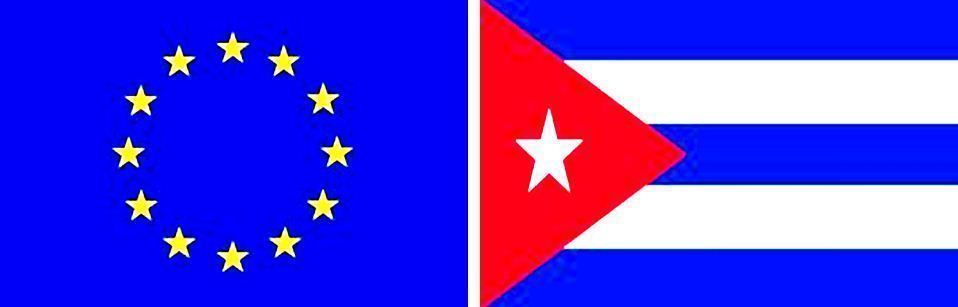
 THE EUROPEAN UNION AND HAVANA Avoid to Engage in talks About the Human Rights in Cuba. ** LA UNIÓN EUROPEA Y LA HABANA Esquivan Tratar sobre los Derechos Humanos en Cuba.
THE EUROPEAN UNION AND HAVANA AVOID TO ENGAGE IN TALKS ABOUT HUMAN RIGHTS IN CUBA.”.
“We talked about it (human rights), cubans are sensitive (…) issues We do not impose a model, we can not, we do not want,” Leffler, chief negotiator of the European Union said.
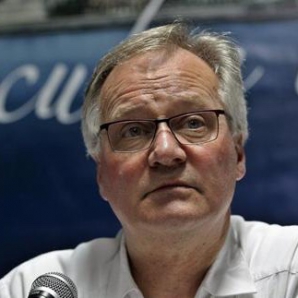 Christian Leffler, director General for the European External Action Service America. (AP)
The European Union (EU) and the Cuban government closed Thursday with “progress” a round of talks in Havana aimed at normalizing relations, but tiptoed on sensitive issues such as human rights, which will be discussed at a future meeting in Brussels, according to AFP.
“We have made important steps and developments especially in the chapter on cooperation, which is the most important chapter wider agreement” that the two sides are expected to sign said EU chief negotiator Christian Leffler, in press conference after the closing of the round.
“He went out of this round with a better understanding of the positions, sensitivities, ambitions of both sides, which I hope will allow us to prepare the next round,” he added.
“The negotiations took place in the constructive spirit and mutual respect that has characterized this process since its inception in April 2014,” said for his part the Cuban Foreign Ministry said in a statement.
This was the third round of negotiations aimed at achieving an “Agreement on Political Dialogue and Cooperation” and was performed with the historic rapprochement between Washington and Havana as a backdrop.
Reporting on the date of the next meeting, the parties showed discrepancies. According to the Cuban Foreign Ministry, will “to be held in Brussels next summer (boreal), on a date to be agreed through diplomatic channels.” But Leffler said to be “in a few months, before the summer”.
‘The Cuban government is very sensitive’
Although the last day focused on issues of cooperation, the EU delegation also made a “presentation” on political issues including human rights.
“We talked about it (human rights), are sensitive (…) We do not impose topics model, we can not, we do not want,” Leffler said.
“We have presented the chapters of political dialogue (…) as governance, human rights, peace and security, combating terrorism and Chapter of trade and economic relations,” he said.
However, “these chapters have not discussed in detail, we have not negotiated, was introduced with comments,” Leffler said.
“For us it is important obligation for the parties to respect and implement international instruments without preconditions,” he added.
For its part, the Cuban Foreign Ministry said the delegation of the island, led by Deputy Foreign Minister Abelardo Moreno, expressed his hope that the agreement “represents a real contribution to promoting respectful relationships (…) on a reciprocal basis and non-discriminatory “.
This implies the “full respect for the sovereign equality of States (…) as well as adherence to the principle of non-interference in the internal affairs of States,” he added.
Leffler said that “the Cuban government is very sensitive to the issue of sovereignty. So when we talk of cooperation and principles of cooperation, there are links for interpretation of the way to work that touch upon the autonomy of national structures”.
“But it’s important for us to achieve cooperation with all parts of Cuban society, that we must look for equilibria that give satisfaction to both parties,” he added.
The reference to “cooperate with all parts of society” apparently imply the intention of the EU to also support Cuban unofficial groups, but not expressly mentioned Leffler.
‘The two processes are complementary’
This is the first meeting between the block and Havana since Raul Castro and US President Barack Obama surprised the world on December 17, with the announcement of a sane to restore diplomatic relations.
According to Reuters, Leffler considered that this shift has helped bilateral talks with the European Union with Havana.
Asked if European interests are threatened by the new US policy, European chief negotiator said the US role is “very positive”.
“This raises a cloud hanging over the region (…) long (y) opens new possibilities,” Leffler said.
“Both processes will complement each other and we welcome the step taken by the United States to move away from confrontation,” he added.
Agencies / DDC / InternetPhotos / www.thecubanhistory.com
The Cuban History, Hollywood.
Arnoldo Varona, Editor.
CUBA PHOTOS.

LA UNIÓN EUROPEA Y LA HABANA ESQUIVAN TRATAR EL TEMA: DERECHOS HUMANOS EN CUBA”.
“Hablamos de eso (derechos humanos), son temas sensibles (…) Nosotros no imponemos un modelo, no podemos, no queremos”, dijo Leffler, jefe negociador de la Union Europea.
Christian Leffler, director general para América del Servicio Europeo de Acción Exterior.(EFE)
La Unión Europea (UE) y el Gobierno cubano cerraron este jueves con “avances” una ronda de negociaciones en La Habana destinada a normalizar sus relaciones, pero pasaron de puntillas sobre temas sensibles, como los derechos humanos, que serán discutidos en una próxima reunión en Bruselas, según la AFP.
“Hemos logrado pasos importantes y avances sobre todo en el capítulo de la cooperación, que es el capítulo más amplio, el más importante del acuerdo” que las dos partes esperan firmar, dijo el jefe negociador de la UE, Christian Leffler, en rueda de prensa tras el cierre de la ronda.
“Salimos de esta ronda con un mejor entendimiento de las posiciones, sensibilidades, ambiciones de ambas partes, lo que espero nos permitirá preparar la próxima ronda”, añadió.
“Las negociaciones se desarrollaron con el espíritu constructivo y de respeto mutuo que ha caracterizado este proceso desde su inicio, en abril del 2014”, declaró por su parte la Cancillería cubana en un comunicado.
Esta fue la tercera ronda de negociaciones destinadas a lograr un “Acuerdo de Diálogo Político y Cooperación”, y se efectuó con el histórico acercamiento entre Washington y La Habana como telón de fondo.
Al informar sobre la fecha de la próxima reunión las partes mostraron discrepancias. Según la Cancillería cubana, va “a celebrarse en Bruselas durante el próximo verano (boreal), en fecha que se acordará por los canales diplomáticos”. Pero Leffler declaró que será “en unos meses, antes del verano”.
‘El Gobierno cubano está muy sensible’
Aunque la última jornada se centró en temas de cooperación, la delegación europea también hizo una “presentación” sobre temas políticos, incluidos derechos humanos.
“Hablamos de eso (derechos humanos), son temas sensibles (…) Nosotros no imponemos un modelo, no podemos, no queremos”, dijo Leffler.
“Hemos presentado los capítulos del diálogo político (…) como gobernación, derechos humanos, paz y seguridad, lucha contra el terrorismo, y el capítulo del comercio y de las relaciones económicas”, indicó.
Sin embargo, “estos capítulos no los hemos tratado en detalle, no los hemos negociado, era más una presentación con comentarios”, agregó Leffler.
“Para nosotros es importante la obligación para las partes de respetar e implementar instrumentos internacionales sin condiciones preliminares”, añadió.
Por su parte, la Cancillería cubana expresó que la delegación de la Isla, encabezada por el vicecanciller Abelardo Moreno, expresó su aspiración de que el acuerdo “represente una contribución real al fomento de relaciones respetuosas (…) sobre bases recíprocas y no discriminatorias”.
Esto implica el “pleno respeto a la igualdad soberana de los Estados (…) así como en apego al principio de no injerencia en los asuntos internos de los Estados”, añadió.
Leffler expresó que “el Gobierno cubano está muy sensible al tema de la soberanía. Entonces cuando hablamos de cooperación y de principios de cooperación, hay vínculos de interpretación de la manera de trabajar que tocan a la autonomía de las estructuras nacionales”.
“Pero es importante para nosotros lograr cooperar con todas las partes de la sociedad cubana, en eso tenemos que buscar equilibrios que dan satisfacción a ambas partes”, agregó.
La alusión a “cooperar con todas las partes de la sociedad” implicaría aparentemente la intención de la UE de apoyar también a grupos no oficiales cubanos, pero el Leffler no lo mencionó expresamente.
‘Los dos procesos se complementan’
Esta es la primera reunión entre el bloque y La Habana desde que Raúl Castro y el presidente estadounidense, Barack Obama, sorprendieran al mundo el 17 de diciembre, con el anuncio de una cuerdo para restablecer relaciones diplomáticas.
Según Reuters, Leffler consideró que ese giro ha ayudado a las conversaciones bilaterales de la Unión Europea con La Habana.
Consultado sobre si los intereses europeos se ven amenazados por la nueva política de Washington, el jefe negociador europeo dijo que el papel de Estados Unidos es “muy positivo”.
“Esto levanta una nube que pesaba sobre la región (…) por mucho tiempo (y) abre nuevas posibilidades”, dijo Leffler.
“Los dos procesos se complementan entre sí y damos la bienvenida al paso dado por Estados Unidos de alejarse de la confrontación”, añadió.
Agencies/DDC/InternetPhotos/www.thecubanhistory.com
The Cuban History, Hollywood.
Arnoldo Varona, Editor.