– BRIEF HISTORY of the Association of Canarios residents in Cuba . (Photos) * * BREVE HISTORIA de la Asociación de Canarios residentes en Cuba. (Fotos)

ggg

BREVE HISTORIA DE LA ASOCIACIÓN DE CANARIOS RESIDENTES EN CUBA.

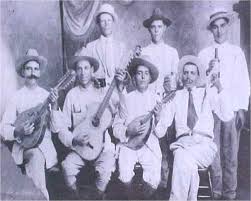
Las más recientes asociaciones que agrupan a los Canarios isleños y sus descendientes en nuestra isla tuvo como antecesora a la Asociación Canaria de Beneficencia y Protección Agrícola, fundada en 1872 —la primera en Cuba— con el objetivo de brindar protección a sus miembros, y luego la Asociación Canaria —creada el 11 de noviembre de 1906—, con la finalidad de contribuir a la asistencia sanitaria, instrucción, recreo y auxilio de sus socios.

Hoy la llamada Asociación Canaria de Cuba ‘Leonor Pérez Cabrera’ (madre del Héroe Nacional José Martí y nacida en Santa Cruz de Tenerife) agrupa a más de 40 mil nativos y descendientes distribuidos por todo el país y que tiene en la región central, sobre todo en la provincia de Sancti Spíritus la zona de mayor representatividad y acaso Cabaiguán como la ciudad “espirituana” con un trabajo más estable en ese sentido.

Tal permanencia canaria en la Cuba de hoy se explica por sí sola. Y hubo varias razones que provocaron en el pasado la llegada de muchos canarios al país.
gggf

Tal vez la primera fuera la crisis económica en Canarias y, por supuesto, las facilidades para emigrar a Cuba, que una vez concedieron los monarcas españoles en la Real Cédula de 1688 con la cual activaron la emigración continua de las familias canarias de origen campesino.

LLEGAN LOS PRIMEROS CANARIOS.

Pero lo cierto es que entre 1830 y 1850 se incrementó el flujo migratorio de isleños, que no pocos investigadores han asociado al nacimiento y auge del ferrocarril en Cuba. De hecho se sabe que en la construcción de mismo participaron más de 900 canarios, sobre todo en la edificación del primer tramo Habana-Bejucal.

Según censos de 1846 y 1862, había en Cuba presencia canaria mayoritaria dentro de las migraciones hispánicas, próxima al 42%.

En 1846 los 117, 466 habitantes de Cuba nacidos en la península representaban el 13,07% del total de la población de la Isla, que era entonces de 898,742.

Los canarios constituían el 6% de esa cifra —unos 53, 825—, y según consta en cifras oficiales, el último tercio del siglo XIX y el primero del siglo XX se caracterizaron, de forma general, por una inmigración individual con predominio de varones en edades productivas.

memoria3

Esa emigración canaria contribuyó a la fundación y desarrollo de asentamientos urbanos y rurales como fueron San Luis, San Juan y Martínez, La Palma y Candelaria en el extremo occidental.

En cambio Güines, Bejucal, Santiago de las Vegas, Jesús del Monte, y San Miguel del Padrón, fueron los asentamientos en los alrededores de La Habana.

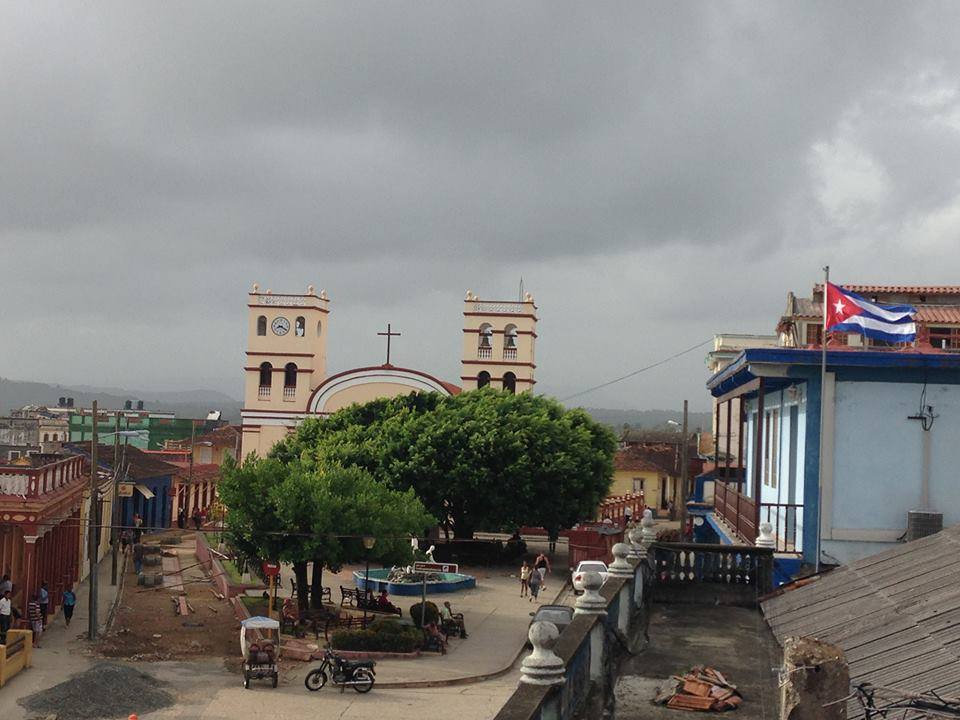
Hacia el centro de Cuba nacieron pueblos como Remedios, Camajuaní, Sagua la Grande, Vueltas, Zaza del Medio, Placetas, Taguasco y Cabaiguán.

En la zona oriental, la emigración canaria se asentó fundamentalmente en la órbita de las ciudades de Bayamo y Holguín.

Aunque la mayoría de la emigración canaria en Cuba se dedicó principalmente a la agricultura a finales del siglo XIX y principios del XX, muchos isleños se dedicaron al comercio de víveres o detallistas.

En su obra El Bello Habano, el escritor Reynaldo González escribe: “entre los emigrantes españoles, los provenientes de islas Canarias, muy tesoneros, prefieren cultivar los campos y no permanecer en las ciudades apenas sobreviviendo en oficios de peonada, que su moral repele. Ellos aceleran la historia del tabaco habano y le dan una significación cultural. (…) el isleño es pobre, viene por cuenta propia, trae su familia y se asienta en zonas rurales apartadas…”1.

En el número 4 de la Revista Cubana de Antropología Catauro (julio-diciembre de 2001) la investigadora y profesora cubana María del Carmen Barcia, señala que “entre 1882 y 1930, el 7% de los inmigrantes hispanos llegados a Cuba eran canarios, contra los gallegos que representaban el 40% o catalanes y asturianos, ambos representando un 10% de sus respectivas autonomías”2.

Pero la esencia canaria en Cuba no fue solo en su representación social laboriosa; la participación de los canarios en las guerras de independencia, sobre todo la de 1895 fue notoria al punto de que representaron el 41% de los hispanos que pelearon al lado los cubanos.

Entre los que estuvieron sobresale Julián Santana, general de Brigada del Ejército Libertador, natural de Gran Canaria y participante, junto con Antonio Maceo en la protesta de Baraguá. Destacada participación tuvo también Manuel Suárez Delgado, quien con el grado de Mayor General recorrió todas las etapas de la lucha independentista de Cuba del lado mambí.

download

Muchas personalidades de la cultura cubana, nacidos canarios o descendientes, contribuyeron a la cubanidad, entre los que pueden citarse a Valentín Sanz Carta destacado pintor, nacido en Santa Cruz de Tenerife, paisajista notable, además de retratista; Gregorio Expósito Gómez, conocido en el canto popular como Manuel Cuquillo, uno de los poetas repentistas más famosos de su época, nacido en La Palma y establecido en la ciudad de Cabaiguán.

Tal vez una de las personalidades más significativas lo fuera Luis Gómez Wangüemert, periodista y profesor nacido en La Palma y quien desarrollara una notable labor en la prensa. Y es que numerosos canarios asentados en Cuba y fundamentalmente en La Habana se dedicaron a la prensa.

Esto explica que entre 1864 y 1932 existieron en Cuba 17 publicaciones realizadas por canarios, iniciada por El Mencey hasta Tierra Canaria, casi todas fundadas en la capital, excepto La Colonia Canaria, creada en 1891 en la ciudad de Cienfuegos.

El propio Wangüemert escribiría en la Revista Patria Isleña, en diciembre de 1926:

“…Cabaiguán es el nuevo término municipal, residencia de millares de isleños que son parte activa y provechosa de su comercio, su industria y sobre cultura y también en las ciencias y las letras. Cabaiguán es una de las porciones de la provincia de Santa Clara en que se aprecia con mayor intensidad la influencia canaria. Quizá y sin quizá, porque los hijos de las afortunadas han contribuido mucho a su nacimiento y prosperidad. Cabaiguán es para nosotros, cuando tenemos la satisfacción de visitarlo como un pedazo de la patria lejana que la fantasía coloca en Cuba.”

Igualmente se sucedieron varias sociedades canarias, desde la de beneficencia a la mutualista, desde culturales y deportivas hasta profesionales.

Es entonces como se comprende la reminiscencia que persiste entre cubanos de las muchas referencias canarias en frases, objetos, comidas, modos y que componen el gran ajiaco de nacionalidades que hoy forma el tronco nacional de los cubanos.

Jiribilla/Josefina Ortega/Excerpts/InternetPhotos/www.thecubanhistory.com
BREVE HISTORIA DE LA ASOCIACIÓN DE CANARIOS RESIDENTES EN CUBA.
The CUban History, Hollywood.
Arnoldo Varona, Editor

Baracoa, Cuba (2014). Cuba en Fotos.
10356201_10152431532836083_9102256640521415093_n

BRIEF HISTORY OF THE ASSOCIATION OF CANARIOS RESIDENTS IN CUBA.

Latest associations representing Canarios islanders and their descendants in our island had the predecessor to the Canary Agricultural Benevolent Association and Protection, founded in 1872-the first in Cuba, in order to provide protection to its members, then Canarian-created Association on November 11, 1906 – with the aim of contributing to health care, education, recreation and assistance of its partners.

Today the call Canaria Cuba Association ‘Leonor Pérez Cabrera’ (mother of national hero José Martí and born in Santa Cruz de Tenerife) brings together more than 40 thousand natives and descendants scattered throughout the country and is in the central region, all in the province of Sancti Spiritus area and perhaps more representative Cabaiguán as “Spiritus” city with a more stable job in this regard.

ggg

Such Canary stay in Cuba today is self-explanatory. And there were several reasons that led past the arrival of many canaries in the country.

Perhaps the first was the economic crisis in the Canary Islands and, of course, the facilities to emigrate to Cuba, once the Spanish monarchs granted in the Royal Decree of 1688 which were activated continuous migration of Canarian families of peasant origin.

ARRIVE OF THE FIRST CANARIOS TO THE ISLAND.

But the fact is that between 1830 and 1850 the outflow of islanders, that not a few researchers have associated the birth and rise of the railroad in Cuba increased. In fact it is known that it involved the construction of more than 900 canaries, especially in building the first section Havana-Bejucal.

According to census of 1846 and 1862, there were in Cuba majority Canarian presence within the Hispanic migration, close to 42%.

In 1846 the 117 466 inhabitants of Cuba born on the mainland accounted for 13.07% of the total population of the island, which was then 898.742.

Canaries made up 6% of that-some 53, 825 -, and as recorded in official figures, the last third of the nineteenth century and the first of the twentieth century were characterized, in general, for a single male-dominated immigration productive age.

That Canarian emigration contributed to the founding and development of urban and rural settlements as were San Luis, San Juan and Martinez, La Palma and Candelaria at the western end.

gggf

Instead Guines, Bejucal, Santiago de las Vegas, Jesús del Monte, and San Miguel del Padrón, were the settlements around Havana.

Towards the center of towns like Cuba were born Remedios, Camajuaní, Sagua la Grande, Laps, Zaza del Medio, Placetas, Taguasco and Cabaiguán.

In the east, Canary emigration settled mainly in the orbit of the cities of Bayamo and Holguin.

Although most of the Canarian emigration in Cuba was mainly devoted to agriculture in the late nineteenth and early twentieth centuries, many islanders were devoted to food or retail trade.

In his book The Beautiful Cigar, writer Reynaldo Gonzalez writes, “among Spanish migrants, from the Canary Islands, very tenacious, islands prefer to cultivate the fields and not remain in the cities barely surviving in trades peons, his moral repels. They accelerate the history of snuff and cigar give a cultural significance. (…) the island is poor, is self-employed, bring your family and settles in remote rural areas … “1.

At number 4 of the Cuban Journal of Anthropology Catauro (July-December 2001) and Cuban researcher Professor María del Carmen Barcia, notes that “between 1882 and 1930, 7% of Hispanic immigrants to Cuba were canaries, against Galician representing 40% or Catalan and Asturian, both representing 10% of their autonomy. “2

But in essence the Canary Cuba was not alone in his laborious social representation; the participation of the canaries in the wars of independence, especially that of 1895 was notorious to the point that represented 41% of Hispanics who fought alongside Cubans.

Among those who were projecting Julian Santana, Brigadier General of the Liberation Army, a native of Gran Canaria and participant, along with Antonio Maceo in protest of Baraguá. Outstanding participation also had Manuel Suarez Delgado, with the rank of Major General toured all stages of the struggle for independence of Cuba from mambí side.

memoria3

Many personalities of Cuban culture, canaries born or descendants contributed to the cubanidad, among which may be mentioned a prominent painter Valentín Sanz Carta, born in Santa Cruz de Tenerife, remarkable landscape, plus portraitist; Gregorio Gomez Exposito, known in popular song as Cuquillo Manuel, one of the most famous poets of his day repentistas, born in La Palma and established in the city of Cabaiguán.

Perhaps one of the most significant personalities out what Wangüemert Luis Gómez, journalist and teacher born in La Palma and who developed a remarkable job in the press. And is that many canaries and mainly settled in Cuba in Havana devoted to the press.

This explains that existed between 1864 and 1932 in Cuba 17 publications by canaries, initiated by The Mencey to Tierra Canaria, almost all based in the capital, except Canaria La Colonia, created in 1891 in the city of Cienfuegos.

The Wangüemert own write in Homeland Islander Magazine in December 1926:

download

“… Cabaiguán is the new municipality, home to thousands of islanders who are active and profitable part of your business, your industry and culture and in the arts and sciences. Cabaiguán is a portion of the province of Santa Clara that is appreciated more intensely the Canarian influence. Maybe and maybe not, because the children of the fortunate have contributed much to his birth and prosperity. Cabaiguán is for us, when we are pleased to visit as a bit of that fantasy distant homeland placed in Cuba. ”

Canary also several companies followed, from the mutual Benefit from cultural and sports to professional.

It is then as reminiscence that persists among Cubans of the many references in canary phrases, foods, and ways that make the great melting pot of nationalities that today forms the national trunk Cubans understood.

Jiribilla / Josefina Ortega / Excerpts / InternetPhotos / www.thecubanhistory.com
BRIEF HISTORY OF THE CANARIOS RESIDENTS AND ASSOCIATION IN CUBA.
The Cuban History, Hollywood.
Arnoldo Varona, Editor

– Cuba: PROHIBITED TAKE OUT of the country Personal Antique Items. (Photos) * * Cuba: PROHIBIDO SACAR DEL PAÍS objetos Personales Antiguos. (Fotos)

download PROHIBIDO SACAR DEL PAÍS OBJETOS PERSONALES ANTIGUOS.

El Estado de Cuba no permite sacar del país objetos personales antiguos por ser “museables”. Leyes y resoluciones del régimen de los Castro aplican esa medida para aquellos objetos que pueden tener alto valor sentimental a menos que lo “resuelva” una autorización.

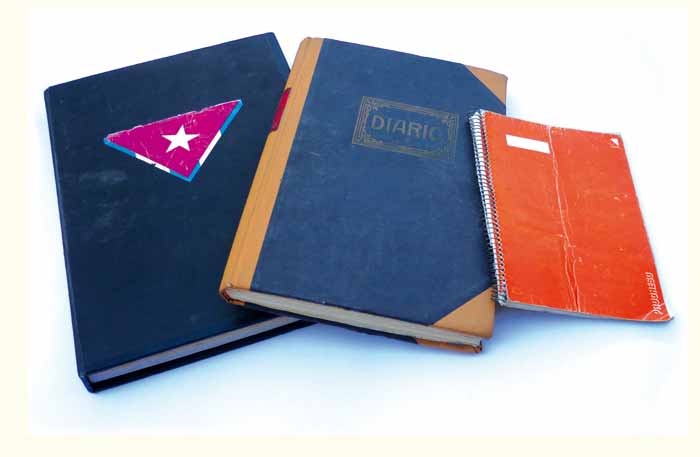
Si usted va a Cuba y a su salida espera llevarse consigo lo que queda de la vajilla de la familia, el reloj de su bisabuelo, o un libro de su padre editado en los primeros años de la revolución, piénselo dos veces: para las autoridades cubanas estos “recuerdos” pueden ser piezas museables y considerados parte del patrimonio nacional. En el mejor de los casos, se los podrían decomisar en la Aduana.

Un reportaje en el sitio web Cuba Contemporánea cita la Resolución 57/1994 del Ministerio de Cultura, donde se definen “los bienes culturales patrimoniales que deben ser protegidos a través de mecanismos de control, según el Registro Nacional de Bienes Culturales (RNBC)”.

La relación incluye “colecciones u objetos de interés científico; productos de excavaciones y descubrimientos arqueológicos; elementos provenientes de la desmembración de monumentos artísticos o históricos, objetos y documentos etnológicos o folklóricos, mapas y otros materiales cartográficos, partituras y grabaciones sonoras originales, objetos etnográficos e instrumentos musicales”.

También se incluyen “manuscritos raros; libros y publicaciones editados hace más de 50 años; archivos fotográficos y cinematográficos; objetos de interés numismático, filatélicos y vitofílicos, documentos y demás bienes relacionados con formadores de la nacionalidad y la independencia cubanas, dirigentes y personalidades sobresalientes”.

cuba-libretas

La exportación de estos bienes culturales sin embargo, no se descarta del todo, sólo que deben ir acompañados de un permiso de salida o Certificado de Exportación emitido por el RNBC.

La mencionada resolución establece, además, que si no se presenta ante la Aduana General de la República (AGR) la autorización al momento de salida del territorio nacional, ese órgano tiene la potestad de decomisar el bien ante un hecho catalogado como de contrabando. Y los contrabandistas pueden ser multados e incluso denunciados ante los tribunales.

SOBRECUMPLIENDO LAS METAS.

La autora precisa que el año pasado, la Aduana General de la República registró 302 casos en los que no se cumplieron los requisitos establecidos de documentación y quedaron decomisados 2.639 bienes culturales. De ellos, 2.285 pertenecían al grupo de las artes decorativas. De enero a marzo del presente año han sido decomisados 885 bienes en 68 infracciones detectadas.

Según dos expertas del RNBC, “lo más común son casos que se relacionan con la intención de llevarse relojes de pared, sobre todo de la marca Cuervo y sobrinos; vajillas, cubiertos, lámparas de techo o de mesa, adornos y otros objetos que, aunque pertenezcan a una familia, pueden tener valor museable”.

xxii-feria-otono-del-libro-antiguo-madrid-L-gUdP4j

También es frecuente que pasajeros lleven a su salida del país libros editados hace más de 50 años, “que pertenecen a Ediciones Revolución, o que tienen cuños institucionales, y es esencial portar el permiso para su exportación”.

Como podría esperarse, cubanos que residen en el exterior son los que más incurren en este tipo de infracción. Las especialistas explicaron que “aunque llevarse un recuerdo de la familia viene unido al desconocimiento de la ley en muchas ocasiones, el proceder es el mismo”.

En cuanto a sacar ilegalmente obras de las artes plásticas, aclararon que, si bien no es frecuente, sí se ha hecho, principalmente camuflando aquellas que sí tienen valor patrimonial entre las que no lo poseen. La preparación del aduanero sería el elemento clave que permite “descubrir” estos objetos en el interior de los equipajes a través de la técnica de los Rayos X.

POR EL COLOR DEL DINERO.

Las autoridades cubanas que se precian de estos estrictos controles todavía no han explicado cómo fueron primero sustraídas de un almacén del Museo Nacional de Bellas Artes, y después probablemente sacadas de Cuba, setenta obras de maestros de la pintura cubana como Leopoldo Romañach, Víctor Manuel García, Eduardo Abela y Armando García Menocal.

download (1)

El robo salió a la luz pública en febrero pasado cuando el coleccionista y galerista Ramón Cernuda inquirió ante las autoridades del museo cubano por el cuadro de Abela “Carnaval Infantil”, que había comprado en Miami.

El patrimonio cultural cubano fue por otra parte usado como una de las tablas de salvación del gobierno de Cuba durante la debacle económica que provocó en la isla la desaparición del bloque soviético y de la URSS.

Un estudio hecho por la Fundación Nacional Cubano-Americana calculó que en el llamado período especial de los años 90 las famosas casas de subasta Christie’s y Sotheby’s vendieron cerca de 900 obras de arte, pinturas, antigüedades y manuscritos históricos de incalculable valor provenientes del Museo Nacional de Bellas Artes y del Archivo Nacional de Cuba.

InfoBAE/ Rolando Cartaya//InternetPhotos/www.thecubanhistory.com
PROHIBIDO SACAR DEL PAÍS OBJETOS PERSONALES ANTIGUOS.
The CUban History, Hollywood.
Arnoldo Varona, Editor

Soroa, Cuba. Cuba en Fotos.
FOto por Roberto Suarez (Master Photographer).

10372799_10152429810836083_2588649306636471019_n

PROHIBITED TAKE OUT OF THE COUNTRY PERSONAL ANTIQUE ITEMS.

The Cuban State does not allow to take out of the country personal antique objects considered as “museum pieces”. Laws and resolutions of the Castro regime are to apply this measure for objects that can have high sentimental value unless “resuelvan” its release with “authorization”.

download

If you go to Cuba and its output expected to take with the rest of the vessels of the family, his great-grandfather clock or a book edited his father in the early years of the revolution, think again: for the Cuban authorities these “memories” museum pieces and can be considered part of the national heritage. In the best case, it could seize the Customs.

A report in Contemporary Cuba website cites Resolution 57/1994 of the Ministry of Culture, where “cultural heritage assets that should be protected through mechanisms of control, according to the National Registry of Cultural Property (RNBC)” are defined.

The list includes “collections or objects of scientific, products excavations and archaeological discoveries; elements from the dismantling of artistic or historical monuments, objects or folkloric and ethnological documents, maps and other cartographic materials, original scores and sound recordings, ethnographic objects and musical instruments. ”

Edited books and publications over 50 years ago, photographic and cinematographic archives; objects of numismatic, philatelic and vitofílicos, documents and other property relating to nationality and forming the Cuban independence leaders and outstanding personalities “rare manuscripts are also included “.

The export of these cultural goods however, not ruled out entirely, only to be accompanied by an exit permit or Export Certificate issued by the RNBC.

cuba-libretas

This resolution also provides that if not presented to the General Customs of the Republic (AGR) authorization when leaving the country, that body has the power to confiscate the right to an event billed as contraband. Smugglers and can be fined and even reported to the courts.

SOBRECUMPLIENDO GOALS.

xxii-feria-otono-del-libro-antiguo-madrid-L-gUdP4j

She needed that last year, the General Customs of the Republic recorded 302 cases in which documentation requirements were not met and were confiscated 2,639 cultural assets. Of these, 2,285 belonged to the group of decorative arts. From January to March this year have been seized goods 68 885 offenses detected.

According to two experts of RNBC, “the most common are cases that relate to the intent of taking clocks, especially brand Cuervo and nephews, crockery, cutlery, lamps, ceiling or table decorations and other objects, even if they belong to a family, may have museum value. ”

They also often carry passengers leaving the country books published over 50 years ago, “Issues pertaining to Revolution, or who have institutional dies, and it is essential to carry the authorization for export.”

As might be expected, Cubans living abroad are most incur this type of offense. The experts explained that “although a souvenir of the family comes together to ignorance of the law in many cases, the procedure is the same.”

As to smuggle works of art, clarified that, although rare, yes has been made, mainly camouflaging those who do have equity between those who do not possess. The preparation of the Customs would be the key element that allows to “discover” these objects inside luggage through the X-ray technique

BY THE COLOR OF MONEY.

Cuban authorities who boast of these strict controls have not yet explained how they were first stolen from a warehouse in the National Museum of Fine Arts, and then probably taken from Cuba, seventy works of masters of Cuban painting as Leopoldo Romañach, Victor Manuel García Eduardo Abela and Armando García Menocal.

download (1)

The theft came to light in February when the collector and gallery owner in Miami Ramón Cernuda asked Cuban authorities to the museum by the paint by Eduardo Abela “Infant Carnaval” which was purchased in Miami.

The Cuban cultural heritage on the other hand was used as one of the tables salvation government of Cuba during the economic meltdown that resulted in the island disappearance of the Soviet bloc and the USSR.

A study by the Cuban American National Foundation estimated that in the so-called special period of the 90s the famous auction houses Christie’s and Sotheby’s sold nearly 900 works of art, paintings, antiques and historic precious manuscripts from the National Museum of Fine Arts and the National Archives of Cuba.

InfoBAE/RolandoCartaya/InternetPhotos / www.thecubanhistory.com
PROHIBITED ITEMS GETTING PERSONAL ANTIQUE COUNTRY.
The Cuban History, Hollywood.
Arnoldo Varona, Editor
– SINCE 2001 MORE than 250,000 Cubans became US Citizens. (Photos) * * DESDE EL 2001 SE HICIERON Ciudadanos de Estados Unidos 250,906 Cubanos. (Fotos)

DD DESDE EL 2001 SE HICIERON CIUDADANOS DE EEUU 250,906 CUBANOS.

Más de 30 mil cubanos obtuvieron la ciudadanía estadounidense durante el pasado año, elevando a un cuarto de millón la cifra de inmigrantes de la isla que consiguieron naturalizarse en Estados Unidos en lo que va de siglo, según estadísticas oficiales.

De acuerdo con el Informe Anual sobre Naturalización (Annual Flow Report 2013), publicado por el Departamento de Seguridad Interna (DHS), un total de 30,482 cubanos se naturalizaron en el año fiscal 2013, lo que los sitúa como el sexto grupo nacional con mayor cantidad de ciudadanías alcanzadas en el período.

La estadística constituye el 3.9 % de las ciudadanías otorgadas por las autoridades estadounidenses en el 2013.

En total se naturalizaron como estadounidenses 779,929 personas, fundamentalmente nacidas en México, que resultaron el 12.7 por ciento del total (99,385 naturalizados). El otro país latinoamericano con una alta cifra de beneficiados por encima de Cuba fue República Dominicana con 39,590 nuevos ciudadanos.

Venezuela no figura en el listado de los 20 países con más ciudadanías otorgadas, en el que sí se relacionan Haití (23,480), Colombia (22,186), El Salvador (18,401), Jamaica (16,442), Perú (11,782), Brasil (9,552), Guatemala (9,530) y Ecuador (9,470).

download (1)

RECORDS DE CUBANOS.

El reporte, elaborado por James Lee y Katie Foreman, forma parte de los expedientes analíticos sobre regularización de estatus migratorios que anualmente emite la Oficina de Estadísticas del DHS.

La cifra de naturalización de personas de origen cubano el pasado año es la tercera mayor desde el 2008, cuando 39,871 nacidos en la isla cumplieron con los requisitos de ciudanía. Este número supera ampliamente el promedio de inmigrantes legales que anualmente viaja a Estados Unidos bajo los acuerdos establecidos entre La Habana y Washington en 1994 y 1995. Adicionalmente, más de 10 mil cubanos llegan cada año a través de la frontera mexicana o en operaciones marítimas ilegales hacia las costas de Florida.

El número de cubanos que recibió la ciudadanía desde el 2001 se eleva a 250,906, llegando a un cuarto de millón en los primeros 13 años del presente siglo.

FF

De acuerdo con el Censo 2012, hay 1,8 millones de cubanos residentes en EEUU, de ellos 1.2 radicados en el estado de Florida.

En cuanto a la cantidad general de nuevos ciudadanos, el área metropolitana de Miami-Fort Lauderdale-Pompano Beach ocupó el tercer puesto de la nación con 66,925, detrás de Nueva-Yor-Nueva Jersey-Long Island (136,513) y Los Angeles-Long Beach-Santa Ana (70,189). Florida ocupó también el tercer lugar entre los estados con más naturalizados, con 101,773, solo superado por California (164,792) y Nueva York (107,330).

Los reportes sobre residencias legales y asilos políticos concedidos en el período fiscal 2013 se publicarán en las próximas semanas.

DDC/Ivette Leyva Martínez/CUBAUSA/InternetPhotos/TheCUbanHistorycom.
DESDE EL 2001 SE HICIERON CIUDADANOS DE EEUU 250,906 CUBANOS.
The Cuban History, Hollywood.
Arnoldo Varona, Editor
CUBA EN FOTOS.
10402433_10152429398361083_6573345074854239812_n

SINCE 2001 MORE THAN 250,000 BECAME US CITIZENS.

Over 30 thousand Cubans obtained U.S. citizenship over the past year, bringing to a quarter million the number of immigrants from the island who got naturalized in the United States so far this century, according to official statistics.

According to the Annual Report on Naturalization (Annual Flow Report 2013), published by the Department of Homeland Security (DHS), a total of 30,482 Cubans were naturalized in fiscal year 2013, which ranks as the sixth largest national group number of citizenships reached in the period.

DD

The statistic is 3.9% of citizenships granted by the U.S. authorities in 2013.

A total of 779.929 persons naturalized Americans, mainly born in Mexico, which were 12.7 percent of the total (99.385 naturalized). The other Latin American country with a high number of beneficiaries was over Cuba Dominican Republic with 39,590 new citizens.

Venezuela is not on the list of 20 countries with more citizenships granted in Haiti (23,480), Colombia (22,186), El Salvador (18,401), Jamaica (16,442), Peru (11,782), Brazil is itself related (9,552 ), Guatemala (9,530) and Ecuador (9,470).

RECORDS OF CUBAN.

The report, prepared by James Lee and Katie Foreman, is part of the analytical records on regularizing immigration status annually issues the DHS Office of Statistics.

download (1)

The number of naturalized persons of Cuban origin last year is the third largest since 2008, when 39,871 births on the island met the requirements ciudanía. This far exceeds the average number of legal immigrants who annually travel to the United States under the agreements between Havana and Washington in 1994 and 1995. Additionally, more than 10 thousand Cubans arrive each year through the Mexican border or illegal maritime operations to the coast of Florida.

The number of Cubans who received citizenship since 2001 amounts to 250.906, reaching a quarter million in the first 13 years of this century.

FF

According to the 2012 Census, 1.8 million Cubans living in the U.S., 1.2 of them based in the state of Florida.

As for the overall number of new citizens, metropolitan Miami-Fort Lauderdale-Pompano Beach ranked third in the nation with 66.925, behind New York-New Jersey-Long Island (136.513) and Los Angeles-Long Beach-Santa Ana (70.189). Florida also ranked third among states with more naturalized, with 101,773, behind only California (164.792) and New York (107.330).

Reports on legal residence and political asylum granted in fiscal 2013 will be published in the coming weeks.

DDC / Ivette Leyva Martinez / CUBAUSA / InternetPhotos / TheCUbanHistorycom.
SINCE 2001 MADE CUBAN CITIZENS OF USA 250.906.
The Cuban History, Hollywood.
Arnoldo Varona, Editor