


COMENTANDO DESDE EL SUB-MUNDO DEL ACTUAL “CAPITALISMO CUBANO”.
Los negocios privados emplean a 450.000 personas y estimulan una mentalidad ‘capitalista’ en la isla.
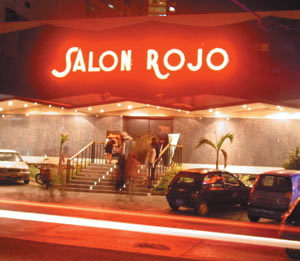
La Habana (Junio 1, 2014)- La chica que hacia las ocho de la mañana cruzaba la calle con las tetas al aire llamó la atención del fiscal cubano, que detuvo el coche y anotó la dirección del escenario de autos: un local de copas de La Habana, propiedad de una conocida voleibolista y su marido italiano. “El fiscal debió alucinar”, comentó un empresario extranjero que conoció el lance ocurrido. El magistrado alucino tanto que llamó a la policía y pidió el cierre del antro por escándalo público.
La señorita del despelote y un irreductible pelotón de noctámbulos se habían desmadrado hasta la madrugada en uno de los pub abiertos cerca de la residencial Quinta Avenida, al amparo de la apertura económica vigente desde hace tres años. La liberalización ha activado una mentalidad capitalista en los nuevos gestores de cafeterías, paladares (restaurantes), pizzerías, talleres, cooperativas, tiendas de artesanía, peluquerías o gimnasios: 450.000 cubanos, en torno al 9% de la población activa, en 200 categorías de gestión privada: desde agentes inmobiliarios, y sastres, a carpinteros, fotógrafos y taxistas.
El monopolio del Partido Comunista de Cuba (PCC) sigue vigente, pero la tolerancia con las infracciones de los cuentapropistas es mucha porque muchos son los volantazos regulatorios durante la incipiente apertura. Pero no todos los negocios prosperan. Miles han cerrado porque abrieron con más entusiasmo que estudios previos sobre su idoneidad y porque la capacidad adquisitiva de la clientela es muy limitada: el grueso de los 11 millones de cubanos recibe su salario en pesos, un media de 500 mensuales (al cambio unos 25 euros) y los emprendedores orientan casi todos sus negocios hacia el compatriota con divisas. Mientras la dualidad monetaria, la circulación de dos monedas, el nudo gordiano de las reformas, no se solucione la vida de los asalariados en pesos será siendo dura.
El monopolio del Partido Comunista de Cuba (PCC) sigue vigente, pero la tolerancia con las infracciones de los cuentapropistas es mucha.
El italiano y la voleibolista se estaban forrando con un local abierto la 24 horas, pero acabaron en comisaría. Preventivamente, algunos bailongos pincharon música sacra tras la redada, pero reanudaron la pachanga al escampar. “Aquí te dejan hacer hasta que ocurre algo y entonces se acabó”, comenta mi acompañante. Jóvenes de la incipiente burguesía local se mueven festivamente por el establecimiento de copas, abierto en la planta baja de un chalé, y decorado con un escorzo del malecón y fotografías emblemáticas de La Habana.
Calzan móviles importados, ropa de marca, trasiegan combinados de cuatro euros, y la política no figura entre sus prioridades porque, entre otras razones, la ideología y sus derivados son franquicia gubernamental intransferible. Tampoco el torcedor que me instruye sobre la vitola y la embocadura de un puro quiere hablar sobre democracia pluripartidista. “Esto no está pa’ eso compadre. ¿Cuántos tabacos quieres?. Te los dejo a buen precio”.
La liberalización promovida por Raúl Castro y el VI congreso del partido, en 2011, no cede poder político, pero la apertura socioeconómica cobra vida propia en algunos ámbitos y su inercia puede agrietar la hegemonía del partido único, según la esperanza de quienes rezan porque así sea. Pero visto lo visto en Cuba, donde el activismo antigubernamental es imperceptible o reprimido, sólo cabe esperar el éxito de las rogatorias o la improbable generosidad del régimen.
El objetivo oficial es otro: el bienestar económico, la recolocación del medio millón de trabajadores de empresas ruinosas que perdieron su puesto, y resolver el futuro del otro medio millón en capilla. El Estado todavía emplea a cuatro de los cinco millones laboralmente activos. Una segunda meta es reducir el gasto de las compras en alimentos porque el país importa el 60% de lo que consume: cerca de 1.800 millones de euros anuales.
Soltando lastre y subsidios, 200 pymes estatales fueron reconvertidas en cooperativas el pasado año, y se consolidó la carga fiscal sobre los cuentapropistas, que aumentaron su contribución a los presupuestos generales en un 18%, aunque sólo representan el 2% del total. Contrariamente a la sepultada retórica igualitarista, el castrismo permite el moderado enriquecimiento de quienes se aventuran con dinero propio, los menos, o prestado por los dos millones de familiares en Estados Unidos, España y otros países. Sus envíos a la isla suman 2000 millones de euros anuales.
Al cierre del 2013, cerca de 2.000 paladares funcionaban con pagos en CUC, la moneda fuerte, equivalente al dólar, y se alquilaban 7.250 habitaciones. Ana Sarabig Domínguez reunió cerca de 30.000 euros para abrir hace dos años el paladar Sancho Panza, en el barrio El Vedado de La Habana, con un menú de variedades criollas. Le va bien: emplea a 18 personas. “Los inspectores nos piden facturas que a veces no podemos presentar porque no nos las dan quienes nos venden el pecado, la carne o los vegetales”, explica Alina, la contable.
Aunque sólo la diáspora y los nacionales con divisas pueden comprar pisos, automóviles y financiar los emprendimientos que exigen miles de euros de inversión, el resto de los compatriotas puede optar a los créditos ofrecidos por el Banco Central de Cuba. Sólo los pidieron 550 emprendedores. El cincuentón Alejandro se olvidó de los préstamos para arriesgarse con una licencia de chófer.
Son las 9,30 y abordo su almendrón, un achacoso Ford norteamericano de 1956, rumbo a ninguna parte. Cobra entre 10 y 20 pesos nacionales, entre 0,20 y 0,60 céntimos de euro, dependiendo de la distancia. “¿Qué tal le va?”. El pasaje, un abuelo y un matrimonio y su hija, pega la hebra. “Ahí vamos. Vengo a hacer unos 1.000 pesos al día, pero pago muchos impuestos varias veces al año. Además, la gasolina, las gomas rotas por los baches, los bombillos, las averías y lo que salga. No me queda mucho.” Se queja de la competencia porque el 11% de los licenciatarios también son taxistas y chóferes, pero le compensa su independencia.
Alejandro y su Ford siguen barriendo a diario las calles de la populosa barriada Centro Habana a la caza de viajeros también pretendidos por una flota de Chrysler, Mercury, Chevrolet y otras reliquias. Cerca de 8.000 circulan en la capital, y cientos fueron transformados en limusinas ofrecidas a novios, celebrantes y turistas
Al haber asumido Cuba los mecanismos de mercado en su embrión capitalista, asumió también los daños colaterales: las emergentes desigualdades sociales, las tercerías mafiosas durante los cambios de titularidad de pisos y vehículos, y los contratos falsos sobre cuantía y concepto de las transacciones para evadir impuestos. “Hay intermediarios que están haciendo fortunas”, admiten fuentes oficiosas
También quiere su parte, la patrulla que me detuvo una noche conduciendo por dirección prohibida. El circunloquio con el agente terminó con la aparición de un civil que me invitó a subir a un coche. “La multa son 60 CUC pero por 20 CUC se puede ir. Deje el dinero en el asiento del carro y salga” .Cómplice del delito, así lo hice.
La técnica me recordó, en miniatura, la cortesía del capo policial mexicano Arturo Durazo (1924-2000), durante los descansos de sus extorsiones a balazos. Las víctimas llegaban a su despacho, y entonces el negro Durazo salía dejando abierto un cajón del escritorio. Los chantajeados depositaban allí fajos de billetes, centenarios de oro, escrituras, alhajas: las legendarias mordidas, todavía vigentes en América Latina, aunque más sofisticadas, desde Río Grande a Tierra del Fuego.
El Pais,Spain/Juan J. Aznarez, La Habana/InternetPhotos/www.thecubanhistory.com
AN OVERVIEW OF TODAY’S UNDERWORLD OF THE “CUBAN CAPITALISM”.
The Cuban History, Hollywood.
Arnoldo Varona, Editor
Cuba en Fotos.

AN OVERVIEW OF TODAY’S UNDERWORLD OF THE “CUBAN CAPITALISM”.
Private businesses employ 450,000 people and foster a ‘ capitalist ‘ mentality on the island.
Havana ( June 1, 2014 ) – As the topless girl crosses the street, she draws the attention of the prosecutor. He stops his car and takes down the address of the locale she has just left. It is a bar belongs to a well-known volleyball player and her Italian husband. It is 8am in Havana.
“The prosecutor must have been surprised,” says one foreign businessman. The official was so shocked that he called the police and asked them to shut down the locale for public indecency.
The girl with the exposed chest and her pack of night owls had been out until the early morning hours. They were coming from one of the pubs that opened up on the residential Quinta Avenida. The bar is on the first floor of a home. The decor includes a shot of the Malecón and other emblematic photographs of Havana. These locales have been cropping up since the government loosened restrictions on privately held businesses three years ago.
The liberalization of the Cuban economy has led to a capitalist mindset among those who manage new cafeterias, restaurants, pizzerias, studios, co-ops, artisan shops, hair salons and gyms. About 450,000 Cubans – 9 percent of the working population – have launched private businesses in 200 sectors. Their endeavors include everything from real estate, tailoring, carpentry, photography to taxis.
The Communist Party of Cuba (PCC) still holds a monopoly on the economy, but the government grown much more lenient on private businesses who commit infractions, especially as new entrepreneurs take sharp turns to reach their goals. But, not all businesses are thriving. Thousands have closed after opening with great enthusiasm but little research about the viability of their chosen trade. Some have also failed because of the limited purchasing power of their clientele. The majority of Cuba’s 11 million citizens earn 500 pesos – €25 – each month. New businesses are targeting the fellow who holds divisas or peso convertible (CUC) [Cuba’s second official currency that is used to convert foreign money for use on the island. It is equivalent to the US dollar.] The two-currency system represents a kind of Gordian knot that locks ups the economic reforms. Until the government resolves the situation, those who earn pesos will continue to live the hard life in Cuba.
The Italian man and his volleyball wife were getting rich at their 24-hour locale but they ended up at the police station. After the raid, some of the dancers put on some religious music as a preventive measure. They relaxed back into the party atmosphere once the officers had cleared out. “Here they let you do what you want until something happens and then it’s all over,” my companion says.
The Communist Party of Cuba (PCC) still holds a monopoly, but the government has grown more lenient on private businesses who commit infractions.
Young middle class patrons mingle merrily now. They have imported cellular phones, brand-name clothing and they use small euro bills. Politics is not a priority for them because ideology and related concepts are non-transferrable government monopolies. Not even the man who works the spindle and tells me about the cigar band and its tip wants to talk about multi-party democracies. “This is not what this is for, friend. How many cigars do you want? I’ll give you a good price.”
The modernization Raúl Castro promoted at the sixth congress of the party in 2011 does not give away any political power. But, those who are praying for political freedom say the modern economy is taking on a life of its own and it may crack open the single-party system. Given the current situation in Cuba – anti-government protests do not exist and when they do spring up, they are suppressed – one can only wait for answers to those prayers or for an improbable act of generosity from the regime.
Meanwhile, the government has different aims. Officials say they want to promote economic well-being, reshuffle half a million workers who lost their jobs when their companies failed and another half million who currently hold precarious positions. The state still employs four of the five million workers on the island. Their other mission is to reduce the amount the nation spends on food. It currently imports 60 percent of its stock, spending about €1.8 billion a year.
Last year, the administration converted two hundred small and mid-size companies into cooperatives. It also raised taxes on private businesses by 18 percent. This increase accounts for about 2 percent of the budget. Contrary to the outdated egalitarian rhetoric, the Castro regime allows moderate wealth acquisition to those few who are willing to take risks with their own money. Some borrow money from family members who live in the United States, Spain or in other countries. Remittances to the island reach up to €2 billion each year.
By the end of 2013, about 2,000 restaurants were using the divisa, the stronger currency that is equivalent to the US dollar, and about 7,250 rooms had been rented.
Ana Sarabig Domínguez raised about € 30,000 to open up Sancho Panza in El Vedado de La Habana two years ago. The restaurant, which serves a variety of Creole dishes, is doing well. Sarabig Domínguez has 18 employees. “The inspectors asks us for bills that we can’t procure at times because those who sell us the fish, the meat or the vegetables don’t issue them,” says Alina, the accountant.
Only those who have lived abroad and those who earn divisas con buy homes, cars and finance businesses. The rest of Cubans must buy credit from the Central Bank of Cuba. Only 550 entrepreneurs took out loans. Alejandro, a 50-year-old chauffeur, chose to forgo the loans and works without a license.
It’s 9.30pm and I get into his almendrón, an ailing 1956 Ford. We have no clear destination. Alejandro charges 10-20 Cuban pesos (€0.20-0.60) depending on distance.
“How’s it going?” The passengers – a couple, their daughter and the grandfather strike up a conversation. “It’s going,” Alejandro says. “I make 1,000 pesos every day but I pay taxes several times a year. And then there is the gas. The tires get ripped because of the potholes. The lights, general wear and tear and whatever else comes up. That doesn’t leave me much.” He complains about the competition because 11 percent of the licensed drivers work as both taxis and chauffeurs. But, he says his independence is worth it.
Every day, Alejandro and his Ford cruise the populous Centro Havana district in search of passengers. A legion of Chryslers, Mercurys, Chevrolets y other relics court the same clients. About 8,000 chauffeurs operate in Havana. Hundreds work as limousines for weddings, parties and tourists.
When Cuba welcomed this embryonic capitalist market, it also took on some collateral damages: growing social inequalities, the third party mafias who take advantage when individuals need to transfer ownership of homes or cars, and contracts that falsify quantities and transactions to evade taxes. “There are middlemen who are getting rich,” an official source says.
The patrol car who stopped me one night for driving in the wrong direction also wants his share. The circumlocutions with the agent ended when a man in civilian clothes appeared. He invited me to get into his car. “The ticket is 60 CUC but for 20 CUC you can go. Leave the money on the back seat and get out.”
I was an accomplice in this crime. I did what he asked.
The maneuver reminded me of the routine the Mexican police capo, Arturo “Negro” Durazo (1924-2000) used when he was taking a break from extortions at gunpoint. When the victims arrived at his office, Durazo would open a desk drawer. Then, he would leave the room. The blackmailed individual would drop in wads of cash, hundreds in gold, important signatures and other precious objects. Although they are more sophisticated now, the legendary cuts are still used in Latin America, from Río Grande to Tierra del Fuego.
El Pais,Spain/Juan J. Aznarez, La Habana/InternetPhotos/www.thecubanhistory.com
AN OVERVIEW OF TODAY’S UNDERWORLD OF THE “CUBAN CAPITALISM”.
The Cuban History, Hollywood.
Arnoldo Varona, Editor