


LITERATURA: ALEJO CARPENTIER, RECUERDOS Y ‘SUS APUNTES CENSURADOS’.. CARPENTIERIA.
Los diarios recién publicados de Alejo Carpentier critican a varios de sus contemporáneos, se enorgullecen por el trabajo propio y tachan por ‘miedo político’.
En la introducción a Diario (1951 – 1957), de Alejo Carpentier, algo leemos sobre el origen y las características de este material dado a conocer recientemente por la editorial Letras Cubanas. Tras la muerte de Lilia Esteban, viuda del escritor, una extensa papelería quedó en manos de los investigadores; entre lo hallado estaban este diario de su etapa venezolana y una nota de Lilia (fechada en 1998 e incluida en el volumen) que lo declara impublicable debido a que muchas de las personas a las que su esposo hace referencia estaban vivas aún.
En realidad, no era para tanto.
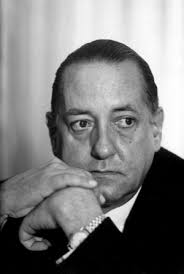
Está claro que Carpentier siempre tuvo en mente la publicación de esas páginas. No solo porque se tomó el trabajo de pasarlas a máquina, corregirlas y actualizarlas con notas en los márgenes: estamos ante un diario cuyo autor ha reseñado en más de una ocasión diarios de escritores —para su columna en El Nacional de Caracas— y es perfectamente consciente del formato diario literario. No puede evitar, incluso, alimentar su diario con otros diarios ya publicados, situarse en esa órbita.
En una entrada de diciembre de 1951, por ejemplo, Carpentier apunta que terminó de leer el Diario (1941 – 1943) de Ernst Jünger. Le molestó que su autor consignara los nombres de los restaurantes elegantes que frecuentaba (“comida en Prunier”, “comida en La Perouse”), y al respecto nos comenta:
“No sé, pero cuando se ama una ciudad.. Me entiendo a mí mismo: en una época en que mi trabajo, en La Habana, me obligaba a pasar cada día por barrios misérrimos, teniendo dos automóviles a mi disposición, uno sencillo y barato, otro de gran lujo, nunca usaba el de gran lujo para recorrer las calles de la pobreza.”
Y agrega que si él hubiese sido Jünger, hubiera elegido restaurantes más modestos.
Más adelante lo encontramos metido de lleno —son sus palabras— en el Diario de Kafka. Una de las parafilias kafkianas (“Tomo, con toda intención, por las calles donde hay putas. Pasarles por delante me excita como una posibilidad lejana, pero no por ello inexistente, de dirigirme a una de ellas.”) lo lleva a recordar cuando tenía dieciséis años y caminaba por el barrio de San Isidro, de noche, fascinado pero sin atreverse a entrar a ninguna de aquellas casas.
A continuación escribe: “La prostitución de bajo nivel tiene, en las ciudades tropicales como La Habana, una cierta poesía que ignora la prostitución de ciudades como París, con sus pobres mujeres paradas en las aceras, envueltos en sus abrigos de lainages baratos con falsos cuellos de piel. En las calles de prostitutas de La Habana, las persianas hablan. Surgen quedas llamadas hechas por bocas invisibles. Y hay voces que son hermosas, de timbre cálido, lleno de promesas, que nos hacen pensar, por un instante, en la posibilidad de un hermoso cuerpo, de un rostro sonriente”.
“L. me señala que de un tiempo a esta parte leo muchos libros franceses o traducidos al francés” —informa Carpentier unas líneas después de reprender a Jünger—. “Es posible, aunque esto choque un poco con ciertos propósitos míos de leer, casi exclusivamente, libros que alimenten mi conciencia de lo americano, y me ayuden a escribir libros futuros.”

Uno pudiera pensar que la conciencia de lo americano supone una batalla contra el francés. Yo creo que el mero hecho de proyectar lo americano revela que la batalla estaba ya perdida antes de empezar. No a pesar de esa derrota, sino gracias a ella, es que sus libros se hicieron posibles.
Cuba a distancia
Mientras americaniza su visión, por aquellos años, ¿qué ve Carpentier cuando mira hacia Cuba? En abril de 1953 vuela a la Isla y de regreso a Caracas anota en el diario: “Me obsesiona de estar entre muertos que tuve en La Habana, no hace un mes aún, en la comida del Pen Club”.
Menos de un mes atrás había escrito sobre esa cena y su énfasis mortuorio: “Una reunión de hombres muertos, que nada tienen ya que decir, y se empeñan en actuar como ujieres de la cultura, sin los títulos necesarios. Mañach, francamente, me da lástima. Es el raté magnifique”.
De su visita a La Habana trae, por otra parte, una buena impresión de Lezama Lima y los de Orígenes. Les dedica unas diez líneas donde recurre tres veces a la palabra criollo.
En enero de 1955 hay otro apunte sobre la Isla, pero en el medio han sucedido varias cosas que el diario registra con puntualidad. El reino de este mundo encandila a los críticos franceses. Los pasos perdidos (que ya tiene su versión francesa, por supuesto) se va a traducir al inglés. El acoso, listo para la imprenta, en lista para la exportación.
“La labor cumplida crea distancias entre nosotros y los que nada cumplieron de lo prometido” —reflexiona satisfecho Carpentier—. “Hay gente en Cuba cuya opinión mucho me hubiera preocupado hace diez años. Ahora, apenas si sabría de qué hablar con algunos, si me los encontrara. Se refocilan en su contexto local de no hacer nada, en sus éxitos debido a un artículo de periódico, en un mundo que dejé atrás de modo tremendo. Solo Julián Orbón, en Cuba, tiene las ambiciones que le permiten su talento. Estoy cansado de los hombres que se contentan, magníficamente, de ser los primeros en su aldea.”
Y en mayo del mismo año, a propósito de sus conversaciones con Wifredo Lam, que expone en Caracas: “En Cuba se tiene envidia, siempre, a los que logran saltar las barreras de la insularidad”.
Diario (1951 – 1957) documenta un salto en la vida del escritor. “Muchos complejos vencidos, muchas victorias ganadas”, celebra en la última página (donde también leemos: “Hay unas ochenta páginas de El siglo de las luces. Me gusta más y más. Veremos”.) Salto que en buena medida tiene que ver con la confianza que va adquiriendo en su propia escritura, los caminos que ve abrirse ante él.
“Mi verdadera obra está aún por hacerse” —apunta el día de su cumpleaños 47. Ya estaba escrito El reino de este mundo, tal vez su obra más resistente—. “Pero esa obra bulle en mí.”
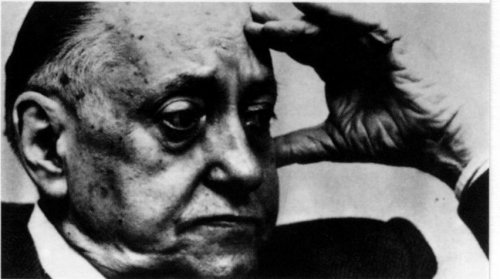
El Carpentier que tacha
No estamos, sin embargo, ante un diario que se asome con lucidez a las interioridades técnicas o conceptuales del oficio literario. Al bullicio. No hay muchas sorpresas por ese lado. De buenas a primeras puede aparecer una sentencia extraordinaria como esta:
“Un escritor consciente solo debe hablar de oficios que ha practicado, de enfermedades que ha padecido, de idiomas que habla, de lugares que ha visitado, de personajes —mujeres, sobre todo— que ha conocido íntimamente, lo demás es mala literatura.”
Un Carpentier hemingwayano (que, como el Hemingway carpenteriano, es de esas criaturas imposibles que muchos narradores cubanos han buscado, y tal vez algunos sigan buscando, desesperadamente) circunscribe la ficción al terreno de la experiencia práctica. Se escribe con un expediente —escolar, laboral— entre las manos. Más adelante, ejemplifica de esta manera:
“Quien no haya sido carpintero, quien no conozca siquiera el nombre de las herramientas del carpintero, y tenga que buscarlas en un diccionario, hará siempre ‘literatura’. Fabricará un carpintero literario. Si tanto me emocionan las tiendas donde se venden incubadoras, alimentos para aves, huevos artificiales, bebederos de gallinas, etc., es porque de niño en El Lucero tuve a mi cargo una pequeña granja avícola. Hay un olor a avicultura —granos, plumas, avenas, excrementos— que tiene, para mí, todo un sentido que puedo describir. Luego, puedo manejar algún día el personaje de un avicultor, como he manejado uno de músico, por haber estudiado la música a fondo.”
Fragmentos como los anteriores contrastan con este otro, de inspiradas mayúsculas:
“Solo la Desobediencia es fecunda; solo la Desobediencia es creadora. [Cuando un hombre acepta un yugo de Partido, admite la retractación política, el mea culpa empieza a oler a sapo.]”
Los corchetes que encierran la frase, por cierto, pertenecen a la edición de Letras Cubanas. Una nota a pie de página señala que esas líneas fueron tachadas por Carpentier del mecanuscrito original. (Además de tachaduras, las notas al pie avisan de páginas faltantes, de páginas recortadas, de anotaciones posteriores.) Otras dos frases tachadas, ambas de 1955, son:
“[Si nos ponemos a ver, los comunistas de las nuevas hornadas negaron a Kafka, a Stravinski, a Schoenberg, a Berg, a Claudel, a Hindemith… A todo el que inventó algo en este siglo.]”
“[El comunismo ruso ha desembocado —artísticamente, se entiende— en la peor música, la peor literatura, la peor pintura, la peor arquitectura, de la época.]”
El Alejo Carpentier que escribe y el Alejo Carpentier que tacha. Lo interesante es que este último, el que corrige lo escrito en La Habana, en la insularidad que había superado, no pertenece a este diario. Y sin embargo está ahí, por encima del hombro del lector, muchos años después. Un personaje lastimero, fantasmal, tan falto ya de sustancia como un carpintero literario.
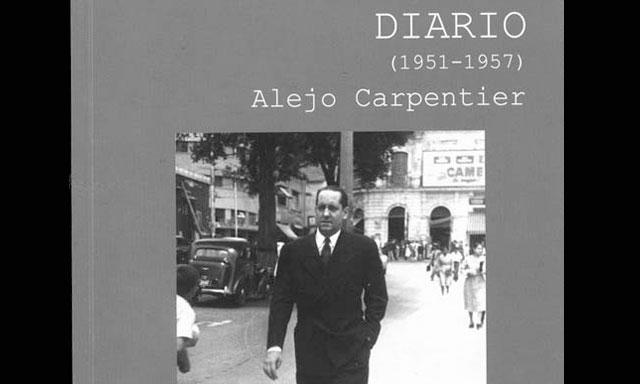
No es el único, claro. Según quién lo lea, habrá otros Carpentier más o menos familiares arrojando su sombra en las páginas de este Diario. Yo, que ya no soy capaz de volver a sus libros, a pesar de haberlos leído con cierta fascinación, prefiero quedarme ahora con aquel que el 18 de agosto de 1952 se propuso algo como esto (no importa que luego haya perdido el camino):
“Arrojarse adelante, siempre adelante, hasta llegar a la zona difícil —esa es la que pocos alcanzan, porque ni siquiera se la huelen— donde no quedan modelos, y no hay modo de hacer litterature d’après la littérature, porque nadie ha tratado de hacer literatura en ese sentido.”
DDC/JORGE ENRIQUE LAGE, La Habana/CARPENTIERIA/Excerpts/Alejo Carpentier/20MINUTOS.ES
Alejo Carpentier, Diario (1951-1957), Letras Cubanas, La Habana, 2013.
The Cuban History, Hollywood.
Arnoldo Varona, Editor
Danzas AfroCubanas – Santiago de Cuba, Cuba
FOTO por Cecilia Habanera — with Maria Hernandez-Delfin and Camilo Garcia.
LITERATURE: ALEJO CARPENTIER, MEMORIES AND ‘ SELF CENSORED NOTES ‘ . CARPENTIERIA .
Newly published diaries of Alejo Carpentier criticize several of his contemporaries , pride in one’s work which are branded with ‘ political fear ‘ .
In the introduction to Journal (1951 – 1957) , Alejo Carpentier, something we read about the origin and characteristics of this material released recently by the Editorial Letras Cubanas . After the death of Lilia Esteban , widow of the writer, an extensive stationery was left to the researchers , were found between the journal and its Venezuelan step Lilia note (dated 1998 and included in the volume) that declares unpublishable because many of the people who referred her husband were still alive .
Actually, it was not so .
Clearly Carpentier always had in mind the publication of these pages. Not only because the work being passed to machine , correct and update with notes in the margins was made: we are facing a journal whose author has been reported in more than one daily opportunity to writers, for his column in The National of Caracas , and is perfectly aware of the literary journal format. You can not avoid even feed your journal with other papers already published , placed in that orbit.
In a December 1951 entry , for example, notes that Carpentier finished reading the Journal ( 1941-1943 ) Ernst Jünger . Annoyed that the author shall record the names of the elegant restaurants frequented ( ” Prunier food “, ” food at La Perouse ” ) , and tells us about it :
” I do not know , but when you love a city .. I understand myself at a time when my work in Havana , forced me to spend every day for the most miserable neighborhoods , taking two cars at my disposal , one simple and cheap , another luxury, never wore the grand luxury to walk the streets of poverty. ”
He adds that if he had been Jünger , would have chosen more modest restaurants .
Later we find him heavily involved – are his words in the Journal of Kafka. One of the Kafkaesque paraphilias ( ” Tomo , deliberately , on the streets where there are sluts . Pass on ahead ons like a distant possibility , but not non-existent, to address one of them. ” ) Leads him to remember when was sixteen and walked around the neighborhood of San Isidro , at night, fascinated but not daring to enter any of the houses .
Then he writes: “Prostitution is low-level , in tropical cities like Havana , some poetry that ignores prostitution in cities like Paris, with its poor women standing on the sidewalk , wrapped in their coats with fake Cheap lainages fur collars . prostitutes in the streets of Havana , blinds speak . arise calls made by staying invisible mouths. And voices are beautiful, warm timbre, full of promise , make us think, for a moment, in the possibility of a beautiful body, smiling face . ”
” L. says me that a while now or read many French books translated into French ,” reports Carpentier lines after rebuking Jünger . “It is possible , though this clash a little with some of my reading purposes , almost exclusively , books that feed my awareness of the American, and help me write future books . ”
One might think that the consciousness of the American is a battle against the French . I think the mere fact of the American project reveals that the battle was lost before it began. No despite this defeat, but thanks to her, is that her books became possible.
Cuba at a distance
While Americanized his vision , in those years , what you see when looking Carpentier Cuba ? In April 1953 the island and fly back to Caracas scores in the newspaper : ” I’m obsessed to be among dead in Havana had not even a month ago , the food Pen Club” .
Less than a month ago I had written about that dinner and mortuary emphasis . “A Gathering of dead men , who have nothing and to say , and strive to act as stewards of culture, without the necessary qualifications Mañach frankly I pitiful . raté is magnifique ” .
In his visit to Havana brings , moreover , a good impression of Lezama Lima and Origen . I spent about ten lines which uses three times a Creole word.
In January 1955 there is another point on the island, but in the middle several things have happened that daily records on time. The kingdom of this world dazzles the French critics . The Lost Steps (which already has its French version , of course) will be translated into English. Harassment, ready for printing , slated for export.
” The work accomplished creates distance between us and that nothing of the promises fulfilled ” – reflects Carpentier satisfied . “There are people in Cuba whose opinion much had me worried decade. Now, hardly know what to talk with some if I find them. Was gush in their local context do nothing in their success due to article newspaper in the world I left behind a tremendous way . Julian Orbón only in Cuba , has ambitions to allow their talent. ‘m tired of men who are content beautifully , to be the first in his village. ”
And in May the same year about his conversations with Wifredo Lam, that sets in Caracas : “In Cuba there is envy , always, those who manage to jump the barriers of insularity .”
Journal (1951 – 1957) documents a jump in the writer’s life . ” Many complex due, won many victories ,” held on the last page (where we read : ” There are about eighty pages of The Age of Enlightenment I like more and more we see . . .” ) Hop that largely has to do with the confidence you acquire your own writing , you see the roads open up before him.
” My real work is yet to be done ,” says the day of his 47th birthday . It was already written The kingdom of this world, perhaps his most durable work . ” But this work stirs in me. ”
Carpentier that censored his own writings
We are not, however, before a day that sneaks lucidly the technical intricacies of literary or conceptual art. Al bustle . No surprises that way. All of a sudden an extraordinary statement may appear like this:
“A writer should be aware that only talk about trades practiced , has suffered from diseases of languages spoken , places you visited, character – women especially – who has known intimately , everything else is bad literature . ”
Carpentier A Hemingway ( who, like Hemingway Carpentier , these impossible creatures is that many Cubans have sought narrators , and maybe some keep looking desperately ) fiction enters limited practical experience . It is written as a- work – school record hands. Later, exemplifies this:
” Anyone who has not been a carpenter , who did not even know the name of carpenter’s tools , and have to look them up in a dictionary, always make ‘ literature .’ Will manufacture a literary carpenter. If both thrilled me stores where incubators are sold , food poultry , artificial eggs , drinkers chickens, etc. . , is because as a child in El Lucero had my charge a small poultry farm . A smell of poultry , beans , feathers , oats, droppings , which are, for me, everything one way I can describe it . then someday can handle the character of a poultry farmer , as I handled one musician , having studied music thoroughly. ”
Fragments as above contrast with this other, inspired case :
” Disobedience is only fruitful , . Single Disobedience is creative [ . When a man accepts a yoke of Party policy supports withdrawal, the mea culpa begins to smell toad ]”
The square brackets around the phrase , incidentally, belong to editing Letras Cubanas . A footnote on page notes that these lines were crossed by Carpentier original typescript . ( . Besides deletions footnotes notified of missing pages of clipped pages, post notes ) strikeout Two other phrases, both of 1955 , are:
” [ If we see, the communists of the new batches refused to Kafka, Stravinsky , Schoenberg , Berg , Claudel , Hindemith … Everyone who invented something in this century. ]”
” [ The Russian – communism has led artistically , that is- in the worst music, worst literature, painting the worst , the worst architecture of the time. ]”
The writer Alejo Carpentier Alejo Carpentier and that blemish. Interestingly, the latter , which corrects written in Havana in insularity that had passed , does not belong to this newspaper . And yet there it is , over the shoulder of the reader, many years later. A plaintive , ghostly, and so lacking in substance as a literary character carpenter .
Not the only one, of course. Depending on who you read , there will be other more or less familiar Carpentier throwing its shadow on the pages of this journal . I, who am no longer able to return to their books , despite having read with some fascination , rather stay now that the August 18, 1952 proposed something like this ( no matter which then lost the way):
” Thrown forward, always forward , until you reach the area that is difficult, which few attain , because not even the smell – which are not models , and no way to make the litterature littérature d’ après because no one has tried making literature in this regard. ”
DDC / JORGE ENRIQUE LAGE , Havana / CARPENTIERIA / Excerpts / Alejo Carpentier/20MINUTOS.ES
Alejo Carpentier, Journal (1951-1957) , Letras Cubanas , Havana, 2013.
The Cuban History , Hollywood.
Arnoldo Varona , Editor