HAVANA: the streets 41th and 60th Traffic Light (Photo) * * LA HABANA: Semáforo de las calles 41 y 60 (Fotos).

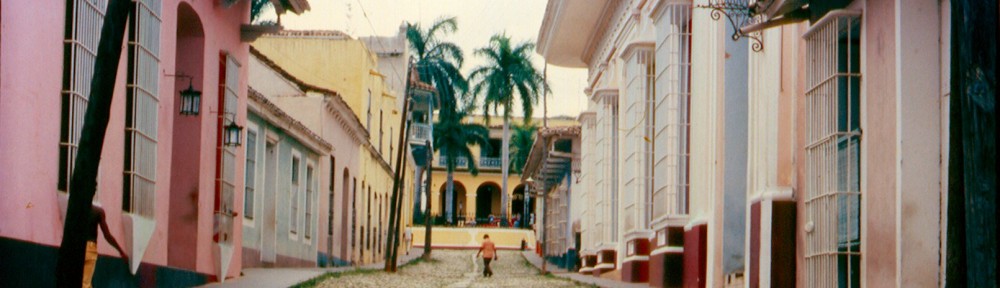
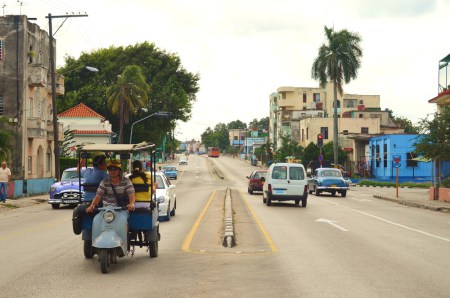
I cross this street almost every day . When I go . When return . Guagua for Vedado or Habana Vieja . Taxi and bus back and the street narrows , it becomes uncomfortable transit.

Sidewalks are brief and tiring , bumpy and leaks of water ( clean and sewers ) . In the section that starts from 44th Street to Blindness , homes Avenue 41 go like getting tired and look faded facades , yawning eternal launched against the poor stripper, accompanying the tarmac on its way two-way to the famous Pando Ferrer hospital .
semaforo-41-y-60-habana-por-dentro-dazra-novak

The curve tracing 41 barely perceive, there will quick thinking in advance what to expect , for here as I come back I’ve been quiet, I feel at home in this habit that sticks to the bones and look, but sees nothing . Around here there is that story capitalized only neighborhood gossip , generational memory that goes with the oldest . Low ceilings and facades rather than restored , rebuilt , deleted and re- invent the eagerness to steal space to space.

This area suffers the undefined border called Playa in the registry , but the surrounding Ceiba with Buena Vista and doors Marianao Spindle shacks with a few miles and yet right from the ridge 60 and 31 can see the sea on the horizon until it liberating. Sometimes I think the area where I live was late to geography, although some nights , when there are clouds and the wind blows on this side, the lights are fanning the sky , the music of the old Tropicana cabaret is heard.

Author : Dazra Novak – download
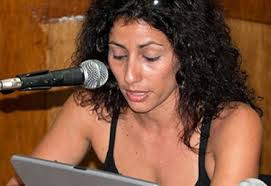
Cuban writer . Degree in History from the University of Havana . He has received awards : New Pines 2007 (stories, Your Body, Editorial Letras Cubanas , 2008 ), David 2007 (stories, Public Body, Union Editions , 2009) and UNEAC 2011 (novel , Making of , Union Editions , 2012).

DDC / InternetPhotos / www.thecubanhistory.com
HAVANA : 41th and 60th Light Traffic
The Cuban History , Hollywood.
Arnoldo Varona , Editor

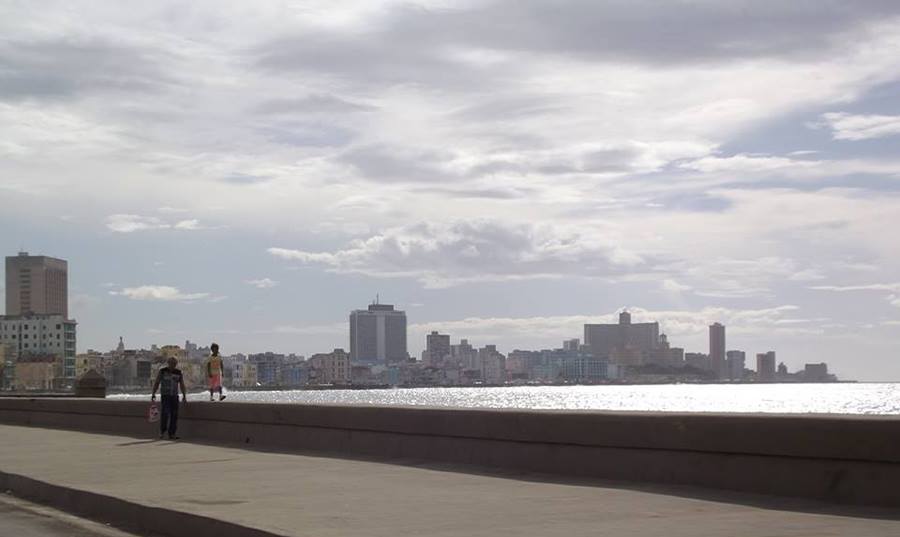
Vista de la Habana desde el Malecón.
1470060_10152000868446083_178237557_n

LA HABANA: Semáforo de 41 y 60

Esta calle la cruzo casi todos los días. Cuando voy. Cuando regreso. Guagua para el Vedado o la Habana Vieja. Taxi o guagua de vuelta y ya la calle se va estrechando, se va haciendo incómodo el tránsito.

Las aceras son breves y fatigosas, llenas de baches y salideros de aguas (limpias y albañales). En el tramo que se inicia desde la calle 44 hasta la Ceguera, las casas de la avenida 41 se van como cansando y lucen fachadas desteñidas, bostezos eternos lanzados contra el pobre separador, que acompaña al asfalto en su recorrido de dos sentidos hasta el famoso hospital Pando Ferrer.

semaforo-41-y-60-habana-por-dentro-dazra-novak

La curva que traza 41 apenas la percibo, para allá voy aprisa pensando por adelantado lo que me espera, para acá como vengo de regreso llevo calma, me siento en casa por esa costumbre que se pega a los huesos y mira, pero no ve nada. Por estos lares no hay esa historia con mayúscula, solo chismes de barrio, memoria generacional que se apaga con los más viejos. Techos bajos y fachadas, más que restauradas, reconstruidas, borradas y vueltas a inventar en ese afán de robarle espacio al espacio.

Esta zona sufre esa indefinición de frontera que llaman Playa en el registro civil, pero es la Ceiba colindante con Buena Vista y a las puertas de Marianao, con las casuchas del Husillo a pocos kilómetros y sin embargo hacia la derecha, desde la loma de 60 y 31 se ve el mar en el horizonte y hasta resulta liberador. A veces me parece que la zona donde vivo llegó tarde a la geografía, aunque algunas noches, cuando hay nubes y el viento sopla de este lado, se ven las luces abanicando el cielo, se oye la música del viejo cabaret Tropicana.

Autora: Dazra Novak – download
Escritora cubana. Licenciada en Historia por la Universidad de La Habana. Tiene en su haber los premios: Pinos Nuevos 2007 (cuentos, Cuerpo Reservado, editorial Letras Cubanas 2008), David 2007 (cuentos, Cuerpo Público, ediciones Unión, 2009) y Uneac 2011 (novela, Making of, ediciones Unión, 2012).

DDC/InternetPhotos/www.thecubanhistory.com
HAVANA: 41th and 60th Traffic Light
The Cuban History, Hollywood.
Arnoldo Varona, Editor

© CARLOS ACOSTA DEBUTS in English film ‘Day of the Flowers’ (Video / Photo) * * DEBUTA CARLOS ACOSTA en la cinta inglesa ‘Day of the Flowers’ (Video/Photo)

Directed by John Roberts, tragicomedy ‘ Day of the Flowers ‘ tells the story of two Scottish sisters traveling to Cuba to find his family roots . They meet Thomas, a role played by the Cuban Carlos Acosta.

Born in Havana , Carlos Acosta has performed with the National Ballet of London Inglés , the Houston Ballet and Boston ( USA ), the Bolshoi Russian companies and Chile, Germany, Hungary, Venezuela , Argentina , Italy , Belgium and Japan .

Day of the Flowers ( UK, 2013 ) is a comedy drama which tells the chaotic adventure of two Scottish sisters, Rosa and Ailie (Eva Birthistle and Charity Wakefield ) , who travel to Cuba with his father ‘s ashes to find on the Caribbean island family roots , where they face dangers and partying in equal parts , on the boardwalk.

The dancer in the film plays Thomas, an unofficial tour guide who befriends Rosa, and this helps and sister to scatter the ashes of the father and find out more about the family’s past .

Carlos Acosta began his training at the National Ballet School of Cuba , which he joined after discovering her love of dance and encouraged by his father , who wanted to appease the revolt of Carlos in his teens.

After its way into theaters around the world , Acosta came to London in 1998 , where fifteen years later became principal guest artist of one of the most recognized companies classical ballet worldwide . He has raised a family with her partner, the Dutch former model Charlotte, and father of a girl , Aila , which has not yet two years old .

DayOfTheFlowersCarlosAcosta-3-700x466

The Cuban , gold medal of the international dance competition in Lausanne (Switzerland ) at 17 , stands on stage for his exceptional technique and interpretive elegance and has been considered by the press as the ” successor Nureyev ” and the “new Nijinsky ” two virtuosos of the dance.

Meshes without hanging up , he started as a writer in 2007 with his autobiography No Way Home , a nostalgic from street dancing to jump on stage look. The book was a bestseller , which encouraged him to write his first novel pork leg , inspired by the nineteenth- century Cuba , which went on sale in October.

The dancer is in its multifaceted stage because in just three months has seen his performance in the film , has published his first novel Knuckle of Pork and has been released as a producer for the Royal Ballet with a remake of Don Quixote .

gggg

To all this his portrayal of Romeo and Juliet adds on 7 December at the Royal Opera House in London.

Acosta has in mind to launch an International Dance Center in Cuba , a project for which you are seeking funding and the dancer is pending , to return to his island so one day was touring the world , commented on occasion.

DDC/InternetPhotos/youtube/www.thecubanhistory.com
CARLOS ACOSTA DEBUTS in English film ‘Day of the Flowers’
The Cuban History, Hollywood.
Arnoldo Varona, Editor
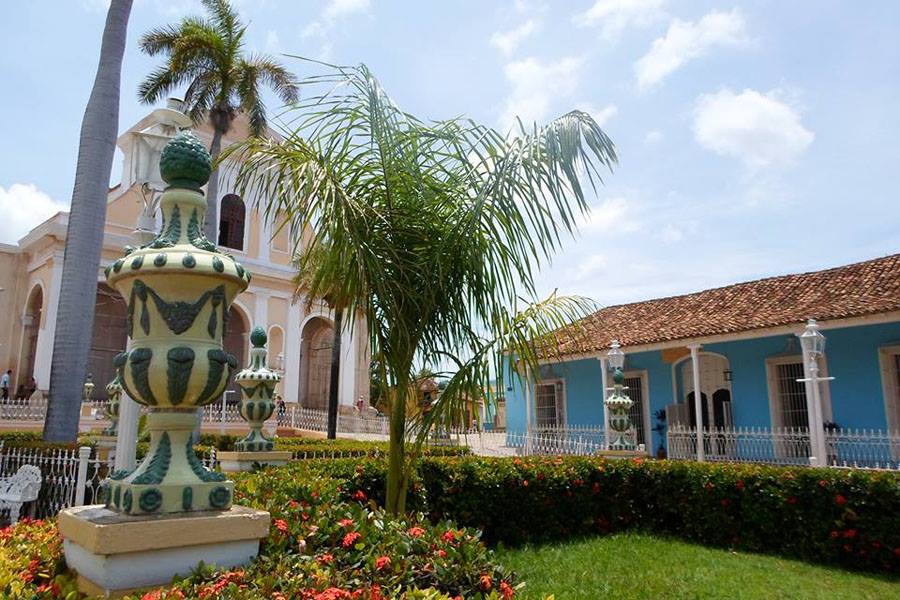
Foto por Marisol Gonzalez – Ciudad de Trinidad.
1425533_10152031693421083_1861326819_n

DEBUTA CARLOS ACOSTA EN LA CINTA INGLESA “DAY OF THE FLOWERS”.

Dirigida por John Roberts, la tragicomedia ‘Day of the Flowers’ cuenta la historia de dos hermanas escocesas que viajan a Cuba para encontrar sus raíces familiares. Allí conocen a Tomás, papel que interpreta el cubano Carlos Acosta.

Nacido en La Habana, Carlos Acosta ha actuado con el English National Ballet de Londres, los Ballet de Houston y Boston (EEUU), el Bolshoi de Rusia, y compañías de Chile, Alemania, Hungría, Venezuela, Argentina, Italia, Bélgica y Japón.

Day of the Flowers (Reino Unido, 2013) es una tragicomedia que cuenta la aventura caótica de dos hermanas escocesas, Rosa y Ailie (Eva Birthistle y Charity Wakefield), que viajan a Cuba con las cenizas de su padre para encontrar en la isla caribeña sus raíces familiares, y allí se enfrentan a peligros y juergas, a partes iguales, en el malecón.

El bailarín en la película interpreta a Tomás, un guía turístico no oficial que entabla amistad con Rosa, y ayuda a esta y a su hermana a esparcir las cenizas del padre y descubrir más sobre el pasado familiar.

Carlos Acosta inició su formación en la Escuela Nacional de Ballet de Cuba, en la que ingresó tras descubrir su vocación por la danza y animado por su padre, que quería apaciguar la rebeldía de Carlos en su adolescencia.

Tras abrirse camino en escenarios de todo el mundo, Acosta llegó a Londres en 1998, donde quince años después se ha convertido en el principal artista invitado de una de las compañías de ballet clásico más reconocidas a nivel mundial. Ha formado una familia con su pareja, la exmodelo holandesa Charlotte, y es padre de una niña, Aila, que aún no ha cumplido dos años.

DayOfTheFlowersCarlosAcosta-3-700x466

El cubano, medalla de oro de la competición internacional de baile de Lausana (Suiza) a sus 17 años, destaca sobre las tablas por su técnica excepcional y su elegancia interpretativa y ha sido considerado por la prensa especializada como el “sucesor de Nureyev” y el “nuevo Nijinski”, dos virtuosos de la danza.

Sin colgar las mallas, se inició como escritor en 2007 con su autobiografía No way home, una mirada nostálgica desde los bailes en la calle hasta el salto a los escenarios. El libro fue un éxito de ventas, lo que le animó a escribir su primera novela Pata de puerco, inspirada en la Cuba del siglo XIX, que salió a la venta en octubre.

El bailarín se encuentra en su etapa más polifacética ya que en apenas tres meses ha visto su actuación en el cine, ha publicado su primera novela Pata de puerco y se ha estrenado como productor para el Royal Ballet con una reedición de Don Quijote.

gggg

A todo esto se suma su representación de Romeo y Julieta el próximo 7 de diciembre en la Royal Opera House de Londres.

Acosta tiene en mente poner en marcha un Centro Internacional de Danza en Cuba, un proyecto para el que está buscando financiación y que el bailarín tiene pendiente, para devolver a su isla lo que un día se llevó de gira por el mundo, según ha comentado en alguna ocasión.

DDC/InternetPhotos/youtube/www.thecubanhistory.com
CARLOS ACOSTA DEBUTS in English film ‘Day of the Flowers’
The Cuban History, Hollywood.
Arnoldo Varona, Editor
© CARMEN AMAYA VISITA A CUBA (Video 1946) * * CARMEN AMAYA visits Cuba (Video 1946).

Carmen Amaya visita Cuba y acuden a recibirla, Pedro Varcárcel (gerente del teatro) y los artistas, Rita Montaner y Victor Correa.

Carmen Amaya (nacida el 2 de noviembre de 1913 – fallecida en el 19 de noviembre de 1963) fue una bailadora y cantante de flamenco española. Nació en la playa de Somorrostro, barrio de Barcelona ya desaparecido. Era hija del tocador El Chino (Francisco Amaya), sobrina de La Faraona, hermana de Paco, Leonor, María, Antonia y Antonio Amaya y estuvo casada con Juan Antonio Agüero. Es decir, formó parte de una de las familias más vinculadas al flamenco, que vivió desde pequeña.

Carmen Amaya es uno de los mitos del baile flamenco. Fue un genio que revolucionó el baile que se hacía en ese momento. También cantaba, pero sus dotes de bailadora acabaron eclipsando su faceta como cantaora. No aprendió a bailar en ninguna academia, todo lo que ella hacia venia de su alma y corazón. No tuvo más maestro que su propio instinto. Su escuela fue la calle, en la que cantaba y bailaba para ganar algo de dinero. De la calle pasó a los teatros y de allí los grandes escenarios de Madrid, en una ascensión meteórica, con un estilo y unas maneras nunca visto.

Vimeo/Molina/www.thecubanhistory.com
CARMEN AMAYA visits Cuba (Video 1946).
The Cuban History, Hollywood.
Arnoldo Varona, Editor

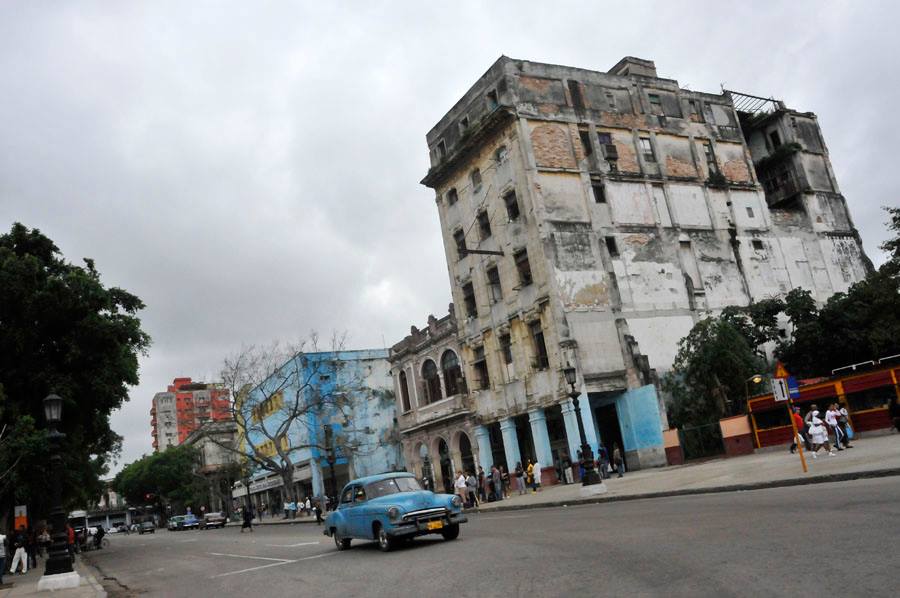
Foto de Roberto Suárez, Guillermo Diaz, Jorge Enrique and Emilio Quintana Jr. – Un viejo edificio de la Habana.
1479481_10152033550321083_1122898174_n

CARMEN AMAYA VISITS CUBA (Video 1946).

Carmen Amaya visit Cuba and come to receive her, Peter Valcarcel ( theater manager ) and artists , Rita Montaner and Victor Correa.

Carmen Amaya (born November 2, 1913 – died on November 19, 1963 ) was a dancer and singer of Spanish flamenco. Born in Somorrostro Beach neighborhood of Barcelona and disappeared. She was the daughter of vanity El Chino ( Francisco Amaya ) The Pharaoh niece , sister of Paco , Leonor , Maria Antonia and Antonio Amaya and was married to Juan Antonio Agüero. That is, was part of one of the families linked to more flamenco, who lived as a child.

Carmen Amaya is one of the legends of flamenco dancing. He was a genius who revolutionized the dance that was done in that time. Also sang, but his skills as a dancer ended up overshadowing his role as singer . He did not learn to dance in any academy, all she came into your heart and soul. He had no master your own instinct. His school was the street in which he sang and danced to earn some money. Street went to theaters , and from there the big stages of Madrid, in a meteoric rise , with a style and a way never seen .

Vimeo / Molina / www.thecubanhistory.com
CARMEN AMAYA visits Cuba (Video 1946).
The Cuban History , Hollywood.
Arnoldo Varona , Editor