DAIQUIRÍ, LA FAMOSA BEBIDA CUBANA QUE HA CONQUISTADO TODO EL MUNDO. PHOTOS

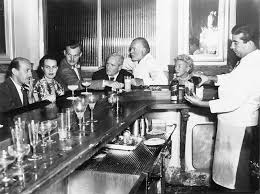
Durante muchos años en el famoso bar habanero “Floridita” ha sido homenajeado el célebre bartender catalán Constantino Ribalaigua, “Constant”, a quien algunos atribuyen el origen de la mezcla cubana, Daiquiri. Durante estos días ávidos bebedores y cantineros de varios países del mundo llegan a La Habana para rendir homenaje a Ribalaigua, quien falleció hace muchos años en La Habana, y que siempre será recordado por su mención en los escritos del célebre escritor norteamericano Ernest Hemingway, residente en La Habana, Cuba entonces y que por muchos años nunca se perdió una semana sin visitar el sitio y elogió la rica mezcla de daiquiriana.
Numerosos bartenders de diferentes países se juntan durante varios dias para rendir homenaje en su tumba a Constantine Ribalaigua, “Constant”, un ritual que incluyen la preparación del famoso daiquiri que muchos degustadores de la agradable mezcla alegan fue su creación.
COMIENZA LA HISTORIA DEL DAIQUIRÍ
Enclavado en el corazón de La Habana Vieja, en la esquina de las calles Obispo y Monserrate, el bar-restaurante abrió en 1817 con el nombre de “La Piña de Plata” y desde entonces ha visto a celebridades como Ernest Hemingway, el boxeador Rocky Marciano, el el diseñador de moda Paco Rabanne y el actor Jean-Paul Belmondo, entre otros.
El Premio Nobel de Estados Unidos contribuyó al reconocimiento mundial de los cócteles cubanos diseñados por el famoso catalán ‘Constante’ como “el presidente” o “el Papa Hemingway”, una variante de la receta clásica Daiquiri que incluye jugo de limón, ron, hielo picado y azúcar. sustituye al jugo de toronja.

El nombre de Daiquiri es también el nombre de una playa cercana a Santiago de Cuba, y una mina de hierro en esa zona, y es una palabra de origen taíno. El cóctel fue inventado alrededor de 1900 en un bar llamado Venus en Santiago, a unas 23 millas (37 kilómetros) al este de la mina por un grupo de ingenieros de minas estadounidenses. Entre los ingenieros estuvieron presentes Jennings Cox, director general de la Spanish American Iron Co., Francisco J. Linthicum, C. Manning Combs, George W. Pfeiffer, De Berneire Whitaker, C. Proctor Merritt O. Holmes y Persing. La historia de que Cox inventó la bebida cuando se quedó sin ginebra mientras entretenía a los invitados de Estados Unidos persiste, incluso cuando la bebida evolucionó de forma natural debido a la prevalencia de la lima y el azúcar.
El consumo de la bebida permaneció localizado hasta 1909, cuando el almirante Lucius W. Johnson, un oficial de salud de la Marina de los Estados Unidos, probó la bebida Cox. Johnson posteriormente ingresó al Army and Navy Club en Washington, DC, y los bebedores de Daiquiri han aumentado en el espacio de unas pocas décadas.
HOMENAJE A LA BEBIDA CUBANA.
Originalmente, la bebida se servía en un vaso alto lleno de hielo picado. Se vertió una cucharadita de azúcar sobre hielo y se exprimió el jugo de uno o dos limones sobre azúcar. Dos o tres onzas de ron completaron la mezcla. A continuación, se agitó el vidrio esmerilado con una cuchara de mango largo. Posteriormente, el Daiquiri evolucionó para mezclarse en una coctelera con los mismos ingredientes pero con hielo raspado. Después de revolver bien, lo vertió en un vaso de flauta frío. Un artículo de la edición del 14 de marzo de 1937 de The Miami Herald y la correspondencia privada de JF Linthicum confirman la prescripción y la historia temprana.
El daiquiri era una de las bebidas favoritas de Ernest Hemingway y el presidente John F. Kennedy.

LA RECETA DEL CÓCTEL DAIQUIRI
Ron cubano 50 ml de light
25 ml de zumo de limón recién exprimido
15 ml de jarabe de azúcar o equivalente en forma granulada.
Agitar con hielo, luego colar en una copa de cóctel. Adorne con una rodaja de limón que ha sido cortada y luego colocada en el borde del vaso.
La creación del catalán Constantino Ribalaigua, “Constante” llamado “Daiquiri Hemingway” en honor al célebre escritor norteamericano y con vistas a la gran población turística que visita la isla para deleitar entre otras cosas la agradable mezcla.
“Hemingway Daiquiri”
2 oz de ron blanco
75 oz de jugo de lima
1 cucharadita de marrasquino
1 cucharadita de jugo de toronja
1 cucharadita de azucar
Agitar con hielo y colar en una copa de cóctel fría. Servir frappé (apilar hielo picado en el vaso)
La bebida se hizo popular en la década de 1940. En tiempos de guerra, el racionamiento hizo que el whisky, el vodka, etc. fueran difíciles de encontrar, sin embargo, debido a la política del Buen Vecino de Roosevelt (quien abrió relaciones comerciales y viajó con América Latina, Cuba y el Caribe), el ron era fácil de conseguir. La Política del Buen Vecino (también conocida como El programa Panamericana “), ayudó a que América Latina pareciera de moda. Las bebidas con ron (antes mal visto como dominio de marineros y de abajo y afuera), también se puso de moda, y el Daiquiri vio un tremendo aumento de popularidad en los EE. UU.
La receta básica para un daiquiri también es similar a la de los marineros británicos que bebían grog a bordo del barco desde 1740. En 1795 la Royal Navy ración diaria de ponche de ron contenido, agua, ¾ onza de jugo de limón, 2 onzas de azúcar. Esta era una bebida común en todo el Caribe, y tan pronto como el hielo estuvo disponible, se incluyó en lugar de agua.
RECOMIENDENOS A SUS AMISTADES * PREFIERA A NUESTROS SPONSORS.

DAIQUIRÍ, THE FAMOUS CUBAN DRINK THAT HAS CONQUERED THE WHOLE WORLD. PHOTOS

For many years in the famous Havana bar “Floridita” the famous Catalan bartender Constantino Ribalaigua, “Constant”, has been honored, to whom some attribute the origin of the Cuban mix, Daiquiri. During these days, avid drinkers and bartenders from various countries around the world come to Havana to pay homage to Ribalaigua, who died many years ago in Havana, and who will always be remembered for his mention in the writings of the famous American writer Ernest Hemingway, resident in Havana, Cuba then and that for many years never missed a week without visiting the site and praising the rich mixture of daiquiriana.
Numerous bartenders from different countries come together for several days to pay homage at his grave to Constantine Ribalaigua, “Constant”, a ritual that includes the preparation of the famous daiquiri that many tasters of the pleasant mixture claim were the creation of him.
THE HISTORY OF DAIQUIRI BEGINS
Nestled in the heart of Old Havana, on the corner of Obispo and Monserrate streets, the bar-restaurant opened in 1817 with the name “La Piña de Plata” and since then it has seen celebrities such as Ernest Hemingway, the boxer Rocky Marciano, fashion designer Paco Rabanne, and actor Jean-Paul Belmondo, among others.
The Nobel Prize from the United States contributed to the world recognition of Cuban cocktails designed by the famous Catalan ‘Constante’ as “el Presidente” or “Papa Hemingway”, a variant of the classic Daiquiri recipe that includes lemon juice, rum, ice chopped and sugar. substitute for grapefruit juice.
The name Daiquiri is also the name of a beach near Santiago de Cuba, and an iron mine in that area, and it is a word of Taino origin. The cocktail was invented around 1900 in a bar called Venus in Santiago, about 23 miles (37 kilometers) east of the mine by a group of American mining engineers. Among the engineers were Jennings Cox, CEO of the Spanish American Iron Co., Francisco J. Linthicum, C. Manning Combs, George W. Pfeiffer, De Berneire Whitaker, C. Proctor Merritt O. Holmes, and Persing. The story that Cox invented the drink when he ran out of gin while entertaining American guests persists, even as the drink evolved naturally due to the prevalence of lime and sugar.
Consumption of the drink remained localized until 1909, when Admiral Lucius W. Johnson, a United States Navy health officer, tasted the Cox drink. Johnson subsequently joined the Army and Navy Club in Washington, DC, and Daiquiri drinkers have increased in the space of a few decades.
TRIBUTE TO THE CUBAN DRINK.
Originally, the drink was served in a tall glass filled with crushed ice. A teaspoon of sugar was poured over ice and the juice of one or two lemons was squeezed onto the sugar. Two or three ounces of rum completed the mix. The ground glass was then stirred with a long-handled spoon. Later, the Daiquiri evolved to be mixed in a shaker with the same ingredients but with shaved ice. After stirring well, he poured it into a chilled flute glass. An article in the March 14, 1937 issue of The Miami Herald and JF Linthicum’s private correspondence confirms the prescription and early history.
The daiquiri was a favorite of Ernest Hemingway and President John F. Kennedy.
THE DAIQUIRI COCKTAIL RECIPE
Cuban rum 50 ml of light
25 ml freshly squeezed lemon juice
15 ml of sugar syrup or equivalent in granulated form.
Shake with ice, then strain into a cocktail glass. Garnish with a lemon wedge that has been sliced and then placed on the rim of the glass.
The creation of the Catalan Constantino Ribalaigua, “Constante” called “Daiquiri Hemingway” in honor of the famous American writer and with views of the large tourist population that visits the island to delight, among other things, the pleasant mix.

“Hemingway Daiquiri”
2 oz white rum
75 oz lime juice
1 teaspoon maraschino
1 teaspoon of grapefruit juice
1 teaspoon of sugar
Shake with ice and strain into a chilled cocktail glass. Serve frappe (stack crushed ice in the glass)
The drink became popular in the 1940s. In wartime, rationing made whiskey, vodka, etc. They were difficult to find, however, due to Roosevelt’s Good Neighbor policy (who opened trade relations and traveled with Latin America, Cuba, and the Caribbean), rum was easy to come by. The Good Neighbor Policy (also known as The Pan-American Program “), helped make Latin America seem fashionable. Drinks with rum (previously frowned upon as the domain of sailors and from below and abroad), also became fashionable, and The Daiquiri saw a tremendous surge in popularity in the US.
The basic recipe for a daiquiri is also similar to that of British sailors who have been drinking grog aboard ships since 1740. In 1795 the Royal Navy daily ration of rum punch contained, water, ¾ ounce lemon juice, 2 ounces of sugar. This was a common drink throughout the Caribbean, and as soon as ice became available, it was included in place of water.
Agencies/ Wiki / DaiquiriStory/ Extractos/ Excerpts/ Internet Photos / YouTube / Arnoldo Varona/ www.TheCubanHistory.com
THE CUBAN HISTORY, HOLLYWOOD.

RECOMIENDENOS A SUS AMISTADES * PREFIERA A NUESTROS SPONSORS.